Wednesday, June 18, 2008

Luck Of The Irish: Celtics Thump & Pimp Slap Lakers To End Title Drought...


Celtics Wins 17th NBA Title With 131-92 Rout Of Lakers


The Boston Celtics rolled over the Los Angeles Lakers on Tuesday to clinch their first N.B.A. championship in 22 years.
Photo: Elsa/Getty Images

By TOM WITHERS, AP Sports

BOSTON (AP)—With Russell and Havlicek sitting courtside, and Red surely lighting up a victory cigar somewhere, these Boston Celtics returned to glory like the great teams before them.

Dominant in every way.

On a new parquet floor below aging championship banners hung in the rafters two decades back, the Celtics won their 17th NBA title and a first one—at last — for Paul Pierce, Kevin Garnett and Ray Allen—their Big Three for a new generation.

After 22 long years, the NBA has gone green.

Lifted by ear-splitting chants of “Beat L.A.” early and cries of “Seven-teen” in the closing seconds by their adoring crowd, the Celtics concluded a shocking rebound of a season with a stunning 131-92 blowout over the Los Angeles Lakers in Game 6 on Tuesday night.

“It means so much more because these are the guys, the Havliceks, the Bill Russells, the Cousys,” Pierce said. “These guys started what’s going on with those banners. They don’t hang up any other banners but championship ones.

“And now I’m a part of it.”

With the outcome assured, Boston fans sang into the night as if they were in a pub on nearby Canal Street. They serenaded the newest champs in this city of champs, and taunted Kobe Bryant and his Lakers, who drowned in a green-and-white wave for 48 minutes.

Garnett scored 26 points with 14 rebounds, Allen scored 26 and Pierce, the finals MVP who shook off a sprained right knee sustained in Game 1, added 17 as the Celtics, a 24-win team a year ago, wrapped up their first title since 1986.

Rajon Rondo had 21 points, eight assists, seven rebounds and six steals as the Celtics, who built a 23-point halftime lead and obliterated the Lakers, who were trying to become the first team to overcome a 3-1 deficit in the finals.

They didn’t stand a chance.

Boston’s 39-point win surpassed the NBA record for the biggest margin of victory in a championship clincher; the Celtics beat the Lakers 129-96 in Game 5 of the 1965 NBA finals.

In the final minute, Pierce doused Celtics coach Doc Rivers with red Gatorade. Owner Wyc Grousbeck, who named his group Banner 17 to leave no doubt about his goal, put an unlit cigar in his mouth—a tribute to Auerbach, the patriarch who had a hand in the franchise’s first 16 titles.

Garnett dropped to the parquet and kissed the leprechaun at center court and then found Russell, the Hall of Famer who taught him the Celtic way, for a long embrace.

“I got my own. I got my own,” Garnett said. “I hope we made you proud.”

“You sure did,” Russell said.

Rivers pulled Pierce, Garnett and Allen with 4:01 left and they shared a group hug with their coach, who was nearly run out of town last season. Rivers lost his father at the beginning of this remarkable run, a season no one expected.

By the time Rivers was handed the Larry O’Brien Trophy, it was June 18—his late father’s birthday.

When the game clock reached zeros, Rivers reflected on his dad.

“My first thought was what would my dad say,” Rivers said, “and honestly I started laughing because I thought he would probably say, if you knew my dad, `It’s about time. What have you been waiting for?”’

It’s was Boston’s first title since the passing of Auerbach, whose presence was the only thing missing on this night. Even Auerbach, who died in 2006, got some satisfaction. Led by Rivers, Auerbach’s beloved team denied Lakers coach Phil Jackson from overtaking him with a 10th championship.

The Boston-Los Angeles rivalry, nothing more than black-and-white footage from the 60s and TV highlights of players wearing short shorts in the 80s to young hoops fans, remains tilted toward the Atlantic Ocean. The Celtics are 9-2 against the Lakers in the finals.

Boston missed its first crack at closing out the series in Game 5, but the Celtics didn’t miss on their second swing, running the Lakers out of the gym.

Bryant, the regular season MVP, finished with 22 points on 7-of-22 shooting.

He started 4-of-5 from the field and seemed intent on forcing a Game 7. But he missed seven shots in a row and everywhere he went, L.A.’s No. 24 ran smack into a wall of Boston defense as high as the Green Monster.

“They were definitely the best defense I’ve seen the entire playoffs,” Bryant said. “I’ve seen some pretty stiff ones and this was right up there with them. The goal was to win a championship, it wasn’t to win MVP or anything like that, it was to win a championship.”

Garnett and Allen were All-Stars in other cities, stuck in Minnesota and Seattle, respectively, on teams going nowhere. But brought together in trades last summer by Celtics general manager Danny Ainge, a member of the ‘86 Celtics champions, they joined Pierce and formed an unbreakable bond, a trio as tight as the club’s lucky shamrock logo.

They resisted being called The Big Three, a nickname given to Larry Bird, Kevin McHale and Robert Parish two decades ago.

“This is the reason we came here,” Garnett said. “This is the reason we got together, and Danny made it go down. This is it right now.”

With Garnett scoring 17 points and Pierce adding 10, Boston built a 58-35 halftime lead, and unlike Game 2 when they let the Lakers trim a 24-point lead to two in the fourth quarter before recovering, the Celtics never stopped.

They pushed their lead to 31 in the third, and with Boston still up by 29 after three, plastic sheets started going up in the Celtics’ locker room in preparation for a champagne celebration.

No team had to work harder for a championship than these Celtics, who were playing in their record 26th post season game after being pushed to seven games by Atlanta and Cleveland before taking care of Detroit in six to win the Eastern Conference title.

They entered Game 6 slowed by injuries as Pierce, Kendrick Perkins (shoulder) and Rondo (ankle) were less than 100 percent. There was also uncertainty surrounding Allen, who stayed behind in Los Angeles following Game 5 after his youngest son became ill and was diagnosed with diabetes. The Celtics needed three planes to get back from L.A. and didn’t get home until late Monday night.

But there were no excuses, and just as they had while winning 66 games during the regular season, the Celtics got plenty of help from their bench as P.J. Brown, James Posey, Leon Powe and rookie Glen “Big Baby” Davis came in and contributed.

It was a group effort by this gang in green, which bonded behind Rivers, who borrowed an African word ubuntu (pronounced Ooh-BOON-too) and roughly means “I am, because we are” in English, as the Celtics’ unifying team motto.

The Celtics gave the Lakers a 12-minute crash course of ubuntu in the second quarter.

Boston outscored Los Angeles 34-19, getting 11 field goals on 11 assists. The Celtics toyed with the Lakers, outworking the Western Conference’s best inside and out and showing the same kind of heart that made Boston the center of pro basketball’s universe in the ’60s.

House and Posey made 3-pointers to put the Celtics ahead by 12 points and baskets by Pierce, Garnett and Rondo put Boston ahead by 18.

In the final minute, Garnett floated in the lane, banked in a one-handed runner and was fouled. His free throw made it 56-35, and after Perkins scored, the Celtics ran to the locker room leading by 23.

On his way off the floor, Garnett screamed, “That’s that.”

And so it was.

Notes

The Lakers had won their previous eight straight Game 6s in the finals. … Since the finals began in 1947, 16 have gone seven games, the most recent in 2005 when San Antonio had to go the distance to beat Detroit. … It was the second biggest margin in finals history behind Chicago’s 96-54 win over Utah in 1998. … The Celtics went 48-7 at home, including 13-1 in the postseason.

******


Boston Cheers as Celtics Rout Lakers

By HOWARD BECK of the NY Times


The Celtics went from having the worst record in the N.B.A. in 2007 to having the league's best record in 2008, after a busy offseason in which the team acquired Ray Allen,center, and Kevin Garnett, right, to help Paul Pierce, left.
Photo: Brian Snyder/Reuters

BOSTON – The sights, smells and happy chaos were familiar, as if borrowed from another era and another arena: Stale cigar smoke filled the air. Champagne soaked the locker-room carpets. Green and white confetti was everywhere.

Red Auerbach was not present for the moment in which the Boston Celtics restored their lost glory, but the party they threw Tuesday night at TD Banknorth Garden was unmistakably stamped with his outsize personality.

The Celtics did not just beat the Los Angeles Lakers, they crushed them – and left no doubt that the Larry O'Brien trophy belonged back in Boston after a 22-year hiatus.

Accompanied by chants of "Seventeen!" the Celtics routed their longtime rivals 131-92 to close out the finals in six games. Sixteen green-and-white banners will soon have company in the rafters.

Kevin Garnett, Ray Allen and Paul Pierce – three stars who had known individual glory but not gratification – will soon have their first championship rings. So will Coach Doc Rivers, who deftly blended their talents after they were united last summer.

It took Pierce, the longtime Celtics captain, 10 years to get here. Garnett waited 13 years for the moment, Allen 12. They all checked out of the game together, with 4 minutes 1 second left. They could not hug each other enough.

"Knowing that you were at rock bottom a year ago today, and to climb all the way to the top, this is a dream come true," said Pierce, who averaged 21.8 points in the finals and was unanimously named the most valuable player. "I'm going to cherish this forever."

They earned the moment with relentless defense that held Kobe Bryant, perhaps the game's premier scorer, to 40 percent shooting in the series. He had 22 points in the finale but just 11 points in the final three quarters.

Unbridled emotion came over the Celtics as the final buzzer sounded. Eddie House, the sharpshooting reserve, fell to his knees at one free-throw line. Garnett kneeled at center court and kissed the Celtics logo.

"I just want to say, other than my kid being born, this has got to be the happiest day of my life right now," said Garnett, one of the greatest power forwards of his era, whose intensity helped transform the Celtics this season.

In the din and the smoke, the Celtics paid homage their franchise patriarch.

"This win is for Red Auerbach," Wyc Grousbeck, the managing partner, said during a raucous trophy presentation on the court.

Moments earlier, Grousbeck had been shown on the video scoreboard chewing on a cigar, to the delight of the crowd.

After a taut series of wild comebacks, near-comebacks and tense fourth quarters, the finale proved anticlimactic – albeit exhilarating for the 18,624 green-clad fans, who hardly used their seats all night.

The Celtics had an 11-point lead in the middle of the second quarter, a 23-point lead at halftime, a 31-point lead by the middle of the third and very little to worry about for most of the night.

Allen buried the Lakers with his 3-point stroke and finished with 26 points. Garnett set the tone with a 10-point first quarter and finished with 26 points, 14 rebounds and 4 assists. Pierce had 17 points and 10 assists.

The Lakers never did win a road game in the series, and the Celtics finished their run with a 13-1 record at home. The 39-point margin of victory was the largest for a title-clinching game.

"We're disappointed," said Lakers Coach Phil Jackson. "Our fans are disappointed. I think everybody is disappointed that we didn't get a game out of this, give ourselves a chance."

The game was lost in the first half, when the Lakers failed to grab a single offensive rebound and shot 29.6 percent from the field. Garnett mowed over Pau Gasol, Allen bounced back from a poked eye (courtesy of Lamar Odom) and the Celtics put the game away early, with a 35-14 second quarter.

"We just didn't have it in us, I guess, tonight to be able to match that effort and that intensity," said Gasol, who finished with 11 points and 8 rebounds.

The story of the series, and the season, was the Celtics' commitment to relentless defense. They turned Bryant into a jumpshooter, made him work for every point and forced his teammates to do something spectacular. With few exceptions, they were not up to the task. Odom and Gasol seemed to shrink in the face of the Celtics' ferocity. A young bench anchored by Sasha Vujacic and Jordan Farmar seemed overmatched and outwitted by a Boston bench that featured the savvy veterans P.J. Brown and Sam Cassell.

After much prodding, Bryant conceded that the Celtics' defense was the best he had seen in the playoffs.

"Just upset more than anything, frustrated," Bryant said. "But I'm proud. I'm proud of the way that we performed all year. I'm proud of my guys. I'm proud of the effort that we gave."

The city was primed for the moment. The arena boomed with "Beat L.A." chants in the first quarter. They booed Bryant's image on the scoreboard even earlier — during the national anthem. Fans amused themselves early in the fourth quarter by singing "Where is Kobe?"

The championship was ready to be claimed Tuesday, if only the Celtics could fight through exhaustion, attrition and whatever Bryant unleashed upon them. Over 48 hours, the Celtics had endured a sobering Game 5 defeat, a delayed flight and a sick child, all layered on top of the accumulated aches from a long playoff run.

Allen's youngest son had fallen ill in Los Angeles two nights earlier, which led him to miss the team flight back to Boston. Pierce played the final five games of the series with a sprained knee. Center Kendrick Perkins finished the series with shoulder and ankle injuries and point guard Rajon Rondo with a sprained ankle.

It took 26 games for Boston to win the championship, an NBA record. They were not always the most convincing contenders, going 3-9 on the road and requiring seven games to beat Atlanta and Cleveland in the early rounds.

But the Celtics were persistent, and unified, staying true to the South African theme of "ubuntu" that they established last fall. The word, introduced to the team by Rivers, literally means "I am because we are" and was invoked when the Celtics opened training camp, with the newcomers Garnett and Allen joining Pierce.

"They came in with no egos," Brown said. "Everything was about one thing — they came here to win a championship. It went throughout the whole team. Everybody bought in."

As an added bonus for the Celtics, they denied Jackson a 10th title, which would have broken his tie with Auerbach. That was, Danny Ainge admitted, a fringe benefit: "We wanted to keep Red's nine championships intact and not let Phil pass him."

Ainge was a vital role player when the Celtics won their last title in 1986 and is now their general manager. He absorbed Auerbach's wisdom, acquired the kinds of players who were worthy of his legacy, then watched them dismantle the franchise's greatest rival.

"Beating the Lakers," Ainge said, "is an added bonus. Yeah."

Monday, June 16, 2008

R.I.P. To Pioneering Black Media Giant Sis. Pat Tobin...


P.R. Executive Remembered As "An Integral Part Of Our Community"

By BETTY PLEASANT, Contributing Editor
Pat Tobin, who specialized in using her skills to advance Black causes for justice, died Tuesday at 65.

Pat Tobin "the community's bridge over uncertain waters, its Sherpa up the slopes of new opportunities, its Perle Mesta of professional networking" died Tuesday morning in Cedars-Sinai Medical Center after battling colon cancer for more than a year. She was 65.

Tobin was the founder of Tobin & Associates, one of the nation's most prominent minority, female-owned public relations firms and, for the past 25 years, was the driving force for the individual and collective advancement of African-American professional aspirations.

She was a founder of the National Black Public Relations Society, was a prime mover of the Black Journalists Association of Southern California, trained women for political and professional leadership positions through her active involvement in the Los Angeles African-American Women's Public Policy Institute and the Los Angeles African-American Women's Political Action Committee.

Tobin had worked in public relations in her beloved hometown of Philadelphia, but the business became her passion after arriving in Los Angeles in 1977 and landing a job with Channel 2, which was then known as KNXT. While there, she organized a successful public relations event for sportscaster Jim Hill, which led to a series of highly welcomed weekly "media nights" meet-and-greet networking events through which she realized the limited opportunities available to Black media professionals. She found her niche.

From there, she left the TV station, founded Tobin & Associates and set about promoting the careers of Black professionals of various fields, of connecting Black businesses to White corporations and organizing massive fundraisers for Black nonprofit organizations and local, national and international causes.

Her client list included director Spike Lee, actor Louis Gossett Jr., attorney Johnnie Cochran, Wells Fargo Bank, and the Los Angeles NAACP. She is particularly noted for her 20-year affiliation with the Toyota Corp. where she spearheaded the company's outreach into minority communities.

Councilwoman Jan Perry was a recent Tobin client for about 18 months, who reflected fondly on the experience. "Pat was an extraordinary woman. Her joy was contagious and she always lit up the room when she entered," Perry said.

State Sen. Mark Ridley-Thomas, who worked with Tobin on several issues when she was at KNXT and he was executive director of SCLC, called her a pioneering woman "who had an unwavering concern for justice, and there were very few issues when wrongs were being perpetrated that she didn't summon people she knew and worked for to join her in a campaign or a crusade to right those wrongs."

Former Assemblywoman Gwen Moore, with whom Tobin collaborated, along with Joy Atkinson, in developing female political activists, said that even though she was a successful businesswoman, Tobin "was an integral part of our community, always willing to lend her expertise in public relations to help community-based organizations gain recognition for their work."

Rep. Diane Watson spoke of Tobin's well-known placid demeanor under all circumstances. "I will always remember the kindness of Pat and that big, beautiful smile that graced her face at all times," Watson said.

Jackie Hawthorne, president of LAAAWPAC, echoed those sentiments, adding that she recently sent a text message to Tobin remarking on her positive spirit during her declining health. Hawthorne said, I told her I was amazed by her upbeat spirit and her continued activities during these trying times, and she text messaged me back: "Girl, you can't hit a moving target."

Tobin is survived by her daughter, Lauren; grandson, Aaron Curry; brother, William Randolph and sister, Daisy Tinson, both of Philadelphia, and several nieces and nephews.

Funeral arrangements are pending. Memorial donations may be made to the Pat Tobin Scholarship Fund or Pat Tobin Memorial Fund, 4929 Wilshire Blvd., Suite 245, Los Angeles, 90010.

R. Kelly Acquitted...Not Guilty...

R.Kelly Acquitted


By Stacy St.
Clair | Tribune reporter

A Cook County jury on Friday acquitted R&B superstar R. Kelly of child pornography charges, marking the end of a high-profile trial rich in courtroom drama and celebrity intrigue.


The 41-year-old singer, whose real name is Robert Kelly, long denied charges that he videotaped himself engaging in a variety of sex acts with his then-underage goddaughter. Authorities said the female in the video could have been as young as 13 at the time.


The jury of nine men and three women deliberated for 7 ½ hours before finding Kelly not guilty on all 14 counts.


The verdict ends a bizarre case that had languished for nearly six years. During almost four weeks of testimony, the jury heard about three-person sexual encounters and watched a sex tape in which the male participant is seen urinating on a female. Celebrities on trial Photos Neither the alleged victim, now 23, nor her parents testified during the trial. All three denied her involvement in the tape to a grand jury in 2002.


Without their cooperation, the prosecution used other witnesses to describe the relationship Kelly shared with his goddaughter--an aspiring rapper who witnesses said became a member of his entourage while in junior high school. She often visited him at his downtown recording studio or watched him play basketball at a West Side gym, they testified.


Only one witness testified to having direct knowledge of an inappropriate relationship between Kelly and the alleged victim. Lisa Van Allen told the jury she engaged in a series of sexual encounters with the singer and his goddaughter when the girl was a minor.


The defense tried to undermine Van Allen's testimony by accusing her of concocting the story to extort money from Kelly. Van Allen, who lives in Georgia, called prosecutors with information about the case shortly after her fiance was arrested on guns and weapons charges.


Kelly's attorneys contended the young woman in the tape is not the alleged victim but a prostitute. They called three family members of the alleged victim who testified that they saw no resemblance between their relative and the female in the video.


Kelly also did not testify. Without testimony from him or his alleged victim, the singer's attorneys built their case around a caterpillar-shape mole along his spine. They argued that the man in the recording has an unblemished back, meaning Kelly couldn't be the man in the video.


If you don't see the mole, the defense told the jury, then Kelly cannot be convicted.


Kelly's attorneys also suggested the 27-minute tape had been doctored, going so far as to say someone could have edited the singer's head onto another man's body. A prosecution expert testified such editing trickery would take 44 years and still would be obvious to viewers.


The drawn-out legal battle has not slowed Kelly's music career. He has released five albums and a greatest-hits collection since he was indicted in 2002. He also has completed several concert tours.


sstclair@tribune.com

The Heart Of A Tiger...Woods Wins U.S. Open In Sudden Death...


Woods Wins U.S. Open In Sudden Death

By Simon Lewis PA SportsTicker

SAN DIEGO (Ticker)—It took 91 holes to separate them but Tiger Woods finally overcame Rocco Mediate to claim the 2008 U.S. Open title after a compelling 18-hole playoff went to sudden death at Torrey Pines on Monday.

The victory completed Woods’ quest for a 14th major title, leaving the world’s top-ranked player only four short of Jack Nicklaus’ record. It was Woods’ third U.S. Open victory and a seventh at Torrey Pines, his second at the course this year.

Woods was playing his first tournament since finishing second at The Masters on April 13, having undergone surgery on his left knee two days later.

Nine weeks on, he forced the playoff in dramatic fashion Sunday, sinking a 15-foot birdie putt at No. 18 to tie Mediate at 1-under. On Monday, he produced another birdie on the final hole to send the championship playoff into sudden death after the golfers posted level par 71s.

At 45 years and five months, Mediate was looking to take over from Hale Irwin as the oldest winner of the championship and the oldest first-time winner of any major.

In 23 years as a professional, Mediate had won only five of 535 PGA Tour events and in 43 majors he had only three top-10 finishes, two of them, a fourth and a sixth, in the U.S. Open.

Woods had led by three shots after 10 holes, only for Mediate to battle back over the back nine before the world No. 1 leveled once more at the 18th.

The drama reached epic proportions as they entered the closing four holes level at 1-over.

Over 72 holes, Woods had a three-shot advantage over Mediate on those closing holes, scoring 3-under over four rounds to the veteran’s 2-over.

On the 15th, though, the tables were turned as fortunes swung to and from between tee and green. First, Woods found sand on the right off the tee while Mediate landed on the fairway after kicking out of the rough. Woods saw his opponent loft his second shot to 18 feet from the flag and then promptly rolled his bunker shot inside Mediate’s ball.

The 45-year-old hit back again by holing out his birdie putt, only for Woods to miss the shorter effort, leaving Mediate with a one-shot lead at even.

There was more drama as the duel continued at the par-3 16th, with Mediate’s tee shot falling just short of the green and Woods sending his to its back with the pin centrally located. Both facing monster putts, Mediate rolled his 50-footer to within two feet while Woods left his mere inches from the cup as both settled for pars.

At 17, Woods found the fairway while Mediate caught the intermediate rough. The two-time champion appeared to be in a quandary over club selection for his second shot, before his caddie Steve Williams persuaded him to switch from a 7-iron to an eight.

Woods’ faith in Williams was justified as he sent the ball to within 20 feet. Mediate, meanwhile, left himself another long putt from the front of the green for his third shot and sent it to within eight feet before Woods two-putted for par.

That left Mediate putting for par, which he duly completed to take a one-shot lead to the par-5 18th.

Mediate had held a similar lead approaching the 72nd hole on Sunday only for Woods to birdie and force the playoff.

Driving first, Mediate pulled left into a bunker while Woods’ tee shot left him grimacing in pain from his left knee but managing to keep his ball in the fairway.

Both second shots cleared the lake guarding the green, Woods left with the longer eagle putt. He sent his 50-footer to three feet, leaving Mediate from 20 feet to putt for the championship. He missed left, and Woods holed to leave Mediate with a short putt to force this remarkable playoff into sudden death for only the third time since its introduction in 1954. Again he failed to convert and the golfers returned to the seventh hole for sudden death.

Mediate was immediately in trouble, following Woods’ tee shot onto the fairway by finding the left fairway bunker on the dogleg right. His rescue shot went left again, into a mandatory drop zone just in front of a spectator stand.

As Woods waited by the green to putt, Mediate’s chip rolled past the flag, leaving Woods to go first from the front of the green, putting for the championship. Woods’ effort was close to finishing the job and he dropped to his knees as his ball stayed above the hole, placing all the pressure on Mediate to rescue his title hopes from 18 feet.

He missed and Woods claimed the title.

Lil Wayne's Tha Carter III Reviewed By Mr. B. Lee a.k.a. Bleebus...

Snoop Dogg's Wife Arrested For DUI...A Candidate For Pro-Active Solution...


This image provided by the Fullerton Calif. Police Department shows Shante Broadus, wife of rapper Snoop Dogg, after her arrest for investigation of driving under the influence of alcohol in Fullerton, Calif. early Saturday, July 14, 2008.
(AP Photo/Fullerton Calif. Police Dept.)


Snoop Dogg's Wife Arrested For DUI In S. Calif.


Sat Jun 14

Police say the wife of rapper Snoop Dogg has been arrested in California's Orange County for investigation of driving under the influence of alcohol.

Fullerton police Lt. Craig Brower says officers stopped 32-year-old Shante (Shahn-taye) Broadus of Sherman Oaks about 12:15 a.m. Saturday and took her to jail. She was cited and then released pending a court appearance.

Brower says nobody else was in the car but he didn't have any other details.

Broadus and Snoop Dogg — whose real name is Calvin Broadus Jr. — were married in 1997 and have three children.

A message left with Snoop Dogg's publicist was not immediately returned.

MY OPEN LETTER TO MS. AFENI SHAKUR THE MOTHER OF 2PAC


This letter was written in the summer of 2001, the summer before my fourth and final year at Washington University in St. Louis...So far to my knowledge I haven't been successful in getting this letter to Ms. Shakur or her representatives...Hopefully someone will see this letter on this blog and bring it to the great Ms. Shakur's attention because I am still very much interested in doing the album cover art for 2Pac's 'final' C.D.


Dear Ms. Afeni Shakur,
It is such an honor and pleasure to finally be able to touch bases with you. I have been a fan of your son ever since I saw him on “Juice” and heard “Brenda’s got a baby”. Your son was truly a “genius” and like so many geniuses he was terribly misunderstood. When I heard he died on Friday the 13th ,1996 I was shocked and outraged. It was like hearing that the President of the United States got assassinated because I knew I would never forget where I was or what I was doing and how I reacted when I heard the tragic news.

Your son’s rapping style (grossly imitated by many simply for money gains) went beyond the hip hop category. It was like hearing the pains, hopes, miseries, preservation, and happiness of a darker race of people articulated through a quick, sharp, and witty mind with the unrelenting passion and restlessness of a well traveled and wise bluesman. To me your son was the closest thing the hip hop generation ever had to a Robert Johnson or a John Lee Hooker, all three are masterful storytellers with commanding presence and superior talent. His simple(not easy!!!) and direct delivery with precise articulation often reminds me of the jazz trumpeter/ creative genius Miles Davis. Both artists are seriously imitated, yet few if any can correctly articulate the fluency, agility, fragility, and nuances in which both men displayed in their respective mediums which expressed their true passion for living and their deep sensitivity for the human experience.

MORE...

Ballad Of A Dead 'Souldier'...Happy Life Affirmation Day Tupac!!!

Hip Hop Icon Or Bearer Of A Legacy – Tupac Shakur

June 16th is the birthday of hip hop icon Tupac Amaru Shakur. His life cut short in 1996 by senseless violence. His murder remains to this day is unsolved.

The ‘testimony’ of hip hop icon Tupac Shakur (2Pac) is written and there is nothing he can add to what he has left us. Tupac is dead. There will be no new oration from one of the masters of words or no new contentious tracks to make headlines. What we have from him is what we have and we must come to grips with that.

In his life Tupac touched many people. He understood the world around him and was quick to point out the flaws and the weaknesses of the government and society. He understood the power of the mic and the power the man holding that mic could brandish; not only in the hip hop culture but in all society.

Tupac has written his last poem, his last rhyme and has given his last opinion of problems in the urban community. As far as hip hop goes: Tupac is gone. But his greatest and strongest points are not those of a hip hop artist, a wild gangsta rapper associated with powerful Death Row Records and Marion ‘Suge’ Knight; his strongest point was that he was in a position to ‘make a change’ and to point out the problems; and most likely those values had something to do with his death; like many other social activist before him.

Tupac once said "I'm not saying I'm gonna change the world, but I guarantee that I will spark the brain that will change the world". Pac knew that the world had to change. We all know that things are not working the way they should and Tupac was quick to remind us and to point it out. He wanted to reach the children and the youth and make them aware of what was in store for them; after all he had lived a life many can not imagine.

“I'm a reflection of the community”, Tupac once said and as we look back on his life we are witness to that fact. Many forget that Tupac was a young man, just 25 years old at his death. Tupac is just one of thousands of young men (and women) killed senselessly in this country every year. What set him apart were his charisma and his ‘in touch’ feeling with the urban community. Tupac became so well loved among the hip hop and urban community; earning praise for his musical and acting talent; almost everyone wanted to see this talented young black man excel. But he also saw condemnation at times for his explicit and violent lyrics; as many of his songs told of fights, gangs, and sex: but that is what was and is going on in the hip hop and urban community. “I don't see myself being special; I just see myself having more responsibilities than the next man. People look to me to do things for them, to have answers,” Tupac said.

Today’s hip hop and rap artists have forgotten that connection. Trying to ‘hood wink’ the community with worthless hooks and content in their tracks; this is why there will never be another Tupac Shakur. Many have proclaimed to be the next 2Pac and many have tried to be Tupac and many have failed to live up to what Pac stood for. KRS-ONE, Chuck D, Lupe, Jasiri X, Immortal Technique, Mos Def, Kanye, Dead Prez, NYOIL, Black Thought, Brother J, Common, Wise Intelligent, Pharaoh Monch and Lyfe Jennings are among some of the few artists today who try to bring the same qualities to the mic when they spit as 2Pac did.

“If we're all saying that rap is an art form then we gotta be more responsible for our lyrics. If you see everybody dying because of what you're saying, it don't matter that you didn't make them die, it just matters that you didn't save them,” Tupac Shakur once said.

The social perception that Tupac Shakur was a ‘thug’ is just that – a false perception. Even when Tupac was on trial for alleged sexual abuse he said "This is all about my image. They buildin' me up and destroying me on the same image they perpetuated. I’m selling records, this is what I do for a livin', don’t get it twisted. This is not my real life, this is not how my real life is supposed to be. I’m not supposed to have all these villains in my life."

The image they ‘perpetuated’ is thanks to Tupac’s Black Panther bloodline; and the bout of arrests in L.A., Atlanta, East Lansing, and Manhattan; and the escape from five of those six arrests with as little as 14 days in jail. Plus there is the fact that while other rappers and hip hop ‘want ta be gangsta’s’ talk about it, Tupac is the only known rapper who has actually put a bullet in a police officer.

Tupac said this "Let me say for the record, I am not a gangster and never have been. I’m not the thief who grabs your purse. I’m not the guy who jacks your car. I’m not down with the people who steal and hurt others. I’m just a brother who fights back."

"And the raps that I'm rappin to my community shouldn't be filled with rage? They shouldn't be filled with same atrocities that they gave me? The media they don't talk about it, so in my raps I have to talk about it, and it seems foreign because there's no one else talking about it."

"My music is not for everyone. It's only for the strong-willed, the (street) soldiers music. It's not like party music- I mean, you could gig to it, but it's spiritual. My music is spiritual. It's like Negro spirituals, except for the fact that I'm not saying 'We shall Overcome.' I'm saying that we are overcome."

"We talk a lot about Malcom X and Martin Luther King JR, but it’s time to be like them, as strong as them. They were mortal men like us and every one of us can be like them. I don't want to be a role model. I just want to be someone who says, this is who I am, this is what I do. I say what's on my mind

One thing is for sure, if the legacy of Tupac Shakur is based on his hip hop persona, 2Pac will surely fade away. But if the total man Tupac Shakur is immortalized then his legacy has a chance to survive and make a difference. “When you do rap albums, you got to train yourself. You got to constantly be in character” Pac said, and that is what hip hop artists are – they portray a ‘character’. There is little truth behind the persona of most of the hip hop and rap artists portray.

As we think of Tupac Shakur today we should think of the total man Tupac Shakur:The activist and poet; the real Tupac. I am not saying Tupac was a saint – far from it. But I am saying that we will never really know the potential of this young black man. We will never know what his knowledge and his willingness to speak up could have done. He was a voice for a generation, a voice that has been silenced but his message lives on.

As we remember the birth of Tupac Shakur today think about these words from Pac and just don’t talk about it – be about it. And as Tupac said “Keep ya head up. Do what you gotta do. And then, inside of you, I will be reborn” – Thus keeping his true legacy alive.

“Some people say I was a thug and a gangsta. Other people remember me as a poet and a born leader. But I'm saying to you measure a man by his actions fully, through his whole life, from the beginning to the end.”

"The real tragedy is that there are some ignorant brothers out here. That's why I'm not on this all-White or all Black shit. I'm on this all-real or all fake shit with people, whatever color you are. Because niggaz will do you. I mean, there's some (foul) niggaz out there (in the streets); the same niggaz that did Malcolm X, the same niggaz that did Jesus Christ- every brother ain't a brother. They will do you. So just because it's Black, don't mean it's cool. And just because it's White don't mean it's evil."

"You gotta make a change. Its time for us as a people to start making some changes, lets change the way we eat, lets change the way we live, and lets change the way we treat each other. You see the old way wasn't working so its on US, to do what we gotta do to survive." – Tupac Shakur.

Take a second to remember Tupac on June 16th and to do all you can to preserve his legacy.

---------------- Also – the reviews are coming in on Thug Life Army’s release – In The Shadow of an Icon

"This entire project is not just a true testament to the direct inspiration that Tupac provided many in our society, but also a reflection of positive hip hop culture being used as a voice for the voiceless." - Shamako Noble: President and Executive Director of The Hip Hop Congress – http://www.hiphopcongress.com

"The artists featured on this two-disc compilation have all been baptized at the altar of Tupac; they not only continue a mighty tradition, they take it to a higher level. All praise is due to ThugLifeArmy Records" - Dr. Uhuru Hotep / Kwame Ture Leadership Institute http://www.ktli.org

"In The Shadow of an Icon pays homage to the late, great Tupac Shakur. Thug Life Army Records compilation was done with taste and respect for Tupac's legacy." - Jonathan Wolfson / Wolfson Public Relations http://www.wolfson-pr.com

“Maybe the "In the Shadow of an Icon" CD will help us, at least imagine if only for a moment, the possibilities of not only Tupac Shakur, but the legions of young men and women who would follow his lead, if they politicized their lyrics and connected them with the struggling masses...” by "TRUTH Minista Paul Scott” of http://www.NoWarningShotsFired.com

"In the Shadow of an Icon is the rare album available today whose lyrical content, production and theme are all top-of-the line and in harmony. The spirit of 'Pac - his intellect, defiance, and love - lives in this album, with enough of a roster, message, and music to carry his great legacy for another generation" – by Cedric Muhammad / Black Coffee Channel http://www.blackcoffeechannel.com and Black Electorate.com http://www.blackelectorate.com .

“A really solid release... I really appreciate the purpose of the project. It's not your typical thugged-out music. It's street music, but with heart, and in that way, it does a great service to the memory of 'Pac. I was also pleasantly surprised by the quality of the production, the lyrical skills of the MCs and variety of artists on the CD. Well done!”...by Greg Schick / Old School G - World Hip Hop Market http://www.worldhiphopmarket.com

Review from StreetHop by Rahim “Judging a book by its cover never really helped anyone to begin with, and in my findings, this 29-track compilation CD is filled with up and down-beat tracks that anyone can easily be bopping their head to, not to mention that the whole vibe of the album can be described as something out of the vaults of Suge Knight’s Death Row Records. The album also showcases a style of music that most 2Pac fans will recognize, while the music itself represents the same struggle in which 2Pac had fought hard for. There are a lot of talented artists on this album, and from the sound of it; I’m glad none of the artists give off too much of a mainstream feel to their music....”

Hip hop is not dead, you just have to know where to look – and that means look to the streets instead of the boardroom and you will see that Thug Life Army Records has done just that on In the Shadow of an Icon. "Hip Hop was supposed to be this new thing that had no boundaries and was so different to everyday music. As long as it has soul to it, hip hop can live on." - Tupac Shakur

The album can also be purchased at http://www.TupacTribute.com or http://thuglifearmyrecords.com for a ‘Special’ price. Thanks in advance for all the support.

Peace & Believe in Better Dayz

Togeather WE can change the world; if we only support each other.

The Staff of Thug Life Army Network

And please visit the Thug Life Army Network of sites:

ThugLifeArmy.com

TLA-PROnline.com

TLA Radio.com

Thug Life Army Records.com

And on MySpace HERE

Also visit our sister radio station and network partner CRN Live HERE

" Reality is wrong. Dreams are for real. " - Tupac

TLA Network Newsletter is sent to over 5,000 loyal fans world-wide.


More 2Pac On W.E. A.L.L. B.E. News & Radio...

Check out 2Pac's lost 1992 interview...The Thug Life Holy Grail!!!
http://weallbe.blogspot.com/2006/09/check-out-2pacs-lost-1992-interviewthe.html

Happy Birthday 2Pac!!! *June 16, 1971-September 13, 1996*
http://weallbe.blogspot.com/2006/06/happy-birthday-2pac-june-16-1971.html


Good Knight???
http://weallbe.blogspot.com/2007/03/good-knight.html

The Cos Got No Love For Pac Nor His Mom...

Saturday, June 14, 2008

Remembering The Kid From Buffalo...R.I.P. Tim Russert


Tim Russert
(May 7, 1950-June 13, 2008)

By Roger Simon of www.Politico.com

After “Meet the Press” ended each Sunday, it didn’t end. The bright lights would go down in the studio, but Tim Russert would keep talking, chatting, going on as if he never wanted the moment to be over.

If you were one of the guest journalists on the panel, you would stay in your seat and talk with him. On or off the set, Tim never acted like a superstar.

“Meet,” as it was always called in the business, often had a small audience in the studio, usually just a dozen people or so sitting on folding chairs off to one side. They were usually students and always in awe watching history unfold before them on live TV.

Tim would spend a lot of time with them after the show, answering their questions, signing autographs, posing for pictures. He was a man of small kindnesses. Last year, just before the Iowa caucuses, when I was standing in the lobby of the Des Moines Marriott hotel nervously waiting for a cab that was never going to arrive for an appointment for which I was already late, Tim came up and put his hand on my shoulder and said, “Hey, I’ve got a car. I’ll drive you.” And he did. Just like that.

He was not a creature of Washington. He was a kid from Buffalo, and it showed. People in Buffalo treat each other like neighbors, and that’s the way Tim treated people.

Having worked for both Daniel Patrick Moynihan and Mario Cuomo, Tim went from politics to journalism at a time when the chasm between the two was vast and not easily bridged. But Tim bridged it, and he did so by dint of sheer talent and a relentless commitment to fairness.

Much was made by politicians of passing the “Russert Test,” of showing you could go toe to toe with him on live TV. Some passed, and some failed. But Tim never hit below the belt, was never snide or snarky or sneaky. His specialty was bringing up a politician’s own words, own actions, own votes — which were often contradictory — and asking for an explanation.

It could be devastating. It reminded me of the H.L. Mencken line: “Injustice is relatively easy to bear; what stings is justice.” Tim dispensed justice every Sunday. “If it’s Sunday, it’s Meet the Press” was not a boast, it was a fact.

He was aided by great researchers and his wonderful executive producer, Betsy Fischer. “Meet” was a relentless search for truth in an era dominated by spin and deception. It was not easy. Live TV is never easy; Tim just made it look that way. He knew, of course, the show was in part about him. He knew the power of personality in both politics and journalism.

A few days after my first appearance on the show, a guy stopped me on the street and said, “Hey, I saw you on the Russert show Sunday.” The Russert show. People would say that a lot. “Meet the Press” had a long, proud history, but Russert made the show his.

I was petrified the first time I went on the show — I was petrified every time I went on the show — but Tim would always be there in the Green Room beforehand to talk to you, and he would always be smiling, energetic, enthusiastic, looking forward to it all.

In a profession in which it is easy to burn out, Tim never did. Tim did his work without fear or favor. That’s tougher than it sounds in this town. And he was gracious. He never needed to prove that he was the smartest guy in the room (though he often was). When somebody else on the show did well, Tim was delighted.

After each show, I would take my “Meet the Press” mug home with me. After about the third time, Russert said, “Hey, you’re not selling those on eBay are you?” He was kidding, but I assured him I was not selling them. I put them on my desk. Sure, they were trophies, but they were also memories and reminders: reminders of just how good political journalism could be if you worked at it hard like Tim did.

“Meet the Press” set the agenda and drove the news and made itself indispensable even in the face of formidable competition. Russert brought a sense of joy and a sense of importance to what he was doing, a sense that even though the political process could be small and demeaning, it could also be great and essential to our nation and to our democracy.

Tim Russert will miss the ending of one of the greatest elections in modern U.S. history, but be gave us the tools and insights and good examples to carry on.

But if it’s Sunday, we’ll miss Tim.

See also...
Tim Russert, TV Legend, Dead At 58:
http://www.politico.com/news/stories/0608/11066.html

Memorable Tim Russert Moments:
http://www.politico.com/news/stories/0608/11076.html

Friends, Colleagues Respond With Grief:
http://www.politico.com/news/stories/0608/11077.html

Tim's Bio On...

Wikipedia
http://en.wikipedia.org/wiki/Tim_Russert

MSNBC
http://www.msnbc.msn.com/id/4459759/

Rise Of The Black Obamacans...


Black Conservatives Conflicted On Obama Campaign

By FREDERIC J. FROMMER, Associated Press

Black conservative talk show host Armstrong Williams has never voted for a Democrat for president. That could change this year with Barack Obama as the Democratic Party's nominee.

"I don't necessarily like his policies; I don't like much that he advocates, but for the first time in my life, history thrusts me to really seriously think about it," Williams said. "I can honestly say I have no idea who I'm going to pull that lever for in November. And to me, that's incredible."

Just as Obama has touched black Democratic voters, he has engendered conflicting emotions among black Republicans. They revel over the possibility of a black president but wrestle with the thought that the Illinois senator doesn't sit beside them ideologically.

"Among black conservatives," Williams said, "they tell me privately, it would be very hard to vote against him in November."

Perhaps sensing the possibility of such a shift, Republican presidential candidate John McCain has made some efforts to lure black voters. He recently told Essence magazine that he would attend the NAACP's annual convention next month, and he noted that he recently traveled to Selma, Ala., scene of seminal voting rights protests in the 1960s, and "talked about the need to include 'forgotten Americans.'"

Still, the Arizona senator has a tall order in winning black votes, no doubt made taller by running against a black opponent. In 2004, blacks chose Democrat John Kerry over President Bush by an 88 percent to 11 percent margin, according to exit polls.

J.C. Watts, a former Oklahoma congressman who once was part of the GOP House leadership, said he's thinking of voting for Obama. Watts said he's still a Republican, but he criticizes his party for neglecting the black community. Black Republicans, he said, have to concede that while they might not agree with Democrats on issues, at least that party reaches out to them.

"And Obama highlights that even more," Watts said, adding that he expects Obama to take on issues such as poverty and urban policy. "Republicans often seem indifferent to those things."

Likewise, retired Gen. Colin Powell, who became the country's first black secretary of state under President George W. Bush, said both candidates are qualified and that he will not necessarily vote for the Republican.

"I will vote for the individual I think that brings the best set of tools to the problems of 21st-century America and the 21st-century world regardless of party, regardless of anything else other than the most qualified candidate," Powell said Thursday in Vancouver in comments reported by The Globe and Mail in Toronto.

Writer and actor Joseph C. Phillips got so excited about Obama earlier this year that he started calling himself an "Obamacan" — Obama Republican. Phillips, who appeared on "The Cosby Show" as Denise Huxtable's husband, Navy Lt. Martin Kendall, said he has wavered since, but he is still thinking about voting for Obama.

"I am wondering if this is the time where we get over the hump, where an Obama victory will finally, at long last, move us beyond some of the old conversations about race," Phillips said. "That possibly, just possibly, this great country can finally be forgiven for its original sin, or find some absolution."

Yet Phillips, author of the book "He Talk Like a White Boy," realizes the irony of voting for a candidate based on race to get beyond race.

"We have to not judge him based on his race, but on his desirability as a political candidate," he said. "And based on that, I have a lot of disagreements with him on a lot of issues. I go back and forth."

Michael Steele, the Republican former lieutenant governor of Maryland who lost a Senate race there in 2006, said he is proud of Obama as a black man, but that "come November, I will do everything in my power to defeat him." Electing Obama, he said, would not automatically solve the woes of the black community.

"I think people who try to put this sort of messianic mantle on Barack's nomination are a little bit misguided," he said.

John McWhorter, a self-described political moderate who is a senior fellow at the conservative Manhattan Institute and a New York Sun columnist, said Obama's Democratic Party victory "proves that while there still is some racism in the United States, there is not enough to matter in any serious manner. This is a watershed moment."

"Obama is probably more to the left than I would prefer on a lot of issues," he adds. "But this issue of getting past race for real is such a wedge issue for me. And he is so intelligent, and I think he would be a perfectly competent president, that I'm for him. I want him to get in because, in a way, it will put me out of a job."

James T. Harris, a Milwaukee radio talk show host and public speaker, said he opposes Obama "with love in my heart."

"We are of the same generation. He's African American and I'm an American of African descent. We both have lovely wives and beautiful children," Harris said. "Other than that, we've got nothing in common. I hope he loses every state."

Moderate Republican Edward Brooke, who blazed his own trail in Massachusetts in 1966 as the first black popularly elected U.S. senator, said he is "extremely proud and confident and joyful" to see Obama ascend. Obama sent Brooke a signed copy of his book, inscribed, "Thank you for paving the way," and Brooke sent his own signed book to Obama, calling the presumed Democratic nominee "a worthy bearer of the torch."

Brooke, who now lives in Florida, won't say which candidate will get his endorsement, but he does say that race won't be a factor in his decision.

"This is the most important election in our history," Brooke said. "And with the world in the condition that it is, I think we've got to get the best person we can get."

Williams, the commentator, says his 82-year-old mother, who also hasn't voted for a Democratic presidential candidate, has already made up her mind.

"She is so proud of Senator Barack Obama, and she has made it clear to all of us that she's voting for him in November," Williams relates. "That is historic. Every time I call her, she asks, 'How's Obama doing?' They feel as if they are a part of this. Because she said, given the history of this country, she never thought she'd ever live to see this moment."

For Comparisons Of Barack To Historical Black Figures Check Out The Following On W.E. A.L.L. B.E. News & Radio:

Acceptable Blackness Vs. Unforgivable Blackness...

http://weallbe.blogspot.com/2008/06/acceptable-blackness-vs-unforgivable.html


Barack Hussein Obama Ain't No Adam Clayton Powell Jr.!!!
http://weallbe.blogspot.com/2007/05/barack-hussein-obama-aint-no-adam.html

Tha Artstorian Ponders:Is Barack Obama The Sam Cooke of American Politics???
http://weallbe.blogspot.com/2008/02/tha-artstorian-pondersis-barack-obama.html


More Related Coverage On W.E. A.L.L. B.E. News & Radio:

Why Obama Did The Wright Thing And How Rev. Wright’s Selfless Sacrifice Saved The Obama Presidency…
http://weallbe.blogspot.com/2008/05/why-obama-did-wright-thing-and-how-rev.html


The Hypocrisy Of The Media…Min. Farrakhan Was A Guest Of Honor For Key Pa. Hillary Supporter!!!
http://weallbe.blogspot.com/2008/05/hypocrisy-of-mediamin-farrakhan-was.html


W.E. A.L.L. B.E. News & Radio Special: Black Liberation Theology 101:
http://www.blogtalkradio.com/weallbe/2008/03/23/Tha-Artivist-PresentsWE-ALL-BE-Radio


The Rev. Wright Controversy Told Through Video Media:
http://weallbe.blogspot.com/2008/03/rev-wright-controversy-told-through.html


W.E. A.L.L. B.E. News & Radio Special: Barack Obama & The Hip Hop Effect On American Politics:
http://www.blogtalkradio.com/weallbe/2008/02/10/Tha-Artivist-PresentsWE-ALL-BE-Radio


W.E. A.L.L. B.E. News & Radio Special~Eyewitness To The Crucifixion: The Last Days Of MLK:

http://www.blogtalkradio.com/weallbe/2008/04/07/Tha-Artivist-PresentsWE-ALL-BE-News-Radio-1


~~~~~~

Get Your Barack
Obama "A Legacy Of Hope" T-Shirt Today!!!


http://weallbe.blogspot.com/2008/04/barack-obama-legacy-of-hope-t-shirts.html

Thursday, June 12, 2008

Remembering Medgar...July 2, 1925-June 12, 1963...

Tha Artstorian Reports…A W.E. A.L.L. B.E. News & Radio Special

"You can kill a man but
you can't kill an idea."

-Medgar Evers, June 7, 1963


When we got to the courthouse, the clerk said he wanted to talk with us. When we got into his office, some 15 or 20 armed white men surged in behind us, men I had grown up with, had played with. We split up and went home. Around town, Negroes said we had been whipped, beaten up and run out of town. Well, in a way we were whipped, I guess, but I made up my mind then that it would not be like that again—at least not for me. I was committed, in a way, to change things.
---Medgar Evers recalling trying to register to vote after coming home from World War 2


Medgar Wiley Evers was a man dedicated to seeing justice realized not only for himself and his immediate family, but for his many brothers and sisters suffering under the stifling oppression of American Apartheid also known as Jim Crow Rule…For 12 years the WW II vet waged a righteous war with Jim Crow…Performing Death Defying stunts on the American Civil Rights Movement Front Lines as if he was Harry Houdini or Evil Knievel…

“I'm looking to be shot any time I step out of my car . . . If I die, it will be in a good cause. I've been fighting for America just as much as the soldiers in Vietnam.”
---Medgar Evers

Then on June 12, 1963, Medgar’s life journey of 37 years was ended with a sniper bullet in the back, the violent ending playing out before his family in the driveway of their home in their Jackson, Ms neighborhood…Medgar died at a local hospital 50 minutes later after first being denied entry because of his race...He allegedly became the 1st African American to be treated at an all-white hospital facility in the state of Mississippi...

For 12 years this proud WW2 Veteran  (who participated in the Normandy D-Day invasion as a member of the legendary Red Ball Express), Alcorn State University Graduate, devoted husband and loving father of three risked his life on Mississippi back roads, plantations and towns trying to bring forth justice, redemption, and civility to his home state, the same home state of the late Confederate President Jefferson Davis and one of the last hold outs of the Old Guard of the Antebellum South…

Being the NAACP Field Secretary it was his job being in the field to seek out the truth which was used to give voice to the voiceless and to give power to the powerless…It was Medgar’s responsibility to investigate the suspicious deaths of Black men, women, and children in Mississippi…What is amazing is that Medgar did much of this in a vacuum, with no support barely from the NAACP main office in Baltimore…For all intents and purposes, he was the NAACP of Mississippi…

It was Medgar, working with the unsung legendary Black leaders Dr. T.R.M. Howard, Amzie Moore and Aaron Henry, who made sure Emmett Till’s great uncle, Moses Wright, was able to testify in court about the kidnapping and the horrific murder of his grand nephew…Moses Wright when asked were the perpetrators in court room that committed the horrendous acts, as if he was taking a cue from a Hollywood director in a John Grisham themed movie, stood up and pointed his long bony finger to the guilty party and calmly stated "thar they be"…This was unheard of in this part of the country and surely meant death for Moses Wright and his loved ones…It was Medgar who helped Wright and his family to escape the brutal White Mob Vigilante Justice of the Mississippi Delta into the safe haven of Sweet Home Chicago,Il…

It was Medgar who made sure that James Meredith had the support and resources needed to become the first Black to be enrolled at the University of Mississippi a.k.a. Ole Miss Home of the Rebels (Medgar Evers tried in 1954 to get into the law school himself to no avail)…It was Medgar who heroically stood up and spoke out against the wrongful imprisonment and inhumane treatment of the soon to be martyred Clyde Kennard, another unsung hero in the American Civil Rights Movement just a few years before his own martyrdom…

Before Freedom Summer and the Mississippi Freedom Democratic Party it was Medgar Evers along with his brother Charles, the Martyred Rev. George Lee, Dr. T.R.M. Howard and others responsible for organizing the Black vote and economic boycotts of the 1950s and early 1960s through their organization, the The Regional Council of Negro Leadership…

Although Medgar never had the press or the following of a Dr. King or a Malcolm X or had their mastery of African American oratory which of course is a hallmark and mainstay in the Black Leadership Vernacular, he nevertheless represented a powerful quiet dignity and understated reserve that many people envied, admired and tried to emulate…He was a man of action more so than words, but when he did speak people knew to listen for such was the value of his words, thoughts, action and overall character…


“Freedom has never been free ... I love my children and I love my wife with all my heart. And I would die, gladly, if that would make a better life for them.”
---Medgar Evers, June 7, 1963

Medgar's family saying goodbye...


From talking to people who knew him, it seems he was a man possessed with the exorcism of the evils of the Magnolia State…He was determined to liberate his home state for his children and for generations not yet even born…He prophetically knew that his time wasn’t long for this world…

The people closest to him, especially his wife sensed that as well…She said that they seldom argued without making up…They did not want their potential last time to be a bad moment and memory…They always told each other ‘I love you’ even after a very heated argument (something we should all practice)…

"No soldier in this field has fought more courageously, more heroically than Medgar Evers."
---Mickey Levine, past chairman of the American Veterans' Committee at Medgar Evers’ funeral services in Arlington National Cemetery


Medgar Evers wasn’t committed to the nonviolence philosophy like MLK, he believed in self-defense like Malcolm X and Robert Williams…As a matter of record Medgar kept guns in his house and in the trunk of his car…He and his wife used to joke about how would he reach his guns if he was in danger because the guns would safely be locked in the trunk of his car…

Being a WW2 Veteran of the Normandy Invasion (D Day), he knew that he was at war and he knew it was a civil war at that…Medgar knew the enemy very well whether on the beaches of Normandy or the beaches of Biloxi…He knew that you should never underestimate the cunning, devilment and desperation of your opponent especially when they were losing ground against the insurgent…

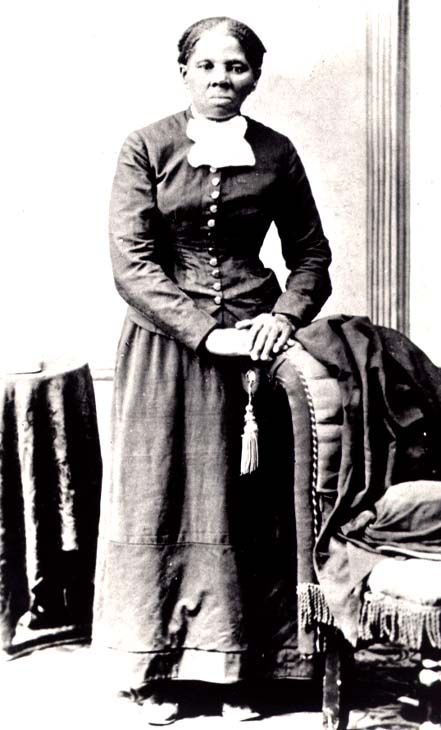
Medgar Evers was a true change agent in an archaic and dying world which hated it as well as him…Medgar also knew well that the enemy will sometimes use his own against him…When he died his wife, Myrlie, said she was resentful of many in Jackson's Black community who weren’t fond of his civil rights activities…Many Blacks saw him as a troublemaker and rebel rouser who put their jobs and way of life in trouble with the White Power structure…To quote the great Harriet Tubman, “If I could have convinced more slaves that they were slaves, I could have freed thousands more."

But then she recalled that Medgar reminded her to forgive them because he said,"When you hate, the only one that suffers is you because most of the people you hate don't know
it and the rest don't care."…He also reminded her that the war being waged will benefit the grateful as well as the ungrateful because that’s the nature of progress…All it takes is a committed few to create change for all…


American civil rights leader Martin Luther King, Jr., foreground, attended the 1963 funeral procession of Medgar Evers, a civil rights organizer murdered by the Ku Klux Klan. In the face of often violent opposition, King challenged his supporters to maintain a policy of peaceful resistance to injustice.

Medgar’s funeral was a state funeral for Black America…He was buried in Arlington National Cemetery with honor befitting a head of state and rightfully so…He was a brave moral soldier who fought and died in a righteous war…


“Our only hope is to control the vote.”“If we don't like what the Republicans do, we need to get in there and change it. . .”
---Medgar Evers

And 45 years later we now see that Medgar’s seeds has bore good fruit and blood wasn’t spilt in vain, but in an act of divine deliverance…In 1969, Evers’ brother , the colorful Charles Evers, became the first Black mayor in Mississippi history…Mississippi now has the highest number of elected Black officials than any state in the union…Also in a state 45 years ago that wouldn’t let Black folks register to vote let alone live to tell about it, a huge and record number Black voter turnout helped to secure the U.S. Presidential nomination of Barack Hussein Obama, the potential first African American President in history…


A Seedling In A Forest Of Giant Sequoias:
The Great Myrlie Evers-Williams (Widow Of The Great Medgar Evers) And Legendary Businessman & Founder Of Black Enterprise Magazine Earl Graves Are Fans Of The Art Of R2C2H2 Tha Artivist

This past April in Memphis, Ms. Myrlie Evers-Williams was in town observing the 40th Anniversary passing of one of her husband’s friends, MLK, as well to receive an award from Al Sharpton’s National Action Network for her own amazing work in civil rights and to honor the legacy of her husband…

Yours truly got a chance to personally thank her for the sacrifices made by her husband, herself and the rest of her family…It was a highlight of my life to meet this beautiful, gracious and humble woman…I gave her an art print of mine entitled “The Sharecropper And His Children”…She was very receptive and enjoyed the gift very much…

I told her the pic reminded me of her husband because he did the work of the social sharecropper…He tilled the land for others so that they may reap the benefits of a bountiful harvest…He allowed me and so many others advantages we wouldn’t have had…Her eyes lit up with appreciation and she thanked me once again…

Medgar the father of three, became the father of us all when he made his ultimate sacrifice…

So let us remember the sacrifices made and the prices paid by all in the struggle…

Let us honor the memory and legacy of our ancestors and freedom fighters by exercising our right to vote…

If you think your vote never counted, then you must think that Medgar never mattered…

For more about Medgar Evers check out the following links:
http://en.wikipedia.org/wiki/Medgar_Evers


W.E. A.L.L. B.E. News & Radio Special~Eyewitness To The Crucifixion: The Last Days Of MLK:

It Was All A Dream: Tigers' Connection To 68...

W.E. A.L.L. B.E. News & Radio Special: February 18, 2007~"We Shall Overcome"-The Henry Hampton Collection (Creator of the Award Winning Eyes On The Prize Documentary) :

Wednesday, June 11, 2008

Organizing for Freedom...In The Spirit Of George Jackson...


Prisoner-led Resistance At Angola State Prison
By Jordan Flaherty
www.leftturn.org
June 10, 2008

At the heart of Louisiana's prison system sits the Louisiana State Prison at Angola, a former slave plantation where little has changed in the last several hundred years. Angola has been made notorious from books and films such as Dead Man Walking and The Farm: Life at Angola, as well as its legendary bi-annual prison rodeo and The Angolite, a prisoner-written magazine published within its walls. Visitors are often overwhelmed by its size – 18,000 acres that include a golf course (for use by prison staff and some guests), a radio station, and a massive farming operation that ranges from staples like soybeans and wheat to traditional Southern plantation crops like cotton.

Recent congressional attention and legal developments have again brought Angola into the media limelight. The focus this time is on the prison's practice of keeping some inmates in solitary confinement for decades, especially two of Angola's most well-known residents – Herman Wallace and Albert Woodfox. Woodfox and Wallace are the remaining members of the Angola Three, political activists widely seen as having been interned in solitary confinement as punishment for their political activism.

Modern Plantation

Norris Henderson, co-director of Safe Streets/Strong Communities, a grassroots criminal justice organization in New Orleans, spent twenty years at Angola – a relatively short time in a prison where 85 percent of its 5,100 prisoners are expected to die behind its walls. "Six hundred folks been there over 25 years," he explains. "Lots of these guys been there over 35 years. Think about that: a population that's been there since the 1970s. Once you're in this place, it's almost like you ain't going nowhere, that barring some miracle, you're going to die there."

Prisoners at Angola still do the same work that enslaved Africans did there when it was a slave plantation. "Angola is a plantation," Henderson explains. "Eighteen-thousand acres of choice farmland. Even to this day, you could have machinery that can do all that work, but you still have prisoners doing it instead." Not only do prisoners at Angola toil at the same work as enslaved Africans hundreds of years ago, but many of the white guards come from families that have lived on the grounds since the plantation days.

Nathaniel Anderson, a current inmate at Angola who has served nearly thirty years of a lifetime sentence, agrees. "People on the outside should know that Angola is still a plantation with every type and kind of slave conceivable," he says.

Prison Organizing

In 1971, the Black Panther Party was seen as a threat to this country's power structure – not only in the inner cities, but even in the prisons. At Orleans Parish Prison, the New Orleans city jail, the entire jail population refused to cooperate for one day in solidarity with New Orleans Panthers who were on trial. "I was in the jail at the time of their trial," Henderson tells me. "The power that came from those guys in the jail, the camaraderie…Word went out through the jail, because no one thought the Panthers were going to get a fair trial. We decided to do something. We said, 'The least we can do is to say the day they are going to court, no one is going to court.'"

The action was successful, and inspired prisoners to do more. "People saw what happened and said, 'We shut down the whole system that day,'" he remembers. "That taught the guys that if we stick together we can accomplish a whole lot of things."

Herman Wallace and Albert Woodfox were inmates who had recently become members of the Black Panther Party, and as activists, they were seen as threats to the established order of the prison. They were organizing among the other prisoners, conducting political education, and mobilizing for civil disobedience to improve conditions.

Robert King Wilkerson, like many inmates, joined the Black Panther Party while already imprisoned at Orleans Parish Prison. He was transferred to Angola, and immediately placed in solitary confinement (known at Angola as Closed Cell Restriction or CCR) – confined alone in his cell with no human contact for 23 hours a day. He later found out he had been transferred to solitary because he was accused of an attack he could not have committed – it had happened at Angola before he had been moved there.

In March of 1972, not long after they began organizing for reform from within Angola, Wallace and Woodfox were accused of killing a correctional officer. They were also moved to solitary, where they remained for nearly 36 years, until March of this year, when they were moved out four days after a congressional delegation led by Congressman John Conyers arranged a visit to the prison. Legal experts have said this is the longest time anyone in the US has spent in solitary. Amnesty International recently declared, "the prisoners' prolonged isolation breached international treaties which the US has ratified, including the International Covenant on Civil and Political Rights and the Convention against Torture."

Wilkerson, Wallace, and Woodfox became known internationally as the Angola Three – Black Panthers held in solitary confinement because of their political activism. Wilkerson remained in solitary for nearly 29 years, until he was exonerated and released from prison in 2001. Since his release, Wilkerson has been a tireless advocate for his friends still incarcerated. "I'm free of Angola," he often says, "but Angola will never be free of me."

This history of struggle and resistance brings a special urgency to the case of the Angola Three. Kgalema Motlante, a leader of the African National Congress, said in 2003 that the case of the Angola Three "has the potential of laying bare, exposing the shortcomings, in the entire US system."

Purchasing Testimony

Wallace and Woodfox have the facts on their side. Bloody fingerprints at the scene of the crime do not match their prints. Witnesses against them have recanted, while witnesses with nothing to gain have testified that they were nowhere near the crime. There is evidence of prosecutorial misconduct, such as purchasing inmate testimony and not disclosing it to the defense. Even the widow of the slain guard has spoken out on their behalf. Most recently, their case has received attention from Representative Conyers, head of the House Judiciary Committee, and Cedric Richmond, chair of the Louisiana House Judiciary Committee, who has scheduled hearings on the issue to begin this summer. Earlier today, the magistrate in Woodfox's case recommended the reversal of his conviction.

But this is more than the story of innocent men struggling to prove their innocence. The story of the Panthers at Angola is both inspiring and shocking. It is a struggle for justice while in the hardest of situations.

"They swam against the current in Blood Alley," says Nathaniel Anderson, a current inmate at Angola who has been inspired by Wallace and Woodfox's legacy. "For men to actually have the audacity to organize for the protection of young brothers who were being victimized ruthlessly was an extreme act of rebellion."

Like many prisoners during that time, Norris Henderson was introduced to organizing by Black Panthers in prison, and later became a leader of prison activism during his time at Angola. The efforts of Wilkerson, Woodfox, Wallace, and other Panthers in prison were vital to bringing improvements in conditions, stopping sexual assault, and building alliances among different groups of prisoners. "They were part of the Panther Movement," Henderson tells me. "This was at the height of the Black power movement, we were understanding that we all got each other. In the night-time there would be open talk, guys in the jail talking, giving history lessons, discussing why we find ourselves in the situation we find ourselves. They started educating folks around how we could treat each other. The Nation of Islam was growing in the prison at the same time. You had these different folk bringing knowledge. You had folks who were hustlers that then were listening and learning. Everybody was coming into consciousness."

Insatiable Machine

The US has the largest incarcerated population in the world – twenty-five percent of the world's prisoners are here. If Louisiana, which has the largest percentage imprisoned of any US state, were a country, it would have by far the world's largest percentage of its population locked up, at one out of every 45 people. Nationwide, more than seven million people are in US jails, on probation, or on parole, and African Americans are incarcerated at nearly ten times the rate of whites. Our criminal justice system has become an insatiable machine – even when crime rates go down, the prison population keeps rising.

The efforts of the Angola Three and other politically conscious prisoners represented a fundamental challenge to this system. The organizing of Wallace, Woodfox, and Wilkerson, though cut short by their move to solitary, had an effect that continues to this day.

Prison activism, and outside support for activists behind bars, can be tremendously powerful, says Henderson. "In the early 1970s people started realizing we're all in this situation together. First, at Angola, we pushed for a reform to get a law library. That was one of the first conditions to change. Then, we got the library; guys became aware of what their rights were. We started to push to improve the quality of food, and to get better medical care. Once they started pushing the envelope, a whole bunch of things started to change. Angola was real violent then, you had inmate violence and rape. The people running the prison system benefit from people being ignorant. But we educated ourselves. Eventually, you had guys in prison proposing legislation."

This was a time of reforms and grassroots struggles happening in prisons across the US. Uprisings such as the Attica Rebellion were resulting in real change. Today, many of the gains from those victories have been overturned, and prisoners have even less recourse to change than ever before. "Another major difference," Henderson explains, is that "you had federal oversight over the prisons at that time, someone you could complain to, and say my rights are being violated. Today, we've lost that right."

Working for criminal justice is work that benefits us all, says Henderson. "Most folks in prison are going to come out of prison," he states. "We should invest in the quality of that person. We should start investing in the redemption of people."

After decades of efforts by their lawyers and by activists, Wallace and Woodfox have been released from solitary, and have won some legal victories, but the struggle continues. Wallace and Woodfox remain behind bars, punished for standing up against a system that has grown even larger and more deadly. And the abuse does not end there. "There are hundreds more guys who have been in [solitary] a long time too," Henderson adds. "This is like the first step in a thousand-mile journey."

---------------------------------------------------------------
Jordan Flaherty is an editor of Left Turn Magazine (www.leftturn.org), and a journalist based in New Orleans. Most recently, his writing can be seen in the anthology Red State Rebels, released this month by AK Press. He can be reached at
neworleans@leftturn.org.

A version of this article is featured in the Summer 2008 issue of Left Turn Magazine, and this week's issue of New York's Indypendent (www.indypendent.org).

Please support independent media! Subscribe to Left Turn Magazine. http://www.leftturn.org/donate.

Resources:

Free The Angola Three - http://www.angola3.org
Safe Streets Strong Communities - http://www.safestreetsnola.org
Families and Friends of Louisiana's Incarcerated Children - http://www.fflic.org
Juvenile Justice Project of Louisiana - http://www.jjpl.org
Letter From Angola State Prison, by Nathaniel Anderson, #130547 - http://www.leftturn.org/node/1155


This is a low-volume email list for Jordan Flaherty's articles and updates from New Orleans and the Gulf Coast. To subscribe, email jordanhurricane-subscribe@lists.riseup.net. To unsubscribe, email jordanhurricane-unsubscribe@lists.riseup.net.