Friday, July 25, 2008

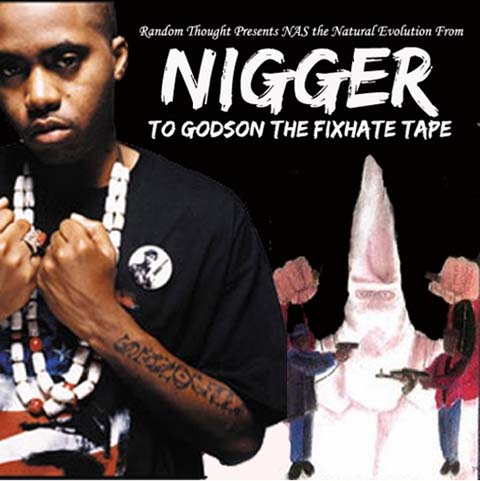
7-27-08~W.E. A.L.L. B.E. News & Radio Town Hall Special: N-Word Madness!!!

One Full Year On The Air!!!

July 2008's Theme Is "Nu Birth...Harvest Time"

Date: Sunday July 27, 2008

Special Time: 7PM C/8PM E/5PM P


Topic: N-Word MADNESS!!!
The Cover And Title Of Comic Great & Civil Rights Pioneer Dick Gregory's Autobiography, Originally Published In 1964...


A Poster From The (IN) Famous Coon Chicken Inn Restaurant Chain In U.S.A....This Restaurant Chain, (started in Salt Lake City, Utah) was Popular And Operated From The 1920s Until The 1950s Read More...

About The Show

What's Up With Rev. Jesse, Nas & Whoopi???
Why Can't White Folks Say It???
Is There A Difference Between N-Word With An "ER" Ending & N-Word With An "A" Ending???
Can We Bury or Abolish The N-Word???
Should We Bury Or Abolish The N-Word???
What Is The History Behind The N-Word???

A Controversial Topic You Won't See Discussed On A CNN Black In America Series Anytime Soon...W.E. A.L.L. B.E. News & Radio (At Great Risk) Is Sponsoring A True Town Hall Meeting Where Everyone (Black,White, Red, Yellow etc.,...) In The Community Will Have A Choice To Voice Their Opinion On The N-Word...People Who Will Be On The Show Include Elders And Youngsters, Scholars And Everyday People, Hip Hop Generation And Civil Rights Generation And So Forth...

Some Of The Featured Guests That Will Aid In The Discussion Are:

1.) Thug Life Army Records Artist & Hip Hop Phenom FAME
2.) Civil Rights Legend and Education Pioneer Dr. Gene Young
3.) Civil Rights Activist Bro. Marcus Jones, The Father of Jena 6's Mychal Bell
4.) Community Activist Extraordinaire & Street Positive Founder Bro. Terry Boykins
5.) Southern Hip Hop Sensation & Activist Kamikaze
6.) Sis. Tawanna Thierry Of Schlumberger 2
7.) YOU!!!
Feel Free To Call In With Your Opinions, Questions And/Or Comments @ 646-652-4593...Hit Us Up With A Question/Comment By E-mail, r2c2h2@gmail.com Or E-holla At Us In The Chatroom Live!!!

This Is Going To Be A W.E. A.L.L. B.E. News & Radio Instant Classic!!!

Some Definitions Of The N-Word
nigga

noun
(ethnic slur) extremely offensive name for a Black person; "only a Black can call another Black a nigga" [syn: nigger]

WordNet® 3.0, © 2006 by Princeton University.

Nigger

Nig"ger\, n. A negro; -- in vulgar derision or depreciation.
Webster's Revised Unabridged Dictionary, © 1996, 1998 MICRA, Inc.

nig·ger(nĭg'ər)
n. Offensive Slang

1.
1. Used as a disparaging term for a Black person: "You can only be destroyed by believing that you really are what the white world calls a nigger" (James Baldwin).

2. Used as a disparaging term for a member of any dark-skinned people.

2. Used as a disparaging term for a member of any socially, economically, or politically deprived group of people: "Gun owners are the new niggers . . . of society" (John Aquilino).

[Alteration of dialectal neger, black person, from French nègre, from Spanish negro; see Negro.]

The American Heritage® Dictionary of the English Language, Fourth Edition
Copyright © 2006 by Houghton Mifflin Company.
Published by Houghton Mifflin Company. All rights reserved.

nigger
1786, earlier neger (1568, Scot. and northern England dialect), from Fr. nègre, from Sp. negro (see Negro). From the earliest usage it was "the term that carries with it all the obloquy and contempt and rejection which whites have inflicted on blacks" [cited in Gowers, 1965]. But as black inferiority was at one time a near universal assumption in Eng.-speaking lands, the word in some cases could be used without insult. More sympathetic writers late 18c. and early 19c. seem to have used black (n.) and, after the American Civil War, colored person. Also applied by Eng. settlers to dark-skinned native peoples in India, Australia, Polynesia. The reclamation of the word as a neutral or positive term in black culture, often with a suggestion of "soul" or "style," is attested first in the Amer. South, later (1968) in the Northern, urban-based Black Power movement. Variant niggah, attested from 1925 (without the -h, from 1969), is found usually in situations where blacks use the word. Nigra (1944), on the other hand, reflects a pronunciation in certain circles of Negro, but meant to suggest nigger, and is thus deemed (according to a 1960 slang dictionary) "even more derog. than 'nigger.' " Slang phrase nigger in the woodpile attested by 1800; "A mode of accounting for the disappearance of fuel; an unsolved mystery" [R.H. Thornton, "American Glossary," 1912]. Nigger heaven, "the top gallery in a (segregated) theater" first attested 1878 in ref. to Troy, N.Y.

" 'You're a fool nigger, and the worst day's work Pa ever did was to buy you,' said Scarlett slowly. ... There, she thought, I've said 'nigger' and Mother wouldn't like that at all." [Margaret Mitchell, "Gone With the Wind," 1936]

Used in combinations (e.g. nigger-brown, nigger-head, nigger-toe) since 1840s for various dark brown or black hues or objects; euphemistic substitutions (e.g. Zulu) began to appear in these senses c.1917.

****
Get Involved

As Always You Can Catch Tha Artivist Presents…W.E. A.L.L. B.E. Radio Live Every Sunday By Clicking On The Following Link:
http://www.blogtalkradio.com/weallbe

Please Be Our Invited Guest By Calling Us Live @ 646-652-4593 Or E-mailing Us Your Questions And Comments @ r2c2h2@gmail.com


As Always Please Spread The Good News!!!

~~~~~~

W.E. A.L.L. B.E. News & Radio Reps Black History 365 Days A Year!!!
http://weallbe.blogspot.com/2008/02/we-all-be-news-radio-reps-black-history_29.html


~~~~~~

Celebrate Black History And Love All Day Every Day With Works By Tha Artivist:
http://weallbe.blogspot.com/2008/02/celebrate-black-history-and-love-all.html


~~~~~~


~~~~~~
Buy The Award Winning James Reese Europe: Jazz Lieutenant


*Named To The Smithsonian Institute's Jazz Books For Kids And Young Adults List*


Buy The Book @ Amazon.com

~~~~~~

$ Millions Of Dollars In Scholarships, Internships & Job Offers $
Please Visit


http://www.ctherd.blogspot.com/


~~~~~~

Check Out "The Empowerment Hour" Hosted By Bro. Kermit Eady Every Saturday @ 6 PM EST/ 5PM CST


http://www.blogtalkradio.com/EadyAssociates

~~~~~~

http://www.streetpositive.com

~~~~~~

Support Thug Life Army!!!

http://www.thuglifearmy.com

~~~~~~

Support Akeru Radio


Wednesday, July 23, 2008

Dr. Barbara Ann Teer, Black Theatre Icon, Now Home With The Ancestors (1937-2008)...

PRESS RELEASE

National Black Theatre, Inc. Institute of Action Arts
♦2031-33 National Black Theatre Way
♦Fifth Avenue & 125th Street
♦Harlem New York, NY 10035
♦ Ph.212 722-3800 Fax 212 .926-1571


DATE: July 21, 2008

Email: nbitca@aol.com

Contact: Pat Faison

Telephone: 212 .722.3800

Dr. Barbara Ann Teer’s Pioneering Vision Leaves A Cultural Legacy


(June 18, 1937-July 21, 2008)

Dr. Barbara Ann Teer, Founder and visionary of the National Black Theatre Inc, made her transition peacefully at home Monday, July 21, 2008. Dr. Teer was an icon in the healing art of Black Theatre. Leaving behind a lucrative show business career in 1967, she came to Harlem in 1968 and founded the National Black Theatre (NBT). This began a 40-year passion that changed the cultural landscape of the theatrical world. She created a new cultural art form by blending cultural appreciation, performing arts and community advocacy. In 1983, she expanded that vision with the purchase of a 64,000 sq ft building located at 125 Street & Fifth Avenue. There she created a thriving cultural and business complex housing the largest New Sacred Yoruba Art collection in the western hemisphere. Through a commitment to her vision and purpose, the National Black Theatre is a world-class institution that inspires cultural transformation, social change, human re-development, historic relevance, and futuristic innovation.


Throughout her life, she was always on the cutting edge as the world paced one step behind her trail blazing vision and provocative stage productions. As a former dancer, actress, producer, director, writer, cultural entrepreneur, and more recently officially an African Chieftain, she has won countless awards and received numerous Honorary Doctorate Degrees. However, what mattered most to her was spiritual, self-empowerment. She was known for providing a cultural incubator and training forum for artists in all walks of life. Her commitment through the National Black Theater was to offer an alternative learning environment where she attracted people from around the world whose work she impacted and showcased.


Dr. Barbara Ann Teer loved Harlem and took a stand for it against the odds. As much as she loved Harlem, she loved her birth home, East St. Louis, Illinois. Dr. Teer leaves in spirit and love two children: Sade and Michael Lythcott and a host of long-term staff, friends and family. Owens Funeral Home will host her transition in New York. She will be released in perpetuity when returned to her home town for her interment with her family who preceded her. In her own words: “The only thing you can take to the bank is love.” Love is the currency, the vibratory frequency that Dr. Teer’s spirit leaves for us to continue. She’s given the world her legacy as a treasure chest of authentic, unprecedented achievements that will stand forever as a tribute to her vision and tireless work. Now and forever more, her legacy and love will live on to impact generations to come.

For More Information: www.nationalblacktheatre.org

'Capitalist Blues' By The Poetician...

Capitalist Blues


Currency wails

Stocks descend

Uncertainty unfurls

Inflation ascends

Dollars subside

Investors confide

Markets stumble

Consumers grumble

And a sign simply reads

“Foreclosure”


copyright by Cris "Nathaniel" Gualberto a.k.a. The Poetician

E-mail: nathanielgualberto at yahoo dot com

Meeting Of The Minds: Tha Artivist & The Poetician @ Tha Artivist Presents...@ Legacy Cafe In St. Louis, Mo. (August 2006)

See Also "America" By The Poetician:
http://weallbe.blogspot.com/2008/05/america-by-poetician-cris-nathaniel.html

Check Out The Poetician's Debut On W.E. A.L.L. B.E. News & Radio:
http://www.blogtalkradio.com/weallbe/2008/06/22/Tha-Artivist-PresentsWE-A-LL-BE-News-Radio


A Blind Eye To Justice: Bro. Eady Seeks Meeting With Gov. Paterson To Restore BUFNY...


Eady Seeks Meeting With Gov. Paterson On BUFNY


By Jim Planck

[Editor’s Note: This is Part Three of three in a series on the demise of former local radio station WCKL-AM. The station was purchased by the Harlem-based Black United Fund of New York (BUFNY) in 2002, which was then, says BUFNY founder and Athens resident Kermit Eady, improperly taken over by then NYS Attorney General Eliot Spitzer during a self-promoting campaign against charitable organizations. Eady says the organization and all its assets, including WCKL, was then allowed to fall apart.]

Part Three — Seeking Answers

CATSKILL — Eady also said that throughout the entire matter, he never met Spitzer.

“I never met the man,” he said. “I’ve written him many letters, but I never got an answer.”

Eady also said that it was difficult to interest political figures in the matter. He said two meetings were held in 2004, but to no avail.

“(Governor) Paterson was the Minority Leader in the Senate then,” said Eady.

He said that as such, Paterson met with him and three others — former City College Professor James Smalls, psychiatrist and community activist Dr. James C. McIntosh, M.D., and National Action Network Attorney Michael Harding — to talk about BUFNY.

Eady said there was also a second meeting, which Vice President Larry Barton was then able to attend, but that neither resulted in any movement towards investigating the matter.

The next year, in June 2005, Eady sent a formal request for public hearings and an investigation into the BUFNY action to both Paterson, who was still Senate Minority Leader, and his counterpart on the other side of the aisle, Senate Majority Leader Joseph L. Bruno.

Eady said the requests were not acted upon.

Eady said that early last year, however, Democratic NYC Councilman Charles Barron got involved, and that Barron has been steadily seeking to bring a focus to the matter, including sending a letter in January 2007 to then Governor Eliot Spitzer.

“As you know,” wrote Barron, “in 2003, the Black United Fund was the largest charity in Harlem and was chaired by its founder Kermit Eady.”

“It was involved in 40 million dollars of development, operated 400 units of affordable housing, as well as a radio station, two ATM machines, and two technical centers with services similar to Kinko’s,” said Barron.

“Even in the wake of this success,” wrote Barron, “when you served as the New York State Attorney General, you dismantled the Black United Fund, claiming that you were appointing a new Board of Directors to ‘breathe new life into BUFNY and help shepherd its finances.’”

“As it stands today, however,” said Barron, “the landmark headquarters building of the Black United Fund that was on Adam Clayton Powell Boulevard is now a bar.”

Barron and Eady have since spearheaded a petition to “restore and reinstate” BUFNY, originally intending to deliver it to Spitzer, but will instead submit it to Paterson.

Additionally, Barron requested a meeting with Paterson two months ago, in April.

“As you well know,” wrote Barron, “former Governor Eliot Spitzer, as Attorney General, executed an unwarranted takeover and investigation of Black United Fund of New York, which was never officially terminated since November 2002, nor generated any charges.”

“These abuses have ultimately led to the complete destruction of the organization,” said Barron, “the tarnishing of the reputations of its leadership, and a great loss to the Black community.”

“Eliot Spitzer,” said Barron, “has never had to explain his discriminatory treatment and destruction of BUFNY.”

Barron also noted that back in January, he had requested meetings with both Spitzer and NYS Attorney General Andrew Cuomo “to discuss the destruction of BUFNY, its reinstatement, and its legal status.”

“However,” he added, “the meetings were never held, and, of course, Mr. Spitzer has now resigned.”

“With the above urgent matters in mind,” Barron said, “we are now requesting a meeting with you, as soon as possible, to discuss the BUFNY situation.”

“The black community,” wrote Barron, “by the signing of the petition, has made it very clear that this organization is still much needed and should be restored, and that there are many questions to be addressed.”

Shortly after, also in April, Eady also requested a meeting, in which he noted Spitzer’s investigation of BUFNY and its result.

“These unjust acts,” wrote Eady, “were without any valid reason or cause, and Mr. Spitzer, as (either) the Attorney General or Governor, has never bothered to communicate with the black community — or the community at large — any rationale for his discriminatory actions.”

“With the above truths in mind,” said Eady, “we request an urgent meeting with you to discuss the Black United Fund of New York’s just reinstatement, restoration, and due restitution.”

Among other voices calling for an examination into the BUFNY matter are NYS Assemblyman Karim Camara, who represents Brooklyn’s 43rd Assembly District, and who has informed Eady that he is drafting a letter to Attorney General Cuomo.

Also supporting Eady in the matter is the Reverend Al Sharpton, who Eady said has stated publicly at a National Action Network meeting this spring that he has spoken to the Governor regarding the re-establishment of the Black United Fund of New York, and that the Governor said he was willing to meet.

Eady said that by June 3, however, he had not yet heard back from the Governor’s Office, so he telephoned, “and I was assured by his secretary that he would get my message,” he said.

“The following day,” Eady said, “I did receive a call from the Governor’s aide David Johnson, who informed me that Paterson had asked him to tell me that as Governor, he could not do a thing about the BUFNY situation because BUFNY’s destruction took place under Spitzer’s watch.”

“He said I should take my concerns to Attorney General Cuomo,” Eady said.

Eady said Wednesday his feeling is that since the position of NYS Attorney General is, in essence, “the state’s lawyer,” Spitzer’s actions as such were “committed by the state.”

“Thus,” said Eady, “Governor Paterson has the power to bring justice where injustice was perpetrated.”

Eady said he still remains hopeful for a meeting with Paterson, in which he, Larry Barton, and Councilman Barron can discuss the issue.

He said he believes the organization should be put back together again, and that those who had their lives disrupted and suffered from its dismantling should be compensated.

“I want the reinstatement of the Black United Fund of New York,” said Eady, “and I want financial restitution for the hardship that I received.”

Eady said he also wants to see the former radio station brought forth again, noting its purpose remains valid.

“We wanted to teach black communities around the counties what we had learned how to do,” said Eady, “which is help themselves.”

“I wanted to teach Black communities around the counties how to practice self-help,” he said, “to teach them we need to stop begging.”

“We’re not anti-anybody,” Eady said, adding that the goal is just to empower the black community, create business and jobs, and employ people.

“We were saying (at BUFNY) we’re going to be a part of what America says we’re supposed to do — and with our own money,” said Eady.

“Even the welfare mom could let a dollar come out of her paycheck to build for her children,” he said.

Responses to inquiry on the BUFNY matter from the Office of New York State Attorney General Andrew Cuomo and the United Way of New York have not yet been received.

Eady currently runs Eady Associates, a business consulting firm specializing in economic development and technology services, and the EmPowerment Institute, an on-line talk radio show.

He has a B.S. in Sociology from Morgan State University and a Masters MSW from New York University in Social Work, with a specialty in Community Organization, of which, he noted, “They don’t give that anymore.”

He began his career in human services working for the City of New York as a case worker, later becoming a manager within the Human Resources administration. He also taught as an adjunct for about seven years at Medgar Evans College, part of CUNY system.

He then served as Director of Admissions and Recruitment for Norfolk State University Graduate School of Social Work for two years, following which he returned to New York City to start Black United Fund of New York.


Also View Part One and Part Two Of This Story On W.E. A.L.L. B.E....


Bro. Kermit Eady

Kermit Eady is president and CEO of Eady Associates/Empowerment Institute, founder and former CEO of Black United Fund of New York. You can contact him at 917-642-1878 and by email at: info@kermiteady.com. Listen to the Empowerment Hour Online University every Saturday at 6pm EST at www.blogtalkradio.com/eadyassociates. You may participate in the conversation by calling 646-716-7472.

Vindictive Spitzer Breaks Up BUFNY...A Political Witch Hunt...


Eady: Spitzer’s BUFNY Abandoned WCKL
By Jim Planck

CATSKILL — [Editor’s Note: This is Part Two of three in a series on the demise of former local radio station WCKL-AM. The station was purchased by the Harlem-based Black United Fund of New York (BUFNY)) in 2002, which was then, says BUFNY founder and Athens resident Kermit Eady, improperly taken over by then NYS Attorney General Eliot Spitzer during a self-promoting campaign against charitable organizations.]

Part Two — Spitzer’s Allegations

“The very beginning purpose of Black United Fund,” said Eady, “was economic development empowerment.”

He said that through working with the NYC Housing Preservation Dept., BUFNY was able to acquire a derelict property on Adam Clayton Boulevard, in Harlem, which was then rehabilitated into five commercial spaces and 41 residential units.

“They were low income, brand new apartments,” said Eady. “We also moved the Black United Fund office there, into one of the commercial locations.”

Eady said that from 1979, when the organization was founded, until late in 2002, BUFNY successfully maintained its operational mission and fiscal integrity, and was a highly respected player in assisting the lives of the black community.

Eady said all that changed, however, in the fall of that year, 2002, when he was contacted by the Office of then NYS Attorney General Eliot Spitzer regarding concerns about BUFNY’s fiscal operations.

The concern was later summarized in a May 2, 2003, press release from Spitzer’s office, which stated, “BUFNY’s initial mission was to provide financial assistance and support services to black community-based organizations.”

“In recent years,” it stated, “the charity has shifted its focus to housing and land development.”

“Its investments in real estate have caused it to fall behind in honoring its financial commitments to designated grantees (the employee payroll-selected charities) that are directly supported by payroll contributions from federal, state, municipal, city and corporate employees.”

Eady said Wednesday, however, that the real estate end of BUFNY’s assets was not the fiscal problem at all. He said it was the late annual disbursals from United Way of New York City.

Spitzer’s office also took issue with BUFNY’s document filings to the state.

“In addition,” the release states, “the charity was chronically delinquent in filing documents, required by law, with the Attorney General’s Office.”

Regarding those late filings, Eady said it was essentially just used as an excuse for the Attorney General’s Office to get involved.

“There’s no question we were late with those,” Eady said, “but that’s trivial,” adding that most organizations end up filing documents late on occasion.

He said the documents were forms that go annually to four destinations — the NYS Attorney General’s Office, the NYS Department of Charities, the involved not-for-profit agencies for which BUFNY was the payroll contribution conduit, and the Internal Revenue Service.

“Yes, mistakes were made, but no matter what, we had high integrity,” Eady said. “There was no rule book on how to build an organization like this.”

Eady said that ultimately, in March 2003, he had to sit for a formal deposition on the matter with a local representative of the Attorney General’s Office.

“The deposition was done in Mineola, Nassau County, by an attorney of the Attorney General’s Office, Juan Merchan,” said Eady.

Merchan was then Assistant Attorney General, Nassau County Region, and is currently a Judge with the Bronx County Family Court, appointed by NYC Mayor Michael Bloomberg in 2006.

“He negotiated the dissolution of the (BUFNY) board,” said Eady.

“He said if you don’t do it, we’ll close Black United Fund of New York right now, and you’ll never see it again,” Eady said.

“So I did it, in the interest of keeping the organization alive,” Eady said.

“The board members had to sign a letter,” said Eady, “that they were literally removing themselves.”

Eady said that besides himself, among those who also had to step down was BUFNY Vice President Larry Barton, and that Spitzer appointed an interim board to manage the organization.

The May 2003 press release quoted Spitzer, “Our goal here is to help BUFNY flourish.”

“The interim board — comprising talented individuals with proven records of service — will breathe new life into BUFNY,” said Spitzer, “and help shepherd its finances and programs.”

Eady said Wednesday that he believes nothing could have been further from what actually occurred as a result of that transition.

He said the first thing the new board did was to force him out three months later as president, a position that he had retained upon resigning as a member of the Board of Directors.

Eady said he had continued to serve as the CEO from May through August in 2003, when on the 29th of that month he was summarily terminated.

“I got a telephone call from their new attorney, telling me I had been fired,” said Eady, “and that I was not allowed to go back to the Black United Fund office anymore.”

“All of my clothes, all of my hundreds of plaques, they threw them in the dumpster,” Eady said. “That’s mean.”

Eady said that under BUFNY’s interim board and its subsequent regular board, the organization’s functionality ultimately fell apart and its assets apparently lost.

Regarding the main BUFNY building in Harlem — which was sold after Eady was no longer a part of the organization — Eady said he believes it was sold for $3.4 million, which he feels was far less than its value.

He said the development cost to rehabilitate the buildings had been $40 million, which did not, he said, reflect its greater asset cost.

“In today’s market,” said Eady, “it would cost $40 million no more (no longer).”

Eady said he has been unable to learn how the building was disposed of. He said the ground floor is now a bar.

“Black United Fund owned that building,” said Eady. “When did the sale occur? Who approved it?”

“Selling 41 units and 5 commercials for $3.4 million is peanuts,” he added.

Eady said he is also unable to learn the subsequent disposition and use of those funds.

Eady said BUFNY also owned a technical center at two locations: one in Harlem and one on Brooklyn.

“The one in Brooklyn,” said Eady, “I think the City took that back.”

“That was in an historic firehouse that was the headquarters for the Brooklyn Fire Department before Brooklyn became a part of New York City,” he said.

Eady said the new board members also failed to follow through on BUFNY’s 2002 acquisition of Catskill’s former AM radio station, WCKL.

“A $100,000 loan from Community Capital Bank, in Brooklyn, paid for it,” Eady said. “You buy with the contingency that you will be approved by the FCC (Federal Communications Commission, which oversees radio station licenses).”

“We submitted the application, and it was approved,” he said, noting that they then moved the equipment from its Greenport location to a rented building on Route 23 in Catskill, near the Route 385 intersection, and which was to be the broadcast studio.

“Exactly one week more and we would have gone on the air,” Eady said. “The only thing left to do was to put the dish up.”

Eady said, however, that the end came on a Friday, even as the anticipation of starting up the station was building.

“That (dish) was going up on Monday, and the coming Sunday we were to go onto the air,” said Eady.

He explained, however, that it was on that Friday that he received the phone call from BUFNY’s attorney, telling him he was fired.

Eady said he feels the station and its studio equipment was then essentially abandoned by BUFNY, noting that although the new studio was a rental, no one ever came to get the equipment.

“At the end of the first month,” said Eady, “he (the landlord) was looking for the next rent, but he didn’t get it.”

Eady said the landlord was more than fair, and tried to work with BUFNY on the matter.

“He left it (the station equipment) in there quite some time, maybe a year,” said Eady. “He tried to get them to pay, and they wouldn’t pay.”

Eady said the landlord ultimately had no alternative but to toss out the equipment.

“He kept it for a while, but then he had no choice,” Eady said. “He didn’t have a choice.”

Eady said that one of the main things that bothers him is that Spitzer’s investigation against the management of BUFNY was never formally closed, that the allegations were never clarified, and the matter was just allowed to remain open, with no closure.

Spitzer’s May 2003 press release did, in fact, confirm, that the investigation remained open, stating, “The AG’s investigation of the charity’s activities pre-dating the interim board is continuing with the cooperation of the new board.”

Eady said that, to his knowledge, that investigation was never formally shut down, nor was there a Certificate of Discontinuance issued disbanding BUFNY.

“If they did a discontinuance,” said Eady, “they kept it quite secret. It was never made public.”

“When Spitzer couldn’t find that anything went in my pocket, that’s when things got quiet,” Eady said, “because I’d have been on TV if he had found anything.”


Also View Part One and Part Three Of This Story On W.E. A.L.L. B.E....


Bro. Kermit Eady

Kermit Eady is president and CEO of Eady Associates/Empowerment Institute, founder and former CEO of Black United Fund of New York. You can contact him at 917-642-1878 and by email at: info@kermiteady.com. Listen to the Empowerment Hour Online University every Saturday at 6pm EST at www.blogtalkradio.com/eadyassociates. You may participate in the conversation by calling 646-716-7472.

United Way Of NY Tried To Undermine BUFNY In The Beginning...


Original 'Voice Of The Twin Counties' Fell Silent Six Years Ago

By Jim Planck As published in Hudson-Catskill Newspapers The Daily Mail/Register-Star July 20, 2008

CATSKILL — This is part one of three on the demise of the former local radio station WCKL.

Part One - Community Empowerment

There are likely very few people in the Catskill-Hudson area that do not remember the area‟s AM radio station WCKL, which went off the air only six short years ago.

However, there are probably even fewer people who know just what happened to it, and why it is no longer on the airwaves.

Athens resident Kermit Eady does, though, and the tale behind WCKL's demise, he says, is one that raises serious questions about the conduct of former Gov. Eliot Spitzer when he was serving as state attorney general.

Eady was the head of the now-defunct Black United Fund of New York (BUFNY), a Harlem-based, not-for-profit community development agency that purchased WCKL in 2002 with the intent of establishing it as a talk radio station serving Greene and Columbia counties.
Eady spearheaded that purchase.

Eady said, however, that in the months just before the station was to go on the air, Spitzer, as attorney general, created allegations against BUFNY, forced out its directors, replaced them with his own hand-picked people, and drove him and other key personnel out.
Eady said the purchase of the station was then allowed to languish by the new board, along with other, even larger, assets the organization owned, until everything — the assets and the unproven allegations — disappeared over the years.

Eady said this was during a period in time when he believes Spitzer was going after charitable organizations to make a name for himself, and that the BUFNY matter — unconcluded and without substantiation — was simply left in limbo once Spitzer had achieved his goal of adding it to his list of “so-called accomplishments.”

Eady said he still wants answers and still wants the radio station to be resurrected, and is hopeful that the political will to help him do so, which he said has been seriously lacking in the past, is there.

Eady noted that the story of the loss of WCKL is a long and convoluted one, and that the radio station was, in effect, collateral damage from what he said was Spitzer's “unwarranted and improper takeover of the Black United Fund of New York.”

Eady also said that when he founded the Black United Fund of New York in 1979 as a statewide not-for profit organization to empower the greater black community, he never imagined it would end the way it did.

He also stressed that until Spitzer's action against it in 2003, the organization was extremely successful and well respected.

Eady said that all changed after people like himself and BUFNY vice-president Larry A. Barton were forced out of office in 2003. He said the organization, including its assets, then essentially disappeared from the map.

“We started Black United Fund of New York in January 1979,” Eady said. “We had more than $100 million in assessed values when Spitzer drove us out.”

“The purpose of founding the organization,” he explained, “was to organize the human and financial resources of black and minority people, to help them participate in their growth, development and empowerment.”

Eady said that one of the first things he did with the organization — which drew attention to it — was to change the way government employees in counties throughout the state, including New York City, could direct their automatic charity deductions from payrolls.

“Our money came through the payroll deduction process from employees who designated it to the Black United Fund.” said Eady. “It was probably about $2.5 million a year.”

“I opened up (diversified) the payroll deduction market plan,” said Eady. “Prior to that, it (the option for a payroll charities deduction) was only through the United Way Drive.”

“It allowed municipal employees to say, "I don't want to give my money anymore through the United Way. I want to give my money through the Black United Fund,"” Eady said. “We forced them to change the name to State Employee Federated Appeal.”

He said the name essentially means that participating organizations can ask, or “appeal” to, municipal employees statewide for their charitable payroll deductions.

“They were then called fundraising campaigns,” he said. “It was called United Way Campaigns before that.”

Eady said the change was also effected through organizational efforts at large corporations, the first one being IBM.

“The first to open up was IBM in 1980,” he said. “We also did the same with New York State in the public sector, including the city and counties.”

“We did it through employee organizing, petitions within the company,” he said. “They would get a pledge card to designate how much and to what charity they wanted the money to go to.”
He said the pledge card would have a list of names of charitable groups that the employee could then check off.

“We listed about 20 organizations that people could designate to,” Eady said. “It was a term called federations, which means all of the organizations that you would list, that people could check off and make a donation to.”

“So we forced the municipalities to open up to campaign drives,” Eady said, “but they (the state government) said they had no time to run it. They said, „We want United Way to run it on everybody's behalf."”

“We objected,” Eady said, noting that objection included a meeting with the Commissioner of the state Office of General Services in about 1982.

“But,” he added, “we got overruled, so they allowed United Way to manage it (the overall pool of donations).”

Eady said he interpreted that as the state saying to him, “We're still going to give United Way direct financial access to the employees, but you (BUFNY) cannot have direct access to the employees.”

“So the state would send the money when it was collected to United Way of New York City,” said Eady, “and United Way of New York City was supposed to send it to us.”

“Now a fundraising drive takes place in the fall,” Eady said, “and the money starts coming out of your paycheck in January.”

“The state (OGS) then sent the money to United Ways all over the state, and each one had to send to Black United Fund of New York its share,” he said.

“But the United Way of NYC set an administration fee that they charged us,” said Eady, “which was not approved by the state.” He said the fee severely impacted BUFNY‟s ability to operate.
“United Way of New York City,” said Eady, “has taken from Black United Fund (during those times) up to 40 percent of their income for administration (of BUFNY incoming donations).”
Eady said there was also difficulty in the amount of time in took to receive those funds from United Way of NYC.

“In some cases they didn't give us the money for two years,” Eady said.
He said he believes United Way of NYC saw benefit from the use of those funds, and that the delays may have been intentional because United Way of NYC resented how BUFNY successfully re-directed a portion of the statewide annual gross charitable donations away from them.

“They made interest off our money,” Eady said, “and it was to squeeze us without any money, to put us out of business.”

Eady said that although the donations process was fairly straightforward, the delays in receiving the funds created organizational choices that needed to be made.

“If employees had selected Black United Fund (as the conduit) for their donations to go to a not-for-profit, say, called Save The Children,” said Eady, “our obligation was, of course, to give those dollars to Save The Children.”

“But,” he added, “since we didn't get — a lot of times — money for two years from United Way of NYC, we couldn't give it because we didn't have it.”

Eady said one way BUFNY sought to overcome that problem was to purchase and redevelop commercial and residential real estate in Harlem and Brooklyn, and that they were very successful at it.

Eady said that part of the dilemma in operating Black United Fund was to make sure there was sufficient operating capital, and explained that the funds from employee charitable donations should not be used for that purpose.

He said another way organizations like BUFNY could try to increase operating capital was to seek corporate matching funds for employee donations.

“Say employees at IBM give United Way $6 million a year,” said Eady, “then IBM matches that $6 million, and United Way could use those matching funds for administration, but not the contributions.”

He said, however, that effort was not always successful because any decision to do so was totally dependent on the will of the employing corporation, and that companies were not always supportive.

“IBM gave no matching money to Black United Fund of New York,” he said. “They would say that's their choice.”

“So I had to leverage the money we had for both programs and administration,” Eady said, adding that is how BUFNY got into purchasing and redeveloping properties.

Also View Part Two and Part Three Of This Story On W.E. A.L.L. B.E....


Bro. Kermit Eady

Kermit Eady is president and CEO of Eady Associates/Empowerment Institute, founder and former CEO of Black United Fund of New York. You can contact him at 917-642-1878 and by email at: info@kermiteady.com. Listen to the Empowerment Hour Online University every Saturday at 6pm EST at www.blogtalkradio.com/eadyassociates. You may participate in the conversation by calling 646-716-7472.

Thank You For Being A Friend: R.I.P. Sophia A.K.A. The Number One Golden Girl


Estelle Getty Of 'Golden Girls' Dies At 84

By BOB THOMAS, Associated Press

Estelle Getty, the diminutive actress who spent 40 years struggling for success before landing a role of a lifetime in 1985 as the sarcastic octogenarian Sophia on TV's "The Golden Girls," has died. She was 84.

Getty, who suffered from advanced dementia, died at about 5:30 a.m. Tuesday at her Hollywood Boulevard home, said her son, Carl Gettleman of Santa Monica.

"Estelle always wanted to be an actress, and she achieved that goal beyond her dreams," former "Golden Girls" co-star Rue McClanahan told The Associated Press. "Don't feel sad about her passing. She will always be with us in her crowning achievement, Sophia."

"The Golden Girls," featuring four female retirees sharing a house in Miami, grew out of NBC programming chief Brandon Tartikoff's belief that television was ignoring its older viewers.

Three of its stars had already appeared in previous series: Bea Arthur in "Maude," Betty White in "The Mary Tyler Moore Show" and McClanahan in "Mama's Family." The last character to be cast was Sophia Petrillo, the feisty 80-something mother of Arthur's character.

"Our mother-daughter relationship was one of the greatest comic duos ever, and I will miss her," Arthur said in a statement.

When she auditioned, Getty was appearing on stage in Hollywood as the carping Jewish mother in Harvey Fierstein's play "Torch Song Trilogy." In her early 60s, she flunked her "Golden Girls" test twice because it was believed she didn't look old enough to play 80.

"I could understand that," she told an interviewer a year after the show debuted. "I walk fast, I move fast, I talk fast."

She came prepared for the third audition, however, wearing dowdy clothes and telling an NBC makeup artist, "To you this is just a job. To me it's my entire career down the toilet unless you make me look 80." The artist did, Getty got the job and won two Emmys.

"The only comfort at this moment is that although Estelle has moved on, Sophia will always be with us," White said in an e-mail to The Associated Press.

"The Golden Girls" culminated a long struggle for success during which Getty worked low-paying office jobs to help support her family while she tried to make it as a stage actress.

"I knew I could be seduced by success in another field, so I'd say, 'Don't promote me, please,'" she recalled.

She also appeared in small parts in a handful of films and TV movies during that time, including "Tootsie," "Deadly Force" and "Victims for Victims: The Theresa Saldana Story."

After her success in "The Golden Girls," other roles came her way. She played Cher's mother in "Mask," Sylvester Stallone's in "Stop or My Mom Will Shoot" and Barry Manilow's in the TV film "Copacabana." Other credits included "Mannequin" and "Stuart Little" (as the voice of Grandma Estelle).

"The Golden Girls," which ran from 1985 to 1992, was an immediate hit, and Sophia, who began as a minor character, soon evolved into a major one.

Audiences particularly loved the verbal zingers Getty would hurl at the other three. When McClanahan's libidinous character Blanche once complained that her life was an open book, Sophia shot back, "Your life's an open blouse."

"I always told her she should be a standup comic. She was so funny in person," McClanahan recalled. "She would always say, 'Why couldn't we make these characters Jewish? Why am I Sicilian?'"

Getty had gained a knack for one-liners in her late teens when she did standup comedy at a Catskills hotel. Female comedians were rare in those days, however, and she bombed.

Undeterred, she continued to pursue a career in entertainment, and while her parents were encouraging, her father also insisted that she learn office skills so she would have something to fall back on.

Born Estelle Scher to Polish immigrants in New York, Getty fell in love with theater when she saw a vaudeville show at age 4.

She married New York businessman Arthur Gettleman (the source of her stage name) in 1947, and they had two sons, Carl and Barry. The marriage prevailed despite her long absences on the road and in "The Golden Girls."

Getty was evasive about her height, acknowledging only that she was "under 5 feet and under 100 pounds."

McClanahan said her nickname for Getty was "Slats."

"Because she was so short, itty-bitty," she said.

In addition to her son Carl, Getty is survived by son Barry Gettleman, of Miami; a brother, David Scher of London; and a sister, Rosilyn Howard of Las Vegas.

___

Associated Press Writers Robert Jablon and Solvej Schou contributed to this report.

Copyright © 2008 The Associated Press. All rights reserved.

For More On The Golden Girls:
http://en.wikipedia.org/wiki/The_Golden_Girls

Sunday, July 20, 2008

(7/20/2008) Soldier Boy Grip Comic & Commentary Of The Week...


(c) r2c2h2 tha artivist/Ronald Herd II from The Arthur 'Soldier Boy Grip' Taylor Chronicles

Be The Change You Seek…It Starts With People Power!!!

By R2C2H2 Tha Artivist


As Obama mania goes through its corporate media induced ebbs and flows, people of all stripes, concoctions and persuasions should take the time to look back to the 60s…Not in terms of over-romanticizing and over-mythologizing, but in terms of analyzing the actual gains that were made in progressive politics, grass roots organizing and issue based advocacy…


I think people have in many ways since the watershed and tragic year of 1968 undervalued the power of collective dissent and people power…In 1968 many idealistic, well meaning and in some cases naïve people thought ‘Messianic figures’ would be able to transform the bitter realities of their lives through rhetoric and protest demonstrations…That year saw two great potential ‘Candidates for Change’ cut down in a hail of sniper bullets compounded by a pathology of hate, ignorance and indifference…In 1968, U.S. cities were set ablaze, after years of built up frustrations, hypocrisy and disgust exploding like a home made molotov cocktail…Just like literary great Bro. James Baldwin prophesied ‘the fire next time’…


In the gross corporate media induced comatose state of our selective national memory and history, many believed then and still unfortunately continue to believe today that leaders make powerful people movements…But closer inspection of true history will show that people movements produce leaders and not the other way around…


MLK was reluctant in accepting his destiny, but it was the Black community of Montgomery that forced him into the limelight and the nation’s conscience…The people organized the first meeting at his church and the people helped form the Montgomery Improvement Association which spearheaded The Montgomery Bus Boycott and ignited the Modern Civil Rights Movement…So it was the people that gave the great MLK the platform and impetus to speak to the better angels of mankind…


In 1968, RFK, by then a seasoned politician marked and toughened by personal tragedy and frustrated by the sluggish bureaucratic process of beltway politics, was inspired by the utter poverty he saw while visiting the poor and dispossessed of the Mississippi Delta…He saw the plight of the migrant workers of California and visited the lost worlds of the ghettoes in cities throughout the U.S.…The people inspired him to make his run to his destiny in 1968…It was the plight of the forgotten working class poor, the sanitation workers of Memphis that forced MLK to delay his Poor People’s Campaign to prepare a trip to the site of his crucifixion, Memphis, TN in Spring 1968…In both cases it was the suffering of the least or have nots of society that inspired these men to take the personal and political risks that resulted in their ultimate sacrifices…


But History will tell also tell you that the have-nots or people at the bottom are usually at the vanguard of their own revolution and liberation and are not waiting for marching orders from the people at the top of the hill or “The Chosen One”…


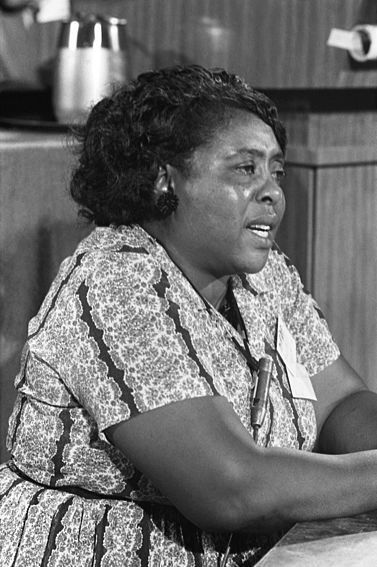
Take the Mississippi Freedom Democratic Party…Many of the key leaders and personalities were folks that came from what some or many would call destitute and impoverished backgrounds…These were the people a.k.a. “the forgotten ones” many pols always talk about not “leaving behind”, people at the bottom rung of the societal ladder in terms of race and class...And yet these same people had the political and spiritual courage to transform the Magnolia State into a flower with a less bitter and sweeter fragrance…


Fannie Lou Hamer


Fannie Lou Hamer, the spiritual leader of the MFD, did not know she could vote until she was 44 years old…She was born and lived on a plantation as a sharecropper all of life up to that point…When she got the will to exercise her right to vote, she was ‘disowned’ and kicked off the plantation that same day…Most people would have given up and went back to the comforts of their enslavement, but Fannie Lou immortally decried “I am sick and tired of being sick and tired” and instead chose a path of self determination and liberation…


With a coalition of poor working class Blacks, sympathetic White Mississippians, college educated Black and White liberal activists, Fannie Lou along with her comrades was able to re-write U.S. political history…In 1964 the year of the infamous Freedom Summer project that saw the martyrdom of three civil rights workers in Mississippi, the MFDP boldly held up the Democratic National Convention in Atlantic City by blocking the seating of the all-white Mississippi Delegation…


Many of the party’s elite including Pres. Lyndon B. Johnson a.k.a. “The Architect of The Great Society” were outraged at this act…However the MFDP insisted that they should be seated instead because they represented Mississippi’s true citizenry makeup…In the end the MFDP refused to compromise their integrity and principles for two token seats…However, they made their point to a national audience and was able to secure a major victory for the civil rights movement, their direct action securing the passage of the Voting Rights Act of 1965…


Although the MFDP was active for only 4 years time, their energy, optimism and hard work was able to change the face of Democratic Party politics in particular and U.S. politics in general…By the end of 1960s, Mississippi saw the election of its first Black mayor since Reconstruction, Charles Evers, the brother of the martyred civil rights leader Medgar Evers…Fast forward to the present, Mississippi has the highest number of elected Black officials than any state in the Union, a remarkable feat considering its bloody Jim Crow Apartheid past…


And mind these changes were not just implemented by fancy rhetoric and hollow promises of stump speeches, catchy campaign songs, subliminal truth loose commercial ads and NY Times editorials…These changes were literally manifested by the blood, sweat and tears of everyday people…People who shared the same fears and doubts about the unknown a.k.a. the future like we all have at some point…People who had flaws, but yet had the courage to master their fears and soldier on in favor of justice…People who cared enough to reach back to help their fellow humans while practicing the foresight and perseverance to plant seeds for future generations to reap the harvest…


All Power To The People Is The Key…Be That The Change That You Seek!!!


(R2C2H2 Tha Artivist is host and editor of Tha Artivist Presents…W.E. A.L.L. B.E. News & Radio http://www.blogtalkradio.com/weallbe & http://www.weallbe.blogspot.com... He is also the author of James Reese Europe: Jazz Lieutenant http://www.jazzlieutenant.blogspot.com…He can be reached by e-mail r2c2h2@gmail.com)


For More On The Adventures Of Arthur 'Soldier Boy Grip' Taylor Please Visit http://www.soldierboygrip.blogspot.com/


Buy Soldier Boy Grip Gear Now @ http://www.cafepress.com/r2c2h2

Friday, July 18, 2008

An Open Letter To Rev. Jesse Jackson Sr....


By Najee Ali

*Rev Jackson, your vulgar tirade caught on tape by Fox News where you said you wanted to cut Barack Obama's nuts off and accusing him of talking down to Black folks by giving moral lectures at churches is the last straw for me and a growing number of African Americans who are outraged at your comments.

There are many Blacks across the nation, myself included, who are appreciative for the work and contributions you have made in your civil rights career. But at this point, you're hurting Black America and Obama.

In September 2007 it was clear that you were frustrated by Obama, when you stated in an interview in South Carolina that Obama needs to stop acting white, because you felt he was not engaged in the Jena 6 movement enough to your liking.

Rev Jackson your continued verbal attacks on Obama are unwarranted it's as if you're jealous that Obama has eclipsed you and both your campaigns for the Democratic nomination by actually preparing to win it as the 2008 presumptive nominee.

For years you have been criticized as an ambulance chaser and opportunist. Many of Dr. King's insiders and aides say that King did not trust you. 40 years ago in Memphis as King lay dying from an assassin's bullet your first thought and action was to smear your shirt with Dr. King's blood.

You then proceeded to appear in Chicago the next day on several news programs wearing the same shirt you deliberately smeared with his blood as if you were the heir of King's movement. Obama's recent comments about Black fathers not abandoning their children and accepting moral responsibility in our lives is a lesson you apparently needed to learn when you were younger. If you had, it may not have caused you to cheat on your wife and father a child out of wedlock with a former staffer.

Maybe that's what really bothered you about Obama's message to the church that Black fathers should be responsible for their children; you certainly haven't been.

Living in Los Angeles I have watched your ten year old daughter Ashley Laverne Jackson grow up. Over the years I have had the pleasure to spend several holidays with your daughter including Christmas, her birthday parties and other milestones in her life. I will never turn my back on Ashley her mom and their family. It's about providing friendship, support and love to them while you have been missing in action.

Your daughter has never traveled or taken a trip with you, you have an annual birthday party in Beverly Hills every year where your entire family is welcome but your youngest child has only attended it once. She has had very little contact with her siblings and has never even met her big brother Congressman Jesse Jackson Jr, who apparently doesn't want anything to do with her. And allegedly (I believe it to be true ), he was the one to leak the scandal to the media concerning your affair. Now don't get me wrong, Obama is not above reproach. He is a politician and is fair game to be fairly criticized by you or anyone else. But to personally attack Obama is crossing the line. Obama is not talking down to Black people; he wants you and other dead beat dads to spend time and care for your children properly. The destruction of the Black family and absentee fathers is a major problem in our community.

It's a problem that King spoke out and fought against. 40 years after King's murder I can see why King didn't trust you. If you can't and won't sincerely help Obama in this historic run then at least stop attacking him. Listen to Obama's message of being a responsible father and start taking care of your daughter Ashley.


Najee Ali
www.islamichope.org

See Also...