Monday, September 20, 2010

W.E. A.L.L. B.E. Radio Special: Weds. 9/22/2010 @ 9pm c/ 10pm e**Concerning Our Father, Brother & Friend, Mr. Ernest Withers: The Civil Rights Generation Speaks Out! Part 1

 Celebrating 3 Years Strong & Still Got It Going On
***Radio Free Dixie For The 21st Century***

September 2010 Theme: Now's The Time...Make It Happen...

Air Date: Weds. September 22, 2010


Time: 9 PM C/10 PM E/7 PM P

Call-in Number: 646-652-4593

Show:


topic: "Concerning Our Father, Brother & Friend, Ernest Withers: The Civil Rights Generation Speaks Out!"Part 1


Featured & Honorable Guests:

1.) Andrew "Rome" Withers~Photographer, activist and the son of Ernest Withers.

***

2.) Min. Suhkara Yahweh a.k.a. Bro. Lance "Sweet Willie Wine" Watson


Prime Minister of the Memphis Invaders, a Black Panther-styled militant group based in Memphis. Was considered 'the most dangerous man in Memphis' during the late 1960s. Affectionately called Withers "my daddy." Unknown to Watson, Withers routinely reported on him. Reports indicate Withers told FBI agents Watson was a thief and a conman and planned an armed takeover of the LeMoyne-Owen College campus. Interviewed this year, Watson had no clue. "If he was (an informant) I don't know anything about it ... He would call me his son. (bio sketch courtesy of the Commercial Appeal)


Was He Or Wasn't He?
Decide For Yourself... 


Sanitation workers' strike. Memphis, Tenn. March 28, 1968 / Ernest Withers, Panopticon Gallery, Boston, Mass.


“The media's the most powerful entity on earth. They have the power to make the innocent guilty and to make the guilty innocent, and that's power. Because they control the minds of the masses."
~Malcolm X


"The people must know before they can act, and there is no educator to compare with the press." ~Ida B. Wells-Barnett

"Human salvation lies in the hands of the creatively maladjusted."~Dr. Martin Luther King

Ernest Withers was once called The Dean Of Civil Rights Photographers for his amazing ability to be on the scene to turn extraordinary history-in-the-making-events with his camera into acclaimed iconic moments for posterity. Whether it was photographing the Emmett Till Trial, Dr. King's first ride on a Montgomery City Bus after a successful 381 day bus boycott, The Memphis Sanitation Workers' Strike complete with the very universal I AM A Man protest placards or the tragic death scene of a King for all of humanity (MLK), Mr. Withers' artistry spoke truth to power to both the good and the bad of the human condition and his work is forever seared (and defiantly so) into the consciousnesses of the National Memory.

However, with the revelation of him allegedly being involved with the FBI as an informant, his character, motives and intentions have now all been called into question. A person once so trusted and revered that he  was given intimate and unrestricted access to some of the most dynamic personalities and icons of  a people's movement  is now being labeled as a traitor and Judas. With the scheduled opening of the Ernest C. Withers Museum, his former studio, on legendary Beale Street next month, and the Withers Family waging a legal battle for control over their late father's intellectual property, will this accusation forever tar and feather an otherwise deserving and invaluable aesthetic legacy of providing emotionally riveting teaching moments in images from such a turbulent and yet hopeful time in U.S. history?  

One must also question the timing of this revelation: 
*Who is served by amplifying the shortcomings, both real and perceived, of Ernest Withers the man? 
*Who will control the narrative of a People's movement once control over Withers' invaluable contribution to a People's history is settled in the courts? 
*What is to be gained and what is to be lost?  
*What role has the U.S. Government played in undermining the civil liberties and human rights of its citizens? 
*What really was the nature and quality of the information given to the FBI by Bro. Withers? 
*Was Bro. Withers' participation consensual or forced through the FBI's abuse of power? 
*Did Bro. Withers' supposed information sharing truly undermine the nature and purpose of a People's Movement?  
*Did people needlessly get killed  or sent to prison because of his alleged collaboration?
*In terms of being an alleged informant with an impressive professional legacy, how does Withers fare in comparison with other proven informants and exceptional peers from the Civil Rights Era such as Thurgood Marshall and Alex Haley? 


In a 4-part series, W.E. A.L.L. B.E. News attempts to provide food for thought analysis on the subject by talking with the folks who knew Mr. Withers the best: his family, civil rights movement veterans and journalists who covered the American Civil Rights Movement. We will also garner responses from this current generation of news media journalists. We will attempt to put both Mr. Withers the man and his work in their appropriate contexts, something the corporate news media has failed miserably at doing up to this point. What will be revealed will be very eye opening and will prompt the listeners and participants alike to face uncomfortable truths and questions that need to be answered with more than just nuanced responses and cliches from a clueless pundit.  It will also force many in the general public to rethink their previous positions on the matter as well.

In the words of Flavor Flav: Don't Believe The Hype! 

See Also... 

Tha Artivist Remembers Ernest Withers (1922-2007)...

The Commercial Appeal Story That Started The Controversy

Contact An American Civil Rights Veteran Today:


More Civil Rights Movement On W.E. A.L.L. B.E. :


Tha Artivist

 AMPLIFY W.E. A.L.L. B.E.!


***

W.E. A.L.L. B.E. Needs Your Support...Give To Grow The Movement!
http://weallbe.blogspot.com/2010/03/we-all-be-needs-your-supportgive-to.html


***
Want More???
Want To Hear More Tha Artivist Presents…W.E. A.L.L. B.E. Radio??? Click On The Following Link:

E-mail Us Your Questions And Comments @ r2c2h2@gmail.com

Follow W.E. A.L.L. B.E. On...
Twitter

http://twitter.com/weallbe

Facebook
http://www.facebook.com/r2c2h2


Myspace
http://www.myspace.com/r2c2h2


blogger facebook myspace twitter youtube
As Always Please Spread The Good News!!!

W.E. A.L.L. B.E. Needs Your Support...Give To Grow The Movement!
http://weallbe.blogspot.com/2010/03/we-all-be-needs-your-supportgive-to.html


See Also...


"Real Talk With Tha Artivist" TV Show On Memphis Comcast Channel 17


Mondays @ 8pm Central


***


~~~~~~

Buy The Award Winning James Reese Europe: Jazz Lieutenant


*Named To The Smithsonian Institute's Jazz Books For Kids And Young Adults List*


Official Website:


Buy The Book @ Amazon.com


~~~~~~

Planning & Preparing For College


$ Millions Of Dollars In Scholarships, Internships & Job Offers $ Please Visit
http://www.ctherd.blogspot.com/

***

Advertise With W.E. A.L.L. B.E.!!!
Affordable Rates...$Incredible Returns$

***For More Info & Quotes Please Contact Us:
e-mail: r2c2h2@gmail.com
phone: 901-299-4355

Address:
The W.E. A.L.L. B.E. Group, Inc.
P.O. Box 752062
Memphis, TN 38175***  

***Radio Free Dixie For The 21st Century***
 

Saturday, September 18, 2010

Scott Sisters Update From Mrs. Evelyn Rasco September 16, 2010

Dear Supporters: Mrs. Rasco has requested that I inform all supporters of the following: The September 16, 2010 rally was a great success. In addition, she has asked me to report that buckets, and buckets of money were collected at the rally and she hopes that the collections will be used to benefit Jamie and Gladys. Currently, we are waiting to determine what the decision of the Pardons and Parole board will be. We have learned from indirect sources that the meeting with Governor Barbour's representative has resulted in a pardon packet being passed to the Pardons and Parole board for a decision. I've included a few links of the most recent media attention. This is the most publicity that the sisters have received in 16 years.

MSNBC News- Mrs. Rasco and NAACP President Ben Jealous -


September 15, 2010 Rally

I would like to thank all supporters of this case. Without each individual person -- this case would not be where it is today. We cannot stop now -- please remain until the sisters are free. THANK YOU! Peace and Blessings! In Solidarity, Nancy Lockhart


***

Listen To The W.E. A.L.L. B.E. Radio Specials:

Still Strange Fruit: 'The Eyes Of Willie McGee' Author Alex Heard & Major Scott Sisters Update (2nd Hour)...
 
All Eyes Are Still On Mississippi: Free The Scott Sisters!!!
http://www.blogtalkradio.com/weallbe/2009/09/17/Tha-Artivist-PresentsWE-ALL-BE-News-Radio

Also On W.E. A.L.L. B.E. Radio...
***Check Out The Scott Sisters Update Featuring Sis. Nancy Lockhart 3/24/2010 (Starts In The 2nd Hour)***

More Scott Sisters On W.E. A.L.L. B.E.:

***
UNTIL THE SCOTT SISTERS ARE FREE NEITHER ARE WE!!!

U.S.A. Today: NAACP Backs Pardon For Miss. Sisters Serving Life


U.S.A. Today: NAACP Backs Pardon For Miss. Sisters Serving Life 
By Chris Joyner, USA TODAY 
JACKSON, Miss. — Evelyn Rasco, who has been pushing for her daughters, Jamie and Gladys Scott to be released from prison for 16 years, picked up two big supporters Tuesday — the attorney who prosecuted the case and the president of the NAACP.

Jamie, 38, and Gladys, 36, are serving life sentences in Mississippi for their role in a 1993 robbery that netted $11, despite having no prior criminal record. The three men also arrested in connection with the robbery pleaded guilty and have served their terms. Two of them testified against the sisters in return for lesser sentences.

The prosecutor, Ken Turner, who since retired, said Tuesday that while he believes they are guilty, some relief for the sisters' sentences is "appropriate."

NAACP President Benjamin Jealous, in Jackson on Tuesday, officially asked Republican Gov. Haley Barbour for a pardon.

"It is a travesty that in the state of Mississippi, the lives of two Black women are valued at little more than 11 
dollars," Jealous said in a statement. "From the outset, the measures in which the Scott Sisters were convicted were questionable and pattern themselves after dubious criminal justice trends in Mississippi and nationwide. We intend to pursue justice to the fullest extent for the Scott Sisters, and will continue our push for criminal justice reform throughout America."

Jackson City Councilman Chokwe Lumumba, a former attorney for the sisters, said he will meet with Lucien Smith, legal counsel for Gov. Haley Barbour, Wednesday morning. "I think we'll have a chance to get first-hand from the attorney what all the requirements are for filing a petition," he said. "He may be able to give us a feel for what the governor thinks."

Advocates for the Scott sisters, who have been ratcheting up calls to pardon them on blogs, podcasts, Facebook pages and YouTube videos, plan a rally Wednesday in Jackson to call on Barbour to order their release.

"I have picked up so many supporters," Rasco said. "I think by people reading this, it really touches their hearts."

The Scott sisters were accused of orchestrating the armed robbery of two men on a rural road near Forest, Miss., on Christmas Eve 1993. According to court documents, the sisters enticed the two men to take them on a ride to a nearby nightclub. Witnesses testified that during the ride Jamie Scott complained of nausea. When the car pulled over three men in a following car robbed them at gunpoint. After the robbery, the victims testified the sisters left with the three men. Both the victims and the accused are black.

Democrat Lumumba, one of the rally organizers, said the sentence they got was "unduly severe."
"In most jurisdictions, in cases like this they would not even ask to give them a life sentence," he said.

Pastor C.J. Rhodes of Mount Helm Baptist Church in Jackson said there are larger concerns at work.
"Here you have the trinity of race, class and gender playing itself out in our system," he said. Poor and black, Gladys and Jamie Scott did not have the resources to adequately defend themselves in court or to pursue the case through the appellate system, he said.

The sisters did not testify at their trial and no one testified on their behalf. They were represented at trial by Firnist Alexander, a local attorney disbarred two years later on charges unrelated to the Scott sisters. The Mississippi State Supreme Court rebuked Alexander for "lack of diligence" and failure to communicate with clients, according to court documents.

Many people drawn to their cause say that the verdict is beside the point.
"Even if the assumption is the jury made the right verdict, certainly (Barbour) has to see with us that the sentence was more than it should have been," Lumumba said. So far, advocates say they have heard no response from the governor.

So far, efforts to sway Barbour have had no success. Dan Turner, spokesman for Barbour, said the governor has pardoned state criminals in the past, but that he has been "very consistent in not substituting his judgment of guilt or innocence over the court."

Joyner reports for The Clarion-Ledger in Jackson, Miss.

***

Listen To The W.E. A.L.L. B.E. Radio Specials:

Still Strange Fruit: 'The Eyes Of Willie McGee' Author Alex Heard & Major Scott Sisters Update (2nd Hour)...
 
All Eyes Are Still On Mississippi: Free The Scott Sisters!!!
http://www.blogtalkradio.com/weallbe/2009/09/17/Tha-Artivist-PresentsWE-ALL-BE-News-Radio

Also On W.E. A.L.L. B.E. Radio...
***Check Out The Scott Sisters Update Featuring Sis. Nancy Lockhart 3/24/2010 (Starts In The 2nd Hour)***

More Scott Sisters On W.E. A.L.L. B.E.:

***
UNTIL THE SCOTT SISTERS ARE FREE NEITHER ARE WE!!!

Johnny's Death: The Untold Tragedy In Birmingham

Johnny's Death: The Untold Tragedy In Birmingham Listen To The Story Courtesy Of NPR: javascript:NPR.Player.openPlayer(129856740,%20129874322,%20null,%20NPR.Player.Action.PLAY_NOW,%20NPR.Player.Type.STORY,%20'0')

 September 15, 2010
Forty-seven years ago this week, on Sept. 15, 1963, a bomb exploded at the Sixteenth Street Baptist Church. The blast killed four little girls and became a tragic marker in civil rights history.

Racial violence broke out on the streets there that afternoon, leading to another, less well-known killing that day. For decades, the circumstances surrounding 16-year-old Johnny Robinson's death remained a mystery.
Johnny Robinson
Courtesy of Diane Robinson Samuels

Johnny Robinson, who was 16 when he was killed during the unrest following the infamous church bombing in Birmingham on Sept. 15, 1963.

The family didn't talk about what happened to Johnny just a few hours after the explosion at the Baptist church.

"Back in those days parents didn't discuss that," says Leon Robinson, 60, Johnny's brother. "They didn't set down and talk to us like we talking now. Kept everything inside, you know. So we just had to deal with it ourselves. That's what we did."

Johnny's sister, Diane Robinson Samuels, remembers arriving at the hospital late in the afternoon on that awful day.

"My mama was coming out the door, and she said, 'Your brother dead, your brother dead,' " Samuels, now 62, recalls. "I think it was about four, five cops was there. And she was just beating on them. With her fists, just beating, ''Y'all killed my son, y'all killed my son.' "

Her older brother Johnny was dead, shot in the back by a white police officer. Today, FBI files in the archives of a Birmingham library offer more detail about what happened that afternoon.

First, Slurs And Soda Bottles

Johnny was hanging around with a few other black teenagers near a gas station on 26th Street. It was a tense scene. White kids drove by, waving Confederate flags and tossing soda pop bottles out car windows. They exchanged racial slurs with Robinson and his group.

FBI agent Dana Gillis works on civil rights cases in the South. "There was a lot of back and forth that you might expect between individuals that were sympathetic to the death of the girls and their families as opposed to those individuals who had no feelings whatsoever for what was being done," Gillis says.
Witnesses told the FBI in 1963 that Johnny was with a group of boys who threw rocks at a car draped with a Confederate flag. The rocks missed their target and hit another vehicle instead. That's when a police car arrived.

Officer Jack Parker, a member of the all-white police force for almost a dozen years, was sitting in the back seat with a shotgun pointed out the window. The police car blocked the alley.

Gillis describes what happened next.
"The crowd was running away and Mr. Robinson had his back [turned] as he was running away," Gillis says. "And the shot hit him in the back."

Other police officers in the car offered differing explanations for the shooting.
One said it could have been an accident because the driver slammed on the brakes — jostling Parker, who mistakenly fired the gun. Another officer said the car might have hit a bump in the road.

But other witnesses with no ties to the police said they heard two shots and no advance warnings. Some news reports at the time concluded, mistakenly, that the kids had been tossing rocks at the police.

A local grand jury reviewed the evidence back in 1963 but declined to move forward with any criminal prosecution against the white police officer. A federal grand jury reached the same conclusion a year later, in 1964.

Doug Jones prosecuted two of the men responsible for the bombing when he was the U.S. attorney in Birmingham during the Clinton administration. Jones is white, and a lifelong resident of the area. He says he's not surprised the Johnny Robinson case went nowhere.

"Those cases involving the excessive force or discretion of a police officer are very, very difficult to make even in today's world much less in 1963 where you would most likely have an all-white, probably all-male jury who was going to side with that police officer by and large," Jones says.

No Attention Paid

The four little girls who died in the church basement attracted worldwide attention. The Rev. Martin Luther King Jr. delivered the eulogy at a joint funeral service for three of them.
But Johnny Robinson's death, six hours later, mostly went unrecognized.
Leon Robinson and Diane Robinson Samuels, siblings of Johhny Robinson.
Carrie Johnson/NPR Leon Robinson and Diane Robinson Samuels say that for years their family didn't talk about what happened to their brother Johnny the day he was killed.

The Justice Department and the White House asked about the Johnny Robinson case at the time.
But a Birmingham civil rights leader, the Rev. C. Herbert Oliver, called Washington to say the government wasn't protecting black children. Instead, Oliver said, law enforcement seemed to be more interested in shooting them.

Leon Robinson, Johnny’s little brother, might agree with that. "I was just so thankful I wasn't with him that day," Robinson says. "I probably would have wound up getting killed too."

He says the family never heard concern from anyone at the White House or even the Birmingham police. "No, no, no, no," he says. "That wasn't going to happen. Not here in Alabama. That ain't going to happen here."
Then a few years ago, the FBI reopened the investigation as part of its effort to figure out whether it could prosecute old civil rights cold cases from the 1960s.

It wasn't until the FBI's Gillis came to the family's neighborhood a few months ago that the Robinsons got a real picture of what happened to their 16-year-old brother.

Mixed Emotions
On a recent day, Samuels sat at her kitchen table in a tan brick house, touching a plastic bag filled with mementos — like her brother's funeral program and some autopsy photos from a book that show the fatal wound in his back.

"We didn't hear nothing else about what was going on, whatever; til that FBI came here, we didn't even know it was no cold case or nothing,"  Samuels said. "Then he came to our house and sit down to tell us what had happened. Me and my brother now. They didn't tell us while my mama was living; my mama died in 1991."
The family says Johnny was a good kid. But the Robinsons had troubles. Their father died in a fight with a neighborhood man a few years before Johnny's death. The younger kids went to live with an aunt.

In the years after Johnny's shooting, their mother didn't want to discuss it. She ended up in a psychiatric hospital for a while. Robinson said the family never really talked about what happened. In fact, he says, he and his sister went to school the next day.
At the Sixteenth Street Baptist Church in Birmingham, photos of the girls killed in the 1963 bombing
Mario Tama/Getty Images At the historic Sixteenth Street Baptist Church, photos of the four girls killed in the infamous Sept. 15, 1963 bombing.

That reluctance to talk about it is one reason Johnny's death didn't get much notice until recently. There are other reasons as well.

The police were plenty busy around that time. They were fighting, among other things, a proposal to integrate the force by bringing in black officers.

Jack Parker, the officer who shot Johnny, was head of a Fraternal Order of Police lodge. He signed an ad in the newspaper that fall arguing against integration of the police force.
Parker died in 1977.

The FBI and the Justice Department told the Robinsons they couldn't move forward with a possible case of excessive force or hate crimes against a dead man.

Johnny's previous brushes with the law also may have been a factor. They made his story just a little less shocking than the little girls' tragic end. Johnny had a juvenile record and had served time in detention. He'd been picked up by the Birmingham police in 1960, when he was 13 years old, on suspicion of burglary and grand larceny.

In the past few years, the Robinsons have started to get some local recognition. The city of Birmingham proclaimed Johnny Robinson a foot soldier in the civil rights movement.

Gillis of the FBI says he's sorry it took so long for the family to get information about their brother's death. "When you look at the history of that day and age, that was just the loss of a life," Gillis says. "And it may not have been a life that had value on the part of the institutions that were in place at that time."

Tom Perez, leader of the Justice Department’s civil rights unit, says that while telling the story of Johnny's death most likely won't bring a legal conclusion to the story, it may help bring another kind of resolution.
"People have died, memories have faded, evidence has disappeared or is no longer available," Perez said. "The measure of our success is ... our ability to uncover the the truth in all of these cases. And as a result of uncovering the truth, I think we are bringing closure and understanding to this dark chapter in our nation’s history."

But Samuels says she has mixed emotions about revisiting the past. She says her heart's still heavy. And she's had several heart attacks. But she also feels the death of someone like Johnny — a kid who may have had some problems but didn't deserve to die — belongs in the annals of civil rights history.

"They shouldn't have just focused on them little girls," she says of the attention paid to the bombing victims by those who mourned the violence of Sept. 15, 1963. "You know. The big wheels. I guess you had to be in the big league. But in my heart, me, I am a big wheel. And that was my brother."

NPR producer Evie Stone contributed to this report


More Civil Rights Movement On W.E. A.L.L. B.E. :
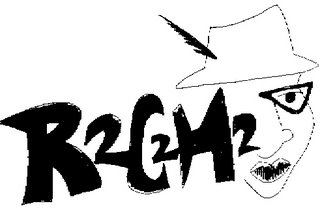
The Bolivar Commercial - Doctor Honored For Outstanding Service To Community, People

Doctor Honored For Outstanding Service To Community, People
 The Bolivar Commercial
9/8/2010
 
slideshow
Dr. Theodore Roosevelt Mason Howard was one of the leading figures in civil rights, health care, business and social issue of his time.

On Monday, Mound Bayou honored Howard by celebrating his role in providing and helping to expand access to high quality low cost health care for poor black people in the Mississippi Delta while also acknowledging his vision and leadership in the fight for civil rights with the renaming of a portion of Miss. Highway 161, formerly Miss. Highway 61, in honor of him.

“This is a great day for the city of Mound Bayou and a great day for a great man in Dr. T.R.M. Howard. Dr. Howard was a lot of things for this community and he did a lot to enhance the lives of the people not only in Mound Bayou but everywhere,” said the Rev. Darryl Johnson, during the breakfast reception held at Delta Health Center.

The event was the culmination of a resolution incorporating the request of citizens that a portion of Highway 161 be renamed in honor of Dr. T.R.M. Howard.

The resolution was properly approved by the mayor and board of aldermen of Mound Bayou and submitted to the state legislature.

Subsequently House Bill 598 designating that a segment of Highway 161 be renamed was shepherded through the legislature by District 29 Representative Linda F. Coleman of Mound Bayou.

Several people in attendance shared memories of Howard.

Elaine Baker said she was very happy to have known Howard and talked about him as a man who cared for and believed in people.

“He believed in the youth of Mound Bayou and he believed in the families of Mound Bayou. He was an inspiration to me. I remember when he left for Chicago I would get the Jet Magazine and it was a joy to see him in there because I knew he would be in there talking about some new adventure,” said Baker.

According to Dr. Linda Royster Beito, co-author of the recently published book, Black Maverick: T.R.M. Howard’s Fight for Civil Rights and Economic Power, “This event not only honored a man of intelligence, determination and perseverance but also the town of Mound Bayou and its tradition of self-help, health-care entrepreneurship and civil rights. Dr. Howard believed that Mound Bayou should take the lead in ‘all good movements to raise standards and make conditions better.’”

Howard came to Mound Bayou to serve as chief surgeon of Taborian Hospital which opened its doors Feb. 12, 1942.

Taborian was built by the International Order of Twelve, Knights and Daughters of Tabor, under the leadership of Sir P.M. Smith.

Operating from the organization’s headquarters in Mound Bayou, Sir P.M. Smith was acutely aware of the critical need, of poor black people in the Mississippi Delta for access to healthcare.

When Howard arrived as the first surgeon for the hospital, he immediately went to work not only in providing high quality healthcare but in helping to expand access to such care.

Howard was not intimidated by the difficulties and challenges that confronted him in providing quality healthcare to the multitudes of poor black people in the Mississippi Delta.

When faced with the need for aides, nurses and other healthcare professionals to work with him in providing quality healthcare, Howard undertook the job of providing their training.

He also opened his own private clinic and, in the early 1950s, organized the United Order of Friendship, which built Friendship Clinic and further expanded access to high quality, low cost healthcare, using the model pioneered by Sir P.M. Smith and his fraternal order.

With two hospitals, physicians and other healthcare professionals, Mound Bayou became a center for the provision of low-cost, high quality healthcare to poor black people in the Mississippi Delta.

Not only was Howard’s influence felt in the provision and expansion of low cost, high quality healthcare but in every aspect of life in Mound Bayou.

He owned and operated a large farm; a construction firm which built modern homes in the city and an insurance company in which he employed Medgar Evers, a future state field secretary for the NAACP.

Just four years after arriving in Mound Bayou, Howard built the Good Will Park which included a sand box for children, a miniature zoo, aquarium, botanical gardens, a swimming pool, tennis court and a restaurant.

Parties responsible for the celebration included: Dr. David and Dr. Linda Beito, Mound Bayou Civic Club, Historic Mound Bayou Foundation, American Literacy Association, city of Mound Bayou, Delta Health Center, Kemetic Institute of Mound Bayou, Mound Bayou Movement Inc., John Milton Wesley, Rep. Linda Coleman and Shade Turnipseed. 

***

MB Residents Prepare To Honor Prominent Doctor
by Candrese Jones
At 1 p.m. Monday, there will be a highway dedication in honor of one of Mound Bayou’s prominent doctors, Dr. Theodore Roosevelt Mason “T.R.M.” Howard.

The event will be held in the parking lot of the Kemetic Institute in Mound Bayou located at 900 Highway 161 or 205 Edwards Street. The purpose of the event is to celebrate Howard’s historic work, as a doctor and “maverick” in the fight for justice, civil rights and economic empowerment for economically disadvantaged people in Mississippi and across the nation.

“This all came about after the author of a the book about Dr. Howard came through for a book signing,” said Mayor Kennedy Johnson. “A group of people got together and created a petition that was sent to Jackson.”

A portion of Highway 161 will be renamed in honor of Dr. T.R.M. Howard through a resolution that has been properly approved by Mound Bayou’s mayor and board of aldermen. The resolution has been submitted to the state legislature.

House Bill 598 designates that a segment of Highway 161 be renamed through the legislature with the help of District 29 Rep. Linda F. Coleman of Mound Bayou.

“Dr. Howard was a very important person to Mound Bayou and the Delta’s civil rights movement,” said Johnson. “My mother and father both worked under him.”

According to Linda Royster Beito, co-author of Black Maverick: T.R.M. Howard's Fight for Civil Rights and Economic Power, “This event will not only honor a man of intelligence, determination and perseverance but also the town of Mound Bayou and its tradition of self-help, health-care, entrepreneurship and civil rights.”

“He was in need of this kind of recognition and honor for the work that he has done,” said Johnson. “He helped a lot of people in his time.”

Howard was an American civil rights leader, fraternal organization leader, entrepreneur and surgeon. He was one of the mentors to activists such as Medgar Evers, Charles Evers, Fannie Lou Hamer, Amzie Moore, Aaron Henry and Jessie Jackson.

He founded Mississippi's leading civil rights organization in the 1950s, the Regional Council of Negro Leadership and played a prominent role in the investigation of the kidnapping and murder of Emmett Till. He was also president of the National Medical Association and chairman of the board of the National Negro Business League.

The public is also invited to assemble at 11:45 a.m. for a parade down Old Hwy 61. The ribbon cutting ceremony will begin at 1 p.m. and festivities will conclude with a luncheon immediately following the ceremony in the Mound Bayou Facilities Building located at 301 Martin Luther King, Jr. Drive.

Also, a Mound Bayou resident will get the chance to win $1,000 during the ribbon cutting ceremony at 1:15 p.m.

Confirmed guests and presenters during the luncheon include Ed Dwight, monument developer; Charles Evers, former field secretary for the Mississippi State NAACP; Bill Luckett, Democratic candidate for governor; and Dr. Leslie Pollard, vice president Loma Linda University School of Medicine, T.R.M. Howard’s alma mater; Kennedy Johnson, mayor of Mound Bayou; and Rev. Darryl Johnson, T.R.M. Howard’s event coordinator.

SEE ALSO...
Tha Artstorian Reports:  Why Dr. T.R.M. Howard Should Be Remembered: The John The Baptist Of The Civil Rights Movement:
http://weallbe.blogspot.com/2010/09/tha-artstorian-reports-why-dr-trm.html

To Learn More About The Amazing Life Of Dr. Howard & Order The Book, Black Maverick: T.R.M. Howard’s Fight For Civil Rights & Economic Empowerment Please Visit The Official Website:
Please Use The Following Link To View More Pics From The Dr. T.R.M. Howard Memorial Highway Dedication Event (All Pics Are © Property O f The W.E. A.L.L. B.E. Group):

Watch The Documentary “Black Maverick: Dr. T.R.M. Howard: Forgotten Civil Rights Hero” On W.E. A.L.L. B.E. TV:  

http://blip.tv/file/3271863

W.E. A.L.L. B.E. Radio Special~Remembering The Black Maverick: Dr. T.R.M. Howard...
The Greatest Civil Rights Leader You Never Heard Of...
http://www.blogtalkradio.com/weallbe/2009/10/01/Tha-Artivist-PresentsWE-ALL-BE-News-Radio

More Dr. T.R.M. Howard On W.E. A.L.L. B.E.: 
http://weallbe.blogspot.com/search?q=DR.+T.R.M.+HOWARD

The Bolivar Commercial: Former Pro Reveals Success From Pain: Mound Bayou Native Kevin Henry Has Had His Share Of Success.

Former Pro Reveals Success From Pain:
Mound Bayou Native Kevin Henry Has Had His Share Of Success.
 
By Andy Collier
Henry was a standout football player for the John F. Kennedy Hornets in high school. From there, he went on to play college football at Mississippi State University and ended up playing football in the National Football League with the Pittsburgh Steelers from 1993-2000.

Henry has written a book titled Play Hard Play Hurt about his experiences in the NFL as well as his life experiences and up bringing.

The 41-year-old was on the defensive line and helped guide the Steelers to the Super Bowl in the 1995 season. He also battled through injury after injury as he suffered through approximately 120 injuries during his career.

Henry said the book is about how to get through the pressures of life.

“It talks about playing through adversity and pain that you deal with whether it be physical or mental,” Henry said. “I was being asked to play with those physical and mental pains and being asked to play at a high level. I want the youth to read this book so that they can get inspired to not give up when things get tough.”

One of the aspects of Henry’s life that has helped him through the years is his relationship with God. Growing up, Henry grew up in a family that firmly believed in God. Henry, whose parents are Bishop JoNathan Henry and Gloria Henry, said they made sure he knew God and followed down the right path in life.

“The book starts off talking about my early years and how I grew up in a family that was geared around Christ,” Henry said, “And how the typical Southern teenager around here would be out on a Saturday night going to skate parties or parties in general when my brother and I were forced to be in the church which kept us out of a lot of trouble kids typically get into.

“I didn’t see it back then, but I have a greater appreciation for how my mother and father raised me,” Henry said. “I didn’t get into a lot of trouble, and it allowed me to be able to use my upbringing later on in life. Now, I can raise my kids to be thankful and appreciative of whatever they get.”

Henry also had a good experience going to school and playing high school football at John F. Kennedy.

“I was very fortunate,” Henry said. “I had the good tutelage of the late, great Prentice James and also Leroy Henderson. Playing under those mentors really helped me out because they were more than just coaches. They were fathers away from home. A lot of my previous teammates didn’t have fathers so having a father figure on the field really helped us out. It was great leadership to play under.”

Another thing that Henry stresses in his book is the importance of a good education at a young age. Henry said having good grades is more important now than ever.

“I want the youth to realize how important academics is,” Henry said. “I could have easily given up and gone the other way, and it could have ruined my dreams. Having an academic foundation would really be a solid foundation. It can make life a whole lot easier at reaching your ultimate goal. If you’re trying to get to the NFL, you’re going to have to have a solid academic foundation. These days, NFL teams are requiring players to really know their stuff so they’re really going to have to let the academics and athletics go hand-in-hand.”

Henry said one experience he had with academics came in trying to get into college when he had a tough time with the ACT. Henry said his transition from high school to college was a tough one.

“My first year, I was what they called a proposition 48, and it was because I didn’t pass the ACT initially,” Henry said. “I had to take the ACT five times to pass it. When I finally passed it with a 21, my ACT score was challenged. The reason for that was they were wondering why did I take it the final time in Alabama. I had a really good explanation for it because I played in the Mississippi-Alabama All-Star game. I took the ACT that weekend.

“They asked me to take it again,” Henry continued. “On my last time which was the sixth time to take it, I had to come within three points of that 21. I didn’t make it, but I had taken the ACT six times, my God, I was tired of seeing it. But, it was good for me. It was a blessing in disguise. It gave me a time to really focus on my studies and get back into my academic realm that I needed to be in. I got bigger, faster, stronger in that one year. I grew up as a player in that one year.”

When his years at Mississippi State University were over, Henry got the call he had dreamed of which was a chance to play for the Pittsburgh Steelers. In their history, the Steelers have made seven Super Bowls and won six of them.

“I was like this is a great opportunity. I screamed at the top of my lungs,” Henry said. “I was running around the house jumping up and down and knocking stuff over. But until I got to the point to getting the call, I was getting a lot of false alarms which kind of made me mad because I didn’t want to tie up the phone line. When I finally got the call, I was filled with joy.”

Henry said playing in the NFL turned out to be a special time in his life.

“Reaching the NFL was a great experience because you’re there with some of the best players in the world,” Henry said. “Not only that, I had the opportunity to play for one of the greatest teams in history.”

One of Henry’s true loves is helping youth. During his career, he started the Kevin Henry Foundation to help youth all over the country. The foundation helps youth get a chance to meet and learn from NFL players. He has been working closely with his foundation ever since his playing days have come to a close.

Henry believes that getting youth to meet these players will help inspire them to succeed.

“I want kids to walk away from my foundation knowing that they can be exposed to players and people who they can see as regular human beings and not just superstars,” Henry said. “I didn’t have that when I was growing up. I think the first time I even met a pro football player, I was in my senior year in college. I felt like if I had the opportunity to meet somebody of that stature, it would have been more of an inspiration and a motivation for me to be even better as a player.”

Henry said his main goal is to continue to strengthen his relationship with God and to help youth especially in the Delta by having a camp that give kids the chance to meet and learn from NFL players.

Tha Artstorian Reports: Why Dr. T.R.M. Howard Should Be Remembered: The John The Baptist Of The Civil Rights Movement.


Tha Artstorian Reports: Why Dr. T.R.M. Howard Should Be Remembered: The John The Baptist Of The Civil Rights Movement.
By R2C2H2 Tha Artivist

“One look told you that he was a leader: kind, affluent, and intelligent, that rare Negro in Mississippi who had somehow beaten the system.”  ~Myrlie Evers

“The man was dynamic...I just thought he was the greatest in the world.” ~Mamie Till Mobley (The mother of Emmett Till)

 
Dr. Theodore Roosevelt Mason Howard (March 4, 1908 – May 1, 1976) could arguably be considered the John Baptist of the Civil Rights Movement because through his unorthodox methods and brave dedication, he initiated and forecast the things to come in the U.S. social revolution of the 1950s and 1960s…

He and other forward thinking Black Mississippians started the Regional Council of Negro Leadership (RCNL) when they were ironically denied membership in the Mississippi (White) Citizens Council. Although Dr. Howard was an advocate for Black businesses and Black self-help, he also was at heart an integrationist.  During the 1950s and 1960s the RCNL would have annual meetings in the vicinity of Friendship Clinic that would at its peak draw upwards of 10,000 Blacks from around the Mississippi Delta. The issues that were discussed included Black economics and voting rights. The event also included great soul food and barbeque, marquee entertainment which sometimes included the otherworldly talents of Gospel singer Mahalia Jackson and accomplished keynote speakers of both national and international renown such as U.S. Rep. Adam Clayton Powell and Thurgood Marshall. 


It was at these events that famed legendary Civil Rights Activist Fannie Lou Hamer of Ruleville, Ms, got her first taste of civil rights organizing.

Dr. Howard was also instrumental in getting the legendary Evers Brothers involved in the civil rights movement. He gave Medgar Evers his first job out of college (Alcorn State) as an insurance sales agent for his Magnolia Mutual Life Insurance Co. where he also employed Medgar’s wife, Myrlie Evers, as a secretary.  It was through this job that Medgar was able to interact with the public on issues that related to the movement. Medgar was also the program director for Dr. Howard’s RCNL. This opportunity eventually led to him being named the NAACP Field Secretary of Mississippi.  The colorful Charles Evers who eventually became the NAACP Ms Field Secretary after his brother’s murder and the first elected Black mayor in the South since Reconstruction has spoken throughout the years very favorably of Dr. Howard’s influence on him as an activist, man and entrepreneur.
Although the Emmett Till story is very well known today, it was the crusading efforts of Dr. T.R.M. Howard that kept it from being lost to historical obscurity. He got the National Black press into covering the story and even hired his own private investigators to look into the matter and find witnesses. 


He also caught the ire of J. Edgar Hoover’s FBI when he very publicly ridiculed them in their apparent aloofness and lackadaisical efforts in trying to solve the horrific hate crime.  

Dr. Howard also went on a national public speaking tour to raise awareness about the Emmett Till tragedy. One day in the fall of 1955 he spoke at Dexter Avenue Baptist Church in Montgomery, Alabama. The minister that presided over the church was a young man from Atlanta, Ga, named Martin Luther King, Jr. (at that time he was still working on his doctorate). Dr. Howard spoke to an overflowing capacity crowd who were very eager to hear the story about Emmett Till and the grim situation in Mississippi overall…Dr. Howard was a very gifted and electrifying orator, the audience was mesmerized by his every word…Some were even motivated to do something about the plight of Black folks in the U.S.A. One of those in the crowd inspired was Mrs. Rosa Parks, the local NAACP secretary. A few days later she refused to move from her bus seat which led to the Montgomery Bus Boycott which of course arguably led to the birth of the Modern Civil Rights Movement.   All of this came about through the singular and selfless efforts of Dr. T.R.M. Howard.

Dr. Howard was very effective at heading economic boycotts in the Mississippi Delta too. A few years before the Montgomery Bus Boycott, Dr. Howard and the RCNL led a very effective don’t buy gas where you can’t use the restroom campaign. It was so effective that the White Citizens Council put a very harsh credit freeze on members of the RCNL, many of whom were proud independent business owners and farmers.   To counteract this economic blockade, the RCNL & NAACP formed a relationship with the Memphis Tri-State Bank to make credit available for the activists.


Dr. Howard was also very ahead of time concerning affordable and quality universal healthcare. Being just as gifted with his hands as he was with his mouth, Dr. Howard made necessary surgery very affordable for poor citizens in the Mississippi Delta.  A man who was very intuitive with his times and beyond and one not afraid to confront adversity, he also performed abortions for both poor Blacks and the wealthy white elite alike at a time when it was very illegal to do so which in turn could have led to the suspension of his medical license, a hefty fine and considerable jail time. Abortion of course is an issue that was very controversial then as it is now.
Due to increasing death threats that affected his ability to effectively run both his businesses and civil rights activities, Dr. Howard and his wife Helen (a beautiful Black California Socialite whose brother, Ed Boyd, was the first Black Advertising Executive at Pepsi) left the Delta and moved to Chicago.  There his Midas touch continued, opening a thriving multi-million dollar Friendship Medical Center on the Southside, at the time the largest privately owned hospital for Blacks in Chicago. As a proud Republican, He unsuccessfully ran for office against formidable Democrat incumbent U.S. Rep. William Dawson.

However, over time he became a powerful mentor, supporter and kingmaker to some of the most successful Black Chicago politicians of the latter half of the 20th Century. Among his political progeny one can count the ambitious Harold Washington, the first Black mayor of Chicago. It was Washington historic campaign and eventual election as mayor that inspired a young community organizer by the name of Barack Hussein Obama to start his own political career. 


Dr. Howard was also one of the first people to raise money for Malcolm X’s widow and family.
Before there was a P. Diddy, Dr. Howard’s New Year Eve party was the much attend event of the Black Society calendar year.  Dr. Howard also co-founded and funded Rev. Jesse Jackson’s Push-Rainbow Coalition organization in his Chicago mansion.

Dr. T.R.M. Howard was a savvy renaissance man who was also a noted big game safari hunter. His famed safari room in his Chicago mansion showcased his mounted big game trophies from hunting expeditions in exotic locales such as Africa, India & Alaska.
Dr. T.R.M. Howard was truly a Black Maverick whose personal fortune, selflessness, talents and calculated risks provided enormous opportunities for Blacks then, now and generations to come. He deserves to be commemorated for his pioneering efforts metaphorically created and paved a highway for us to get to our promised land together.

To Learn More About The Amazing Life Of Dr. Howard & Order The Book, Black Maverick: T.R.M. Howard’s Fight For Civil Rights & Economic Empowerment Please Visit The Official Website:
Please Use The Following Link To View More Pics From The Dr. T.R.M. Howard Memorial Highway Dedication Event (All Pics Are © Property O f The W.E. A.L.L. B.E. Group):

View Extra Coverage & Footage Of Event On W.E. A.L.L. B.E. TV:
Watch The Documentary “Black Maverick: Dr. T.R.M. Howard: Forgotten Civil Rights Hero” On W.E. A.L.L. B.E. TV:  

http://blip.tv/file/3271863

W.E. A.L.L. B.E. Radio Special~Remembering The Black Maverick: Dr. T.R.M. Howard...
The Greatest Civil Rights Leader You Never Heard Of...
http://www.blogtalkradio.com/weallbe/2009/10/01/Tha-Artivist-PresentsWE-ALL-BE-News-Radio

More Dr. T.R.M. Howard On W.E. A.L.L. B.E.: 
http://weallbe.blogspot.com/search?q=DR.+T.R.M.+HOWARD