Tuesday, December 28, 2010

George Curry: John Boehner’s Voting Record: A Crying Shame


John Boehner’s Voting Record: A Crying Shame
By George E. Curry
NNPA Columnist
Dec 27, 2010

Incoming Speaker of the House John Boehner is shedding so many tears in public that some are calling him the Weeper of the House. The Ohio Republican cries at every turn. There’s video of him crying on the House floor in 2007 when discussing the plight of soldiers being deployed to Iraq.

There’s another video of him crying on June 4, 2009 at the unveiling of a Ronald Reagan statue in the capitol. Last May, he cried when he accepted the pro-life Hyde Award. And after he was re-elected to Congress in November, Boehner, the second-oldest of 12 children, started tearing up while recalling his hardscrabble upbringing in Reading, Ohio, a factory town just outside Cincinnati.

“Listen, I hold these values dear because I’ve lived them,” he said at the time. “I spent my whole life chasing… the American dream.” Then, the tears began flowing.

An appearance December 12 on CBS News’ 60 Minutes also featured waterworks. Leslie Stahl asked, “On election night, what made you sad, what – what got to you that night?”

With tears in his eyes, Boehner replied, “I was talking, trying to talk about the fact that I’ve been chasing the American Dream my whole career. There’s some – some things that are real – very difficult to talk about – family, kids, I can’t go to a school anymore. I used to go to a lot of schools. And you see all these little kids running around. Can’t talk about it.”

Later in the interview, Boehner cried again when his wife, Debbie, said she was proud of him. Nodding toward the congressman, Stahl asked his wife, “You know what’s happening over here?” She answered, “Oh, yeah.”

Trying to deny the obvious, John Boehner said, “No, my nose is running.” But his wife interrupted, “That wasn’t a nose running” Stahl agreed: “No, it’s not. What set you off that time because she’s proud of you?” She then stated the obvious: “He cries all the time.”

Some are pointing to Boehner’s public crying as proof that it’s alright for men to show their emotions in public. But imagine the public reaction if the one doing the crying was outgoing Speaker of the House Nancy Pelosi instead of John Boehner. She would be accused of playing the female card and every other card in and out of the deck. .

Ironically, the man who worked as a janitor at night to pay his way through college has a terrible record supporting legislation that would benefit people from a similar background. He earns a low-F on every NAACP Legislative Report Card, voting for legislation favored by the NAACP only 18 percent of the time in the 110th Congress (2008) and 16 percent of the time in the 111th Congress (2009). His life is one of contradictions:


·         Although he talks about his heart melting at the mere sight of school children, Boehner was in the defeated minority when Congress passed the Children’s Health and Medicare Protection Act of 2007, which expanded the State Children’s Health Insurance Program (S-CHIP) so that every child living in the U.S. would be assured of high-quality health-care coverage.


 ·         Boehner tearfully recalls that because of limited finances, it took him seven years to complete college. However, he voted against a bill that reauthorized the Higher Education Act for five years and increased the maximum Pell Grant to $8,000. The bill passed the House 380-49 and was signed into law.


·         He talked about the tough time his father had as a bar owner. Yet, Boehner voted against the Small Business Lending Improvement Act of 2007, which was passed by the House 380-45. The bill authorized loans up to $250,000 to small businesses owned by women, veterans and others considered socially or economically disadvantaged.


·         The Ohio congressman talks about the difficulty of a family with 12 children growing up in a 2-bedroom house with only one bathroom. But that didn’t prevent him from opposing funding for the Hope 6 housing program.


·         Boehner even had the nerve to praise Dr. Martin Luther King, Jr. yet vote against the Local Law Enforcement Hate Crimes Prevention Act of 2009, which allows the federal government to assist local officials in the investigation and prosecution of hate crimes. The bill passed the House 249-175.


·         He also voted against the Lilly Ledbetter Fair Pay Act of 2009, which was signed into law by President Obama. The measure clarified provisions that allow employees to challenge pay discrimination based on race, gender, national origin, religion, age or disability.


·         Boehner speaks often about the need to create more jobs, but voted against H.R. 2847, a bill that appropriated $154.4 billion for infrastructure projects, jobs programs and aid to local and state governments so that they can continue providing basic services. The bill passed the House 217-210.


If anyone should be crying, it should be the people Boehner has abandoned.

Even conservatives are fed up with Boehner’s lonely teardrops. RedState.com, a conservative blog, stated: “Someone needs to tell John Boehner to grow the heck up and stop crying in front of every camera thrust in front of him...” It continued, “Boehner is now coming across as a blubbering, tongue-tied basket case whenever he has to think about something difficult or emotionally challenging. If he keeps crying every time someone asks him a tough question, it might be wise for the Republican caucus to relieve him of his duties and get him some help…”

(George E. Curry, former editor-in-chief of Emerge magazine and the NNPA News Service, is a keynote speaker, moderator, and media coach. He can be reached through his Web site, http://www.georgecurry.com/. You can also follow him at www.twitter.com/currygeorge.)

Hear Bro. George Curry On W.E. A.L.L. B.E. Radio:

Concerning Our Father, Brother & Friend, Mr. Ernest Withers:Reactions From The Press...Part 3
 http://www.blogtalkradio.com/weallbe/2010/10/07/tha-artivist-presentswe-all-be-radio

2010 State Of The Black Union
“It Ain’t About Tavis, It’s About Us, & It's About Time!”

Friday, December 24, 2010

Happy To Be Nappy?

Special Report - 'Going Natural'


Happy To Be Nappy?
By Jason Johnson
Published  12/9/2010

The black blogoshere and African-American news has been all abuzz over the last week because of anchorwoman Rochelle Ritchie of WPTV-TV in West Palm Beach Florida. Ritchie has caused quite a positive stir with her story about “going natural” in the professional news world and the motivations and complications behind it. I applaud Ritchie for taking such a bold step, especially this early in her career. And I give credit to the press outlets – especially black ones – that have promoted the story.

The problem is that in an effort to praise Ritchie, one of the real problems she identifies is never fully addressed.

The background story is fairly simple. Having graduated from college in 2004 Ritchie took a job at a local television in station in Lexington, Ky. At the time she had a shoulder length perm that you’d see on any 20-something black woman coming out of college. She reports that she sent out dozens of demo tapes of her on-air work and was not getting any call backs for months, until one day she got a key piece of advice. An older black anchorwoman told her that she was not going to get ahead in the television unless she got extensions. The short black perm wasn’t going to catch the eye of news producers across the country but a nice weave would do it.


 Rochelle Ritchie

Ritchie changed her hair, sent out a new demo and suddenly job offers started popping up around the country. The fact that she reports having to have spent over $9,000 to maintain that hair over the next six years was no small sacrifice. For reasons that aren’t quite clear, she pitches a story to her bosses in Florida about going natural. They accepted it, she cut off her hair, shared her story with the public and now sports a natural and has boosted the station’s ratings.

This is certainly a feel good story, but when watching the report online I couldn’t help but notice some glaring omissions in the narrative. Ritchie notes in her voiceover how black women spend thousands on their hair even during a recession. She introduces a hair expert that warns of scalp damage and alopecia resulting from perms. She ends with a personal story of how a mother went natural to show her daughter that beauty doesn’t have to come from a hot-comb.

What’s missing from all of these lovely stories? White Americans.

If you knew nothing of race, class and culture you could easily walk away from these stories thinking, “What is WRONG with black women?” Why are these women spending thousands of dollars on haircare during a recession?” The weakness of Ritchie’s narrative is that she doesn’t and perhaps can’t point out why this is such a difficult choice for many African-American women.

Black female skin color, hair and beauty has been almost universally marginalized or rejected by the majority in American popular culture until perhaps the last 20 years. In order to get ahead in most fields African Americans have to conform to white norms, socially, politically and in the case of women even physically regardless of how unreasonable or unhealthy these standards may be.

Ritchie’s story demonstrates how “professionalism” is racialized to a white standard. In order to advance in her career, Ritchie and African-American women across America are being told that they have to do something unnatural and potentially damaging to their hair and health. Whether white Americans are conscious of this or not, they perpetuate a system wherein black people are told implicitly that the way they look is unacceptable. Simply having the hair that you are born with, not matter how well maintained, is not ‘professional’ in the minds of many whites in a position to hire and fire.

In Ritchie’s case, she happens to be in the particularly image conscious industry of television news, but the battle she managed to fight and win is waged everyday in offices across the country. In the past, perhaps African Americans had to conform to white notions of beauty out of our own post-slavery self-loathing. But now, it’s a move of financial necessity. If going natural, or growing locks makes your boss “uncomfortable,” then you have to weigh your job and promotions against your health.

I’m sure that Ritchie knows these deeper truths but this aspect of the story would probably be a bit more in depth than she would have been allowed to address. She still deserves credit, however, and she’s earned the right to be happy about her nappy.


(Dr. Jason Johnson is an associate professor of political science and communications at Hiram College in Ohio, where he teaches courses in campaigns and elections, pop culture, and the politics of sports. He can be reached at johnsonja@hiram.edu.)

More Jason Johnson On W.E. A.L.L. B.E.:

Chart Worthwhile Goals As New Year Approaches


Chart Worthwhile Goals As New Year Approaches
By George E. Hardin 
12/22/2010

As this year wends toward its end and a new one approaches, many people are already charting a path to self-improvement for 2011, which will result in the making of one or more New Year’s resolutions. Among the most common goals are to lose weight, reduce debt, save more money, get better organized and stop smoking.

I admire and respect those who make New Year’s resolutions – and keep them, but refrain from making them myself, not because I see no need for improvement, but because I question the wisdom of waiting until the first of the year to address problems that existed the previous 365 days.

However, I do make resolutions of a kind, in my fashion, throughout the year. With all my mistakes – and they are legion – I assess what happened and vow never to do that again, although it seldom happens that way. And when things turn out well, I evaluate the situation to see what can be done to replicate such results, an effort that is not always fruitful. Essentially, the aim is a continuing commitment to put forth my best effort all the time, to grasp each opportunity to be better.

The well-known poem “Opportunity,” by the late Memphis Judge Walter Malone is engraved on a monument in Court Square. Many of us of a certain age had to memorize it as schoolchildren. In the poem, Opportunity personified cries out: “They do me wrong who say I come no more/ When once I knock and fail to find you in;/ For every day I stand outside your door,/ And bid you wake, and rise to fight and win.” He goes on to warn against lamenting over “precious chances passed away” and “vanished joys,” and concedes that although the past consists of “blotted archives,” we “find the future’s pages white as snow.” The poem promotes constant readiness for growth.

One poll says from 40 percent to 45 percent of adult Americans make one or more New Year’s resolutions. The study indicates that 75 percent keep their resolutions past the first week, and 71 percent past the second week. After one month, it drops to 64 percent, and after six months, 46 percent. Yet the process is considered worthwhile. “People who explicitly make resolutions,” the survey claims, “are 10 times more likely to attain their goals than people who don’t explicitly make resolutions.”

New Year’s resolutions derive from a practice of the early Babylonians, who believed that one’s actions on the first day of the year influenced what happened the rest of the year.

It is easy to understand the appeal of fitness gurus, life coaches and motivational speakers who offer to fix things we think we need to change, and promise a new you for the new year, but major changes can only take place when the individual is motivated from within. Some psychologists say public accountability often helps inspire people to keep resolutions. They suggest telling family and friends about your plans and enlisting their support.

With a sound approach toward resolutions, the new year could bring personal improvements rather than a new start on the same old habits. Still, some goals are always likely to remain elusive, but that does not indicate life is less meaningful or a lack of success. How far you have advanced, not your perceived shortcomings, is what counts.

James Matthew Barrie said, “The life of every man is a diary in which he means to write one story, and writes another; and his humblest hour is when he compares the volume as it is with what he vowed to make it.”


George E. Hardin worked as a photographer, reporter and editor, and in public relations during a long career before he retired. His column appears every other week on W.E. A.L.L. B.E.

More Bro. George E. Hardin On W.E. A.L.L. B.E.:

President Obama Needs A Shutdown, Not A Clinton

 
President Obama Needs A Shutdown, Not A Clinton
By Jason Johnson 
12/16/2010

In the wake of 2010 mid term elections and President Obama’s recent deal with the Republicans on the Bush Tax cuts a curious narrative seems to have occurred in the press. Many have been saying that Obama needs to act more like Bill Clinton.

The storyline is that after Clinton’s 1994 mid-terms he ‘triangulated’— more moving to the center and avoiding liberal hot button issues such as Healthcare and Gays in the Military. The narrative further goes that Obama caves in to Republicans too often, resulting in policies such as the Tax Deal or healthcare that lead to him giving into Republicans, chastising his own base for not having his back and leaving the center annoyed that no real business gets done.

When Obama trotted out Clinton last Friday to justify his tax deal it even further solidified this discussion of Clinton post 1994 as a model for Obama. But let’s be honest, Bill Clinton isn’t a model for the Obama presidency and any suggestion that he is ignores the ineptitude of the early Clinton presidency.

It wasn’t even 20 years ago when Clinton first came into office with only 43 percent of the popular vote, managing to beat George Bush only because Ross Perot peeled off enough Republican and fiscal conservative independent voters to let Clinton slip through. Immediately after getting into office, Clinton pissed off the public and the right by putting in “Don’t Ask Don’t Tell” through executive order. No one cared and no one wanted the policy at the time.

He then attempted universal healthcare and when he faced resistance from the GOP and insurers he backed off of the plan entirely. He then put through a crime bill that was a capitulation to the right, gutted welfare to appease right wing critics and generally waffled or caved or quit on most issues in his early presidency.

And let’s not forget President Clinton’s predilection for leaving his friends out in the cold when it got too hot in the kitchen, especially African-American women. Clinton totally sold out assistant attorney general nominee Lani Guiner to the right wing attack dogs and fired Surgeon General Joceyln Elders despite her support for the very policies he lacked the backbone to push through Congress.

Let’s be honest about history. Clinton’s first term was pretty much defined by his capitulation to the right, his penchant for frustrating his own base and his tendency to betray his friends? Does that sound like a formula for President Obama to follow?

The truth for Clinton, as it may one day be for Obama, is that a symbolic victory might turn around his public perception more than a policy one. Clinton was a waffling “Slick Willy” until the government shutdown staring contest with Newt Gingrich and the Republican Congress. When Republicans in the House refused to pass the federal budget unless Clinton made drastic cuts in social welfare programs, he stood up to them and the government was shut down for weeks, from December in 1995 to mid January of 1996.

While it was non-essential government services (we were all still getting our mail) the public thought that Newt was going too far, sided with Clinton and the rest is history. Bob Dole was tainted by the whole affair weakening his run for president in 1996, where Clinton won re-election but STILL didn’t get 50 percent of the popular vote. He continued to waffle throughout his presidency, get in trouble, but his one major public standoff with the Republicans is remembered almost 20 years later as Clinton’s coming into his own presidency.

President Obama has made plenty of ‘rookie mistakes’ in his first two years in office, but the suggestion that Clinton was a model of presidential leadership is a specious one. Clinton’s presidency wasn’t saved by “triangulation” or moving to the center, he had been doing that all along. Clinton was just as much a back – tracking capitulation waffler then as many see President Obama as today. Clinton lucked out when the Republicans tried to overreach and he took advantage. You aren’t outmaneuvering someone when you simply have an issue fall into your lap.

At some point Obama too will have to make a public stand on some issue that symbolically makes Americans think that he’s got a spine, even if it’s followed by four more years of waffling and caving. Maybe he’ll figure it out and maybe he won’t , but if he’s smart he’ll leave the Clinton revisionist strategy in the past.


(Dr. Jason Johnson is an associate professor of political science and communications at Hiram College in Ohio, where he teaches courses in campaigns and elections, pop culture, and the politics of sports. He can be reached at johnsonja@hiram.edu.)

More Jason Johnson On W.E. A.L.L. B.E.:

City Of Brotherly Snubs

City Of Brotherly Snubs

 Dr. Jason Johnson
12/22/2010


Barack Obama may have an excellent resume when it comes to attempts at bi-partisanship with the GOP, but he seems to have an entirely different effect on his own party’s unity.

Obama’s become a surprisingly polarizing figure within one of the most unified and consistent bastions of political power in the African-American community: The Congressional Black Caucus. The CBC appears to be going through one of its roughest periods in history and the most recent problems for the august caucus are centered right on the president that so many of them were enamored with just two years ago.

The last year has been one of the roughest for the CBC with problems coming from both the inside and the outside. Within the Democratic party, James Clyburn (D-S.Car.) has been bamboozeled out of a legitimate leadership bid in order to placate Nancy Pelosi (D-Calif.) and Elijah Cummings (D-Md.) is being put out to pasture because Democrats don’t have the backbone to stand up to future investigator-in-chief Darryl Issa (R-CA). 

Then from the outside, ethics charges against old stalwarts such as Maxine Waters (D-Calif.) and Charlie Rangel (D-NY) have hamstrung the caucus’s leadership yet again. In particular Rangel’s rants about Obama not supporting him during his recent trials and tribulations further speaks to the chasm between the main leaders of the CBC and the White House. However, in the face of all of these problems, Chaka Fattah’s (D-Pa.) public break with the CBC last week shows one of the biggest cracks in the foundation of the caucu that the public has ever seen.

The Congressional Black Caucus leadership announced two Friday’s ago that they were against Obama’s tax cut deal with Republicans and that the members would stand firm against it. And then Fattah turned right around last Monday and publicly announced he was backing Obama over the CBC. In political terms, the CBC just got “Punk’D” by one of its own members.

On the surface Congressman Fattah has good reason for his break with the CBC. He represents Philadelphia, where the unemployment rate is 11 percent. Even if he doesn’t like extending Bush’s tax cuts to the rich, he at least doesn’t want thousands of his constituents to miss out on the extension of unemployment benefits that Obama put into the new deal. Of course, that’s not the only reason he’s taking this stand, and in such a public way.

The real reason is because he feels snubbed by the CBC from earlier this year. Fattah wanted to run for a Democratic leadership position on the powerful House Appropriations committee. Unfortunately, he did not have seniority on the committee. While Democrats usually hold to the seniority rule when it comes to leadership appointments on committees Fattah felt, rightly or wrongly, that in the face of the horrible losses in the 2010 mid-term elections that he was the best man for the job, regardless of how long he had been in Congress.

 While few will admit it publicly, the CBC quietly backed senior Democrat on Appropriations Norm Dicks (D-Wash.) for the position, snubbing one of their own for a not only a white member of Congress but one whose abilities are not necessarily any more suited for the battles ahead with Republicans than Fattah. So what does our insulted Congressman do? He publicly backs the president of the United Sates over his own caucus, even though they’re all supposedly on the same team.

The significance of Fattah’s move – and the role Obama plays in it – cannot be understated. Yes, there are many Democrats who were unhappy withmObama’s tax plan, but the CBC Caucus spoke with one voice in their opposition. What’s more, the timing and intensity of Fattah’s break with the organization speaks to just how fractured the Caucus has become and this is before a Republican takeover in 2011 that promises to bring even more intense battles to both chambers.

 It appears as though a generational shift is occurring in the CBC, where older member’s powers may be waning in D.C. younger members are seeking more influence and in the coming months a black Republican might even join from South Carolina. But in the midst of all of this, when siding with the African-American president of the United Sates is the ultimate public snub of the most powerful body of African-American politicians in the country, a brave new era of politics has finally come.


(Dr. Jason Johnson is an associate professor of political science and communications at Hiram College in Ohio, where he teaches courses in campaigns and elections, pop culture, and the politics of sports. He can be reached at johnsonja@hiram.edu.)

More Jason Johnson On W.E. A.L.L. B.E.:

George Curry: President Obama Is An Apprentice Negotiator

 
President Obama Is An Apprentice Negotiator
By George E. Curry
NNPA Columnist
Dec 20, 2010


President Barack Obama’s negotiations with Republicans over extending both the Bush tax cuts and unemployment benefits reminded me of an episode of The Apprentice. In week 11, the Octane team of Clint and Steuart was matched against the Fortitude team of Brandy and Liza. The task was to meet with QVC officials and pick a product to sell on television. The team with the highest sales would be declared the winner and the losers would have to face Donald Trump in the board room.

On the helicopter ride from New York City to QVC headquarters in Westchester, Pa., Clint concocted a strategy to trick the women. Although Clint and Steuart wanted to sell purses on TV, they pretended to want the watches as their first choice. In the negotiations with team Fortitude, they allowed the women to select the watches as their product; in a concession to the men, Octane was allowed to have a more favorable second time slot. In the end, the men got exactly what they had wanted all along.

In the negotiations between President Obama and Republican leaders, President Obama was similarly duped. Republicans played him by saying federal unemployment benefits would be extended only if Obama agreed to extend the Bush tax cuts for all people, including families earning more than $250,000 a year.

Instead of standing up to Republicans who have already declared their top priority is to deny him re-election in 2012, Obama wimped out. And he wimped out when he had the overwhelming majority of the public on his side.

On the campaign trail, Obama promised to extend the Bush tax cuts only for individuals earning less than $200,000 and couples making less than $250,000. That would cover 98 percent of all taxpayers. Even John Boehner, the incoming Speaker of the House, said he would support a measure that did not include the tax breaks for the top 2 percent if that were his only choice. Under pressure from his Republican colleagues, Boehner retracted his comment.

Extending the tax cuts for the rich makes no sense. At a time when both Democrats and Republicans claim to be concerned about the $1.4 trillion deficit, it will cost at least $80 billion over the next two years to extend cuts for the wealthy. If they stay in place for 10 years, the figure would rise to almost $700 billion, according to the Congressional Budget Office.

More than half of the Bush tax cuts of 2001 and 2006 will go solely to the richest 5 percent of Americans. According to the Census Bureau, the gap between the richest and poorest Americans is at its largest level since the government began tracking household income in 1967.

Obama said he did not want to risk damaging an already frail economy by standing up to the GOP on the tax extension for the rich. He said in order to get an extension of unemployment benefits, he had to compromise with Republicans and extend the cuts to everyone.

That was an enormous mistake. Obama should have borrowed a page from Ronald Reagan and dared Republicans to make his day. Let Senator Mitch McConnell and Rep. John Boehner explain to 98 of percent of Americans why they opposed legislation that would extend the tax breaks to them but not the top 2 percent of earners. Let the GOP leaders justify why those making $1 million or more should continue to get a tax break averaging $100,000 a year.

See how far “the Party of No” would get by denying additional unemployment benefits to the jobless in their home districts. Republicans don’t mind playing a game of chicken with Obama because they know they can count on him running off the road, usually before they even start the engine.

Extending tax breaks to the wealthy, which the Congressional Budget Office said is the least effective way to stimulate the economy, was bad enough. But to cave in to “hostage-takers” -- Obama’s words, not mine – on the estate tax is even more indefensible.

Under current law, the first $3.5 million of an estate ($7 million for couples) is exempt from taxes, with the maximum rate of 45 percent on the remainder. The deal with Republicans increases the estate exemption to $5 million ($10 million for couples) and sets a maximum tax rate of 35 percent for the remainder. According to the Tax Policy Center, this will provide $25 billion in tax reductions over the next two years to the top 1 percent of estates.

The compromise with Republicans wasn’t totally one-sided. In addition to a 13-week extension of federal unemployment benefits, the package continues for two years the American Opportunity Act that helps low- and middle-income families pay for college and improvements in the Earned Income Tax Credit. It also contains a one-year reduction of the Social Security payroll tax from 6.2 percent to 4.2 percent on the first $106,800 in wages.

Many believe Obama could have gotten those concessions without giving away the store.

Rep. Jesse Jackson, Jr., one of Obama’s presidential co-chairs in 2008, said of his fellow Democrats: “…We capitulated too much in the majority, and now we’re capitulating as if we’re already in the minority. We’re acting like inexperienced poker players who fold with a winning hand.”

(George E. Curry, former editor-in-chief of Emerge magazine and the NNPA News Service, is a keynote speaker, moderator, and media coach. He can be reached through his Web site, http://www.georgecurry.com/. You can also follow him at www.twitter.com/currygeorge.)

Hear Bro. George Curry On W.E. A.L.L. B.E. Radio:

Concerning Our Father, Brother & Friend, Mr. Ernest Withers:Reactions From The Press...Part 3
 http://www.blogtalkradio.com/weallbe/2010/10/07/tha-artivist-presentswe-all-be-radio

2010 State Of The Black Union
“It Ain’t About Tavis, It’s About Us, & It's About Time!”

Wednesday, December 22, 2010

Sojourners: The Man Who Shot Jimmie Lee Jackson In His Own Words...Graphic Stuff!


Warning: This unedited article contains offensive and racist language.

Deep into the winter night of Feb. 18, 1965, a procession of maybe 500 people filed from the sanctuary of Zion United Methodist Church onto a sidewalk in Marion, Ala. They walked quietly toward the city jail half a block away where they planned to sing freedom songs to protest the incarceration of a young civil rights worker. Between them and the jail stood a wall of city police officers, sheriff's deputies and Alabama state troopers. As the mass came to a stop before the law enforcement officers, someone switched off the streetlights. In the darkness came screams and the muffled cracks of billy clubs hitting people. Reporters close in to the town's square could make out men in uniform first setting upon the peaceful protesters and then chasing them as they fled in all directions. They also saw other white men dressed in casual clothes attacking anyone in their path - movement activists, peaceful protesters, bystanders and journalists.

A few minutes into the confusion, perhaps 10 troopers chased a group of protesters into a place called Mack's Café just off the city square and directly behind Zion. From that point, nearly all historical accounts and press reports at the time agree the following happened:

As the troopers entered the café they immediately started overturning tables and hitting customers and marchers alike. In the melee, they clubbed 82-year-old Cager Lee to the floor and his daughter Viola Jackson when she rushed to his aid. When her son, Jimmy Lee Jackson, tried to help his mother, he was shot in the stomach by a state trooper.

Ex-Trooper Pleads Guilty In 1965 Ala. Slaying Of Jimmie Lee Jackson, Whose Death Prompted "Bloody Sunday" March In Selma

Ex-Trooper Pleads Guilty In 1965 Ala. Slaying
Manslaughter Plea In Shooting Of Jimmie Lee Jackson, Whose Death Prompted "Bloody Sunday" March In Selma

By David S Morgan
MARION, Ala., Nov. 15, 2010

(CBS/AP)  A former state trooper has pleaded guilty to a misdemeanor manslaughter charge in the 1965 slaying of a black man in Alabama that triggered a key march of the civil rights era.

James Bonard Fowler, who is white, entered the plea Monday at Marion, two weeks before he was scheduled to go to trial on a murder charge for the death of Jimmie Lee Jackson.

Jackson, 26, was shot during a civil rights protest that turned into a club-swinging melee. His murder inspired a Selma march that became known as "Bloody Sunday" when it was turned back by club-swinging troopers.

The march helped lead to passage of the Voting Rights Act.

The 77-year-old Fowler was sentenced to six months in jail in Geneva County, his home county.

Fowler was among a contingent of law officers sent to Marion on the night of Feb. 18, 1965. According to witnesses, about 500 people were marching from a church toward the city jail to protest the jailing of a civil rights worker when the street lights went out.

Troopers contended the crowd refused orders to disperse. Soon law officers began swinging billy clubs, with marchers fleeing.

A group of protesters ran into Mack's Cafe, pursued by troopers. The cafe operator said 82-year-old Cager Lee was clubbed to the floor along with his daughter, Viola Jackson, whose son, Jimmie Lee Jackson, was shot trying to help them. He died two days later.

Fowler had contended he fired in self-defense after Jackson grabbed his gun from its holster.

Shortly after the shooting, federal and state grand juries conducted reviews and brought no charges.

District Attorney Michael Jackson, who in 2005 became the first black prosecutor elected in Marion County, reopened the case and took it before a county grand jury, which indicted Fowler on a murder charge in May 2007. Jackson, who died at a Selma hospital days after the shooting, is now honored in civil rights museums in Alabama as a martyr of the movement.

Fowler, who apologized to Jackson's family after entering the plea Monday, said he didn't mean to kill anyone that night in 1965.

"I was coming over here to save lives. I didn't mean to take lives. I wish I could redo it," he said.

Defense attorney George Beck said Fowler agreed to plead guilty to the reduced charge because he was concerned he couldn't get a fair trial in Perry County and his health is poor.

"He wants to put it behind him," he said. "It puts to rest a long chapter of civil rights history here in Perry County."

The district attorney recommended the plea to the family. He said he wanted Fowler to acknowledge what he did, apologize to the family and serve some time behind bars.

"This is almost like a death sentence for him at his age," he said.

But Jackson's daughter, Cordelia Billingsley, said, "This is supposed to be closure, but there will never be closure."

Fowler could have received a maximum sentence of one year. He will be on probation for six months after serving six months in jail.

Some of those who were in Marion on the night of the shooting are dead, as are two FBI agents who originally investigated Jackson's death.

News reporters were also beaten and cameras destroyed during the melee, with no pictures left of what happened.

The shooting galvanized civil rights activists who had not been getting any national media attention in their efforts to register blacks to vote in Selma, said Taylor Branch, the Pulitzer-Prize winning author of "Parting the Waters" and other books about the civil rights movement.

National news coverage of the attack, including images of terrified marchers being beaten amid clouds of tear gas, made Selma the center of the civil rights movement. King, who was not present on Bloody Sunday, arrived to lead a weeklong Selma-to-Montgomery march later in the month.

Those events prompted Congress to pass the Voting Rights Act of 1965, which transformed the political makeup of the South by ending various segregationist practices that prevented blacks from voting.

More Civil Rights Movement On W.E. A.L.L. B.E. :

W.E. A.L.L. B.E. TV: Tha Artivist Salutes Jimmie Lunceford

W.E. A.L.L. B.E. TV: Tha Artivist Salutes Jimmie Lunceford
 

For More Information On Jimmie Lunceford & The Jimmie Lunceford Jamboree Festival Please Visit The Official Website: 

Mississippi Still Lacks Civil Rights Museum

Mississippi Still Lacks Civil Rights Museum 

By Shelia Byrd
Associated Press / December 12, 2010

JACKSON, Miss. — Mississippi bred some of the worst violence of the civil rights era, yet nearly a half-century after a barrage of atrocities pricked the conscience of the nation, it is one of the few civil rights battleground states with no museum to commemorate the era.

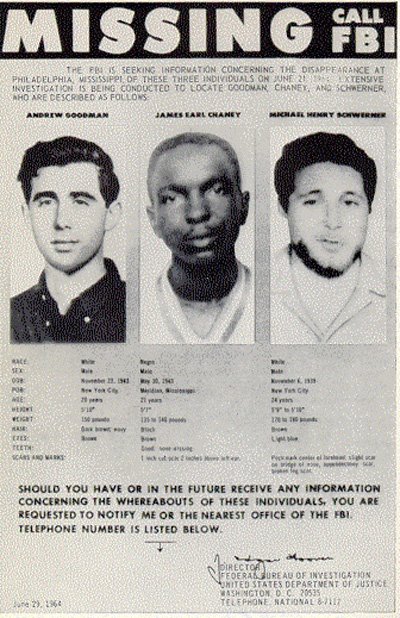
Emmett Till, a 14-year-old black boy, was bludgeoned to death for “sassing’’ a white woman and his body dumped in the Tallahatchie River in 1955. Mississippi NAACP Field Secretary Medgar Evers was gunned down outside his home by a white sniper in 1963. And three young voter registration activists — James Chaney of Mississippi and Michael Schwerner and Andrew Goodman, both of New York —were murdered by the Ku Klux Klan during the Freedom Summer of 1964.

Such events forced the nation’s eyes on the upheaval in the segregated South and were pivotal in passing the Civil Rights Act of 1964 and the Voting Rights Act of 1965.

The absence of a state museum to acknowledge and commemorate these events leads some to question whether Mississippi is ready to embrace its role in history.

“It comes to a point that I don’t think Mississippi wants her history clearly told,’’ said state Senator David Jordan, a black Democrat from Greenwood in Leflore County.

A strong push for a museum didn’t come until 2006, when state Senator Hillman Frazier, a Democrat from Jackson, sponsored a resolution to create a museum study commission. Governor Haley Barbour, a Republican, took the reins on the project, which appeared to have his support.

A commission that Barbour appointed chose the private Tougaloo College in north Jackson as the museum site in 2008 and gave the project an estimated price tag of $73 million. Tougaloo was a hub of civil rights activity during the 1960s and 1970s.

Little else has happened to develop the museum. Organizers raised $470,000, but more than half was spent on consultants. Businessman John Palmer, the acting treasurer for the planning commission, said $108,000 is left.

“It’s very frustrating when you’re visiting Memphis and Birmingham, and they’re telling Mississippi’s history when we’re ground zero for civil rights,’’ Frazier said.

Supporters of a museum tout it as a tourism draw. The National Civil Rights Museum in Memphis drew 207,143 visitors between July 2008 and June 2009 and had an operating revenue of $4 million.

About 170,000 people visit the permanent exhibit and participate in the programs at the Birmingham Civil Rights Institute each year, said Lawrence J. Pijeaux, the Alabama museum’s president and chief executive.

“It means we’re bringing people to the state and it puts revenue in the city and the state,’’ said Pijeaux.

William Winter, a former Mississippi governor noted for his work to improve race relations in the state and a member of Barbour’s museum study commission, disagreed with the suggestion that the state’s leaders aren’t truly interested in creating a museum.

“The problem has not been resistance to the concept of having a civil rights museum,’’ Winter said. “But I do think it’s important that those who are interested get together on where it would be located.’’

He said the Tougaloo site drew criticism from those who wanted the museum in downtown Jackson.

Organizers have said fund-raising dried up because of the recession. Frazier said Barbour was to appoint a board to advance the project, but never did.

The governor still supports the project, but “it’s going through a number of trials and tribulations,’’ said Barbour spokesman Dan Turner.

“There was a split on the committee in choosing the site. Not having that unity behind it helped it lose momentum,’’ he said. “Charitable donations are down across the board. Raising money at this time is really difficult.’’

While the museum project languished, Barbour and lawmakers approved $2.1 million to begin work on a trail of markers describing significant civil rights events. The move didn’t please everyone.

“If this is the alternative to the museum, that’s horrid. That’s shameful. You can’t store artifacts out in the street,’’ said Owen Brooks, 82, a Boston native who came to Mississippi in 1965 and participated in literacy, community development, and voting rights projects.

Now, even the trail project has hit a snag. It is not clear who dropped the ball.


More Civil Rights Movement On W.E. A.L.L. B.E. :

***Must See TV***Dr. Frances Cress Welsing Vs. Phil Donahue

Dr. Frances Cress Welsing Vs. Phil Donahue Part 1 

***

Dr. Frances Cress Welsing Vs. Phil Donahue Part 2  

***

Dr. Frances Cress Welsing Vs. Phil Donahue Part 3 

***

Dr. Frances Cress Welsing Vs. Phil Donahue Part 4 

***

Dr. Frances Cress Welsing Vs. Phil Donahue Part 5

***Must See TV***KHALID MUHAMMAD-NEW YORK ONE INTERVIEW

KHALID MUHAMMAD-NEW YORK ONE INTERVIEW PT1

***

KHALID MUHAMMAD-NEW YORK ONE INTERVIEW PT2  

***

KHALID MUHAMMAD-NEW YORK ONE INTERVIEW PT3

***

KHALID MUHAMMAD-NEW YORK ONE INTERVIEW PT4 

Monday, December 20, 2010

Prof. Griff On The Black Church

W.E. A.L.L. B.E. TV: Faces Tell The Story...A Conversation With Renown Portrait Painter Simmie Knox


W.E. A.L.L. B.E. TV: Faces Tell The Story...A Conversation With Renown Portrait Painter Simmie Knox
W.E. A.L.L. B.E. TV talks with Bro. Simmie Knox, the first African American artist to be commissioned to do the official portrait of a U.S. President (Bill Clinton)...

Visit his official website:
http://www.simmieknox.com

Sunday, December 19, 2010

Suicide Or Lynching? The Coroner Thinks The Former & NAACP The Latter In Greenwood,MS Man's Death

Frederick Jermaine Carter

NAACP Contests Suicide As Cause Of Hanged Man's Death

By Larry Copeland, USA TODAY

12/6/2010

The county sheriff says that a 26-year-old black man found hanged from an oak tree in Greenwood, Miss., apparently committed suicide, but the president of the local NAACP challenges that explanation and says the group will monitor developments in the case.

Frederick Jermaine Carter, whose body was found Friday in North Greenwood, had a history of mental illness, was on medication and had a pattern of wandering away, says Leflore County Sheriff Ricky Banks.

Carter, who lived in neighboring Sunflower County, was helping his stepfather paint a building Wednesday. The stepfather went to get tools and when he returned, Carter had wandered off, Banks says.

"That really didn't bother the stepdaddy," Banks says. "It had happened so many times before. He's a mental patient and was taking medication. He had wandered to Florida, to Arkansas."

After Carter was found Friday, Banks says he investigated the scene and found no evidence that anyone else was there. "I didn't see any indication of anybody else being in that area, going from physical evidence and the general tracks," Banks says. "He had on a sort of new pair of tennis shoes that had a most distinct track with an unusual design."

"We tracked him where he walked in there," he says. "No other tracks followed his tracks. He walked in there by himself. There were no signs around the tree where he was hanging."

Banks says a man who lives nearby saw Carter walking toward the site, in a field between a levee and the Yazoo River. "He talked to him, asked him what he was doing down there. He said, 'Well, I'm just walking.' He wouldn't talk to him."

Banks says his finding on a cause of death is not final. He is awaiting autopsy and toxicology reports. "They'll look for bruising on the body, to see if it looks like somebody might have scuffled with him or whatever," he says. "I didn't find any evidence of that."

The FBI's Jackson field office is monitoring the situation. "The FBI has been advised of the situation in Leflore County," spokeswoman Deborah Madden says in a statement. "We stand by to provide whatever assistance is necessary to ensure the integrity of the investigation."

State Rep. Willie Perkins, a Democrat from Greenwood and president of the Leflore County branch of the NAACP, says that group also "will keep a high scrutiny and watch on any investigative report regarding what was the cause of death."

"There are a lot of concerns there, No. 1 that this individual could not have (hanged) himself without the assistance of someone, if it's being declared a suicide," he says. "Why would someone from Sunflower County come to North Greenwood, the predominantly white housing area of Greenwood? Why would someone that far away come and hang themselves in North Greenwood by a river? That does not pass the smell test to me."

Another local elected official, state Sen. David Jordan, a Democrat, says the African-American community in Greenwood is "very much concerned."

"This is in a white wealthy area, and black people just don't go over there," he says. "There's not a single black that's talked to us who believes that he hanged himself."

Jordan, who is African-American, suggests there is a historical underpinning for blacks being suspicious about the specter of violence against them: Greenwood is about 12 miles from Money, Miss., site of one of the most infamous lynchings in U.S. history. In August 1955, Emmett Till, a 14-year-old Chicago boy visiting relatives for the summer, was abducted and killed after he allegedly made remarks to a white woman.

"We're not drawing any conclusions," Jordan says. "We're skeptical, and rightfully we should be, given our history. We can't take this lightly. We just have to wait and see."

***

Coroner: Miss. Black Man's Hanging Was A Suicide

By Larry Copeland, USA TODAY
12/7/2010

An autopsy shows that a Mississippi man found hanging from a tree in Greenwood killed himself, according to the Leflore County coroner.

"The cause of death was hanging. The manner of death was suicide," coroner Debra Sanders said. She said the state crime lab faxed the autopsy results to her Monday night.

NAACP: Not satisfied with suicide explanation

Frederick Jermaine Carter, 26, of nearby Sunflower, who Leflore County Sheriff Ricky Banks said had a history of mental illness, was fully clothed, his hands were free, and he had a cigarette lighter in his pocket, Sanders said.

Banks said he found no evidence of foul play and no signs that anyone else was at the scene near the Yazoo River in north Greenwood.

Carter and his stepfather were painting in Greenwood on Dec. 1 when Carter wandered off, which he did frequently, Banks said. He was found hanging from an oak tree two days later.

Banks said a toxicology report is not expected for at least several days.

Many African Americans in Greenwood challenged the initial official explanation of the man's death.

The local NAACP said it is still closely following the case. "I don't know enough at this point in time to accept or reject the decision," said state Rep. Willie Perkins, a Democrat and president of the Leflore County branch of the NAACP. "We'll continue to monitor and watch the situation."

Greenwood, in the Mississippi Delta, is in the same county as Money, Miss., where 14-year-old Emmett Till was infamously lynched in 1955.

More Civil Rights Movement On W.E. A.L.L. B.E. :

Friday, December 17, 2010

Why The ‘Lazy Jobless’ Myth Persists

 Why The ‘Lazy Jobless’ Myth Persists

Posted on Dec 16, 2010

By David Sirota

During the recent fight over extending unemployment benefits, conservatives trotted out the shibboleth that says the program fosters sloth. Sen. Judd Gregg, R-N.H., for instance, said added unemployment benefits mean people are “encouraged not to go look for work.” Columnist Pat Buchanan said expanding these benefits means “more people will hold off going back looking for a job.” And Fox News’ Charles Payne applauded the effort to deny future unemployment checks because he said it would compel layabouts “to get off the sofa.”

The thesis undergirding all the rhetoric was summed up by conservative commentator Ben Stein, who insisted that “the people who have been laid off and cannot find work are generally people with poor work habits and poor personalities.”

The idea is that unemployment has nothing to do with structural economic forces or rigged public policies and everything to do with individual motivation. Yes, we’re asked to believe that the 15 million jobless Americans are all George Costanzas—parasitic loafers occasionally pretending to seek work as latex salesmen, but really just aiming to decompress on a refrigerator-equipped recliner during a lifelong Summer of George.

Of course, this story line makes no sense. From liberal Paul Krugman to archconservative Alan Greenspan, economists agree that joblessness is not caused by unemployment benefits. With five applicants for every job opening, the overarching problem is a lack of available positions—not a dearth of personal initiative.

Why, then, is the myth so resonant that polls now show more than a third of America opposes extending unemployment benefits? Part of it is the sheer ignorance that naturally festers in a country of cable-TV junkies. But three more subtle forces are also at work.

First, there’s what psychologists call the Just-World Fallacy—the tendency to believe the world is inherently fair. This delusion is embedded in our pervasive up-by-the-bootstraps, everyone-can-be-a-millionaire catechism. The myth of the lazy unemployed can seem to make sense because it connects those ancient fables to current news, effectively alleging that today’s jobless deserve their plight.

Narcissism is also a factor. In a nation that typically dehumanizes the destitute Other with epithets like “welfare queen” and “white trash,” our self-centered culture leads the slightly less destitute to ascribe their own relative success exclusively to superhuman greatness. The myth of the lazy unemployed plays to that conceit, helping the still-employed experience potentially scary unemployment news as a booster shot of self-aggrandizement. You remain in a job, says the myth, because you are better than the jobless.

Finally, there’s raw fear—arguably more powerful than even arrogance. With the labor-market news downright frightening, the still-employed are understandably pining for a defense mechanism to cope with persistent layoff anxieties. The myth of the lazy unemployed provides exactly that—a calming sensation of control. If, as the myth suggests, the jobless are really out of work because they “are generally people with poor work habits and poor personalities,” then it stands to reason that the employed can avoid catastrophe by simply choosing better behavior.

The trouble, though, is that the whole narrative averts our focus from the job-killing trade, tax-cut and budget policies that are really responsible for destroying the economy. And this narrative, mind you, is not some run-of-the-mill distraction. The myth of the lazy unemployed is what duck-and-cover exercises and backyard nuclear shelters were to a past era—an alluring palliative that manufactures false comfort in the face of unthinkable disaster. Only now, our fate isn’t being dictated to us by faraway Soviets—we could actually prevent a future apocalypse if more of us just accepted reality and demanded the right kind of change here at home.

David Sirota is the author of the best-selling books “Hostile Takeover” and “The Uprising.” He hosts the morning show on AM760 in Colorado and blogs at OpenLeft.com. E-mail him at ds@davidsirota.com or follow him on Twitter @davidsirota.


© 2010 Creators.com

Dec. 18*4pm-6pm*[choice] LIFE OVER AIDS Closing Reception*Free

Photo By Frank D. Robinson
All For The Cause: R2C2H2 Tha Artivist Shows His Work For The Exhibit: (Left) "The Pied Piper Of HIV: The Woeful Tale Of Darnell 'Boss Man' McGee" & "My Uncle Arthur The Martyr"

[choice] LIFE OVER AIDS Closing Reception

 You are invited to the Closing Reception for [choice] LIFE OVER AIDS Art Exhibit!

 What: [choice] LIFE OVER AIDS Art Exhibit Closing Reception

 Where: Caritas Village, 2509 Harvard, 38112

 When: Saturday, December 18, 2010

 Time: 4:00- 6:00pm

 Cost: FREE

Art Exhibit:
Local artists submitted original work that is on display at Caritas Village's Hope Gallery. The art exhibit opened on October 1. A juried exhibit, the winners are (pictures attached):

Marcellous Lovelace, "Falling Forever"- First Place ($500)
Leandra Urrutia, "Red Cross"- Second Place ($300)
Ron Herd, "The Legends Of The Fall: My Uncle Arthur The Martyr"- Honorable Mention ($100)
Derrick Dent, "one in sixteen"- Honorable Mention ($100)

Exhibiting artists include:
Phyllis Boger, Harriet Buckley, John Bullock, Gerecho Delaney, Derrick Dent, Judith Dierkes, Fannta Drummer, Howard Gentry, Tammy Groves, Ron Herd, Morris Howard, Rollin Kocsis, Urrutia Leandra, Margarette Loiseau, Marcellous Lovelace, Sherita McMullen, Becky McRae, Edwin McSwine, Jason Miller, Sue Miller, Carl Moore, Darlene Newman, Joyce Petrina, Chandler Pritchett, Brandy Richardson, Frank D. Robinson, Jr., Damita Shaw, Chris Short and  Shamek Weddle.


There will be a special screening of "Love Choice" at 5:00pm!

For more information about [choice] LIFE OVER AIDS and the film, “Love Choice” please visit http://mychoicelifeoveraids.org/arts.html.

Follow us on Twitter: http://twitter.com/lifeoveraids

Follow us on Facebook: Caritas Village