Wednesday, January 03, 2007

Being A Modern Hip Hop Mogul Part Two

The Successes and Struggles of the Modern Hip-Hop
Mogul. Part 2 of 2.
To view Part 1 please click here.
A Limelight Exclusive
By Byron Lee

Last month, we profiled two of rap's major power players: Nelly and Jay-Z. This month, we turn the spotlight towards the industry's two most successful and polarizing figures: Sean "Diddy" Combs and Curtis "50 Cent" Jackson.

FLAUNTING IT: Diddy styles and profiles in the sun.
No one has taken Russell Simmons's blueprint of brand diversification to more successful heights than Sean Combs, who was recently listed by Fortune Magazine as the most wealthy person in rap. He embarked on his career by dropping out of Howard University and working as an intern at Uptown Records under then President Andre Harrell. The polite, professional Combs worked hard and was eventually, at the age of 19, named Division Director, which put him in a position to develop acts. He would quickly make a name for himself by exposing the public to talented R&B acts with a hip-hop edge, such as Jodeci (which contained K-Ci and JoJo Hailey, who would eventually become a superstar duo on their own) and Mary J. Blige.

The success soon went to Combs's head, and his arrogance alienated his co-workers to the extent that he was fired from Uptown. After sulking in his apartment for a weekend, he plugged his phone back in and found a message from Arista Records. Industry legend Clive Davis was impressed by Combs's work and wanted Combs to operate a new urban music imprint being started through Arista. Combs agreed and christened the imprint "Bad Boy."

THE PERFECT PAIR: Many felt that Combs and Bad Boy flagship artist the Notorious B.I.G. complemented each other perfectly, with the latter being the "Ghetto" to the former's "Fabulous."
Bad Boy would find its flagship artist when DJ luminary Mr. Cee introduced him to a charismatic, rotund, lyrically gifted MC from Brooklyn. His given name was Christopher Wallace, but he rapped under the name Biggie Smalls. Combs would give him the iconic moniker The Notorious B.I.G. Along with energetic lyricist Craig Mack, of "Flava in Ya Ear" fame,B.I.G. helped put Bad Boy in the public eye. It was not long before Biggie's presence, personality, and Billboard track record ("Juicy," "Big Poppa," and "One More Chance (Remix)" were massive hits) overshadowed Mack, a point that was made clear when Biggie was chosen to be the first person to rap on Mack's landmark, star-studded "Flava In Ya Ear (Remix)." B.I.G.'s first album, "Ready to Die," sold 4 million copies, while the follow-up, the double album "Life After Death" achieved diamond status (10 million copies sold).

LIVE ON STAGE: Regardless of their feelings on his music, people have to admit that Combs knows how to put on a show.
However, after Biggie Smalls was gunned down in early 1997, after the murder of rival Tupac Shakur a few months earlier, Combs would be accused of milking Biggie's death in order to better shape his own public image (many people felt that while Biggie was alive, the two complemented each other perfectly, Biggie being the "Ghetto" to Diddy's "Fabulous".) The release of "I'll Be Missing You" which featured a prominent sample of the Police's "Every Breath You Take" and an accompanying video that featured Combs dancing through rain puddles, only furthered the criticism. (The track was from 1997's "No Way Out," Diddy's first solo album, which boasted the hits "Been Around the World" and "All About The Benjamins" and sold 7 million copies domestically.)

IN STYLE: Comb's "Sean John" clothing line became an instant success, becoming ubiquitous in urban and mainstream fashion outlets.
It was in 1998, at the height of his musical power, that he wisely decided to branch out his empire into the fashion arena. The "Sean John" clothing line, named after his first and middle name, became a wildly successful urban clothing line. Combs went on to win the fashion equivalent of the Oscar in 2004 when he won the CFDA (Council of Fashion Designers of America) Menswear Designer of the Year award.

POWER COUPLE: Sean Combs and Jennifer Lopez provided fodder for urban, fashion, and tabloid journals during their courtship.
While his clothing line got off the ground, his romantic life became more public. Combs struck up a rapport with pop culture hyphenate Jennifer Lopez while the two worked together on the video for Diddy's single "Been Around The World." Soon, the two were inseparable, making headlines with their public appearances at award shows, particularly Jennifer Lopez's iconic green dress at the 2000 Grammys. (It is also rumored that Combs gave Lopez the boost she needed in order to take the step towards a recording career.)
The relationship encountered rocky waters in December of 1999, when a shooting occurred at a nightclub where Diddy, Lopez and then-Bad Boy artist Jamal "Shyne" Barrow were celebrating. The resulting negative publicity (both Combs and Barrow faced charges, while Lopez was not charged) created a fissure that never truly closed. The couple announced their break up on Valentine's Day 2001.


MAKEOVER: Perhaps as an attempt to improve his
post-trial image, Diddy started appearing in public
dressed in the suits from his Sean John line.
Combs, with the aid of his own, separate defense team, which featured Johnnie Cochran, was acquitted of charges of weapons possession and bribery (the latter stemming from allegations made by Combs's former driver), while Barrow was convicted of first-degree assault, gun possession, and reckless endangerment. Barrow is currently still serving a ten year jail term for this conviction. The belief that Combs turned his back on Barrow, thus setting up Barrow to be the fall guy, has badly hurt Combs's image.

ON THEIR OWN: Feeling neglected by Combs, acclaimed R&B quartet 112 eventually started their own independent record label.
The public's perception of Combs is rooted in a concern over how he treats his artists as a whole. Carl Thomas and Black Rob, who were, at one point, two of the most popular artists on the Bad Boy label, went 4 years and 6 years, respectively, without releasing albums. However, when Combs released one of his own albums, the LP seemed to receive all of the attention of Bad Boy's promotions department. 112, another staple of the label's glory years, were so disenchanted with how they were been handled that they tried to leave the label. (Eventually, an agreement was made to split professional interest in the group equally between Bad Boy and Island Def Jam. 112 is now presiding over their own independent label.) Finally, veteran group New Edition, who released their 2004 album "One Love" through Bad Boy, severed ties with the label over Combs's refusal to release a track produced by hitmakers Jimmy Jam and Terry Lewis.
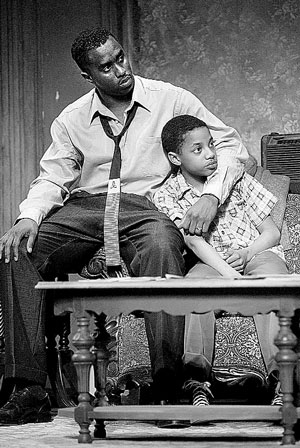
"RAISIN" HIS PROFILE: Combs earned modest reviews for his performance in the revival of "Raisin in the Sun," but simultaneously brought a new audience to the theater.
While his label struggled, Combs found some success in another area: acting. He won raves for turns as a hot headed record mogul in the Jon Favreau/Vince Vaughn film "Made" and as Halle Berry's doomed, estranged husband in "Monster's Ball." Combs also brought a new audience to the theater, while receiving mixed reviews, with his role as Walter Lee Younger in the 2004 stage revival of Lorraine Hansberry's "Raisin in the Sun"

DOIN' TOO MUCH?: Many people thought that Diddy's "Vote or Die" campaign was awkward and ineffective.
Combs, no doubt inspired by Simmons, also tried his hand at social activism. He raised 2 million dollars for New York City schools by participating in the New York City marathon, and spearheaded 2004's "Vote or Die" campaign, an effort to get young people interested in voting. While most people respected his efforts, some felt that the marathon was more about drawing attention to himself and that the "Vote or Die" campaign was awkward and politically-biased in favor of the left wing.

BEST FOOT FORWARD: Diddy finishes the New York
Marathon.

Diddy would soon have an incentive to return to his first love. Bad Boy received a new lease on life last year when Warner Music Group purchased a large minority stake in the label and bought out the remainder of the agreement between Bad Boy and Universal Music Group. New artists such as Cassie (whose "Me and You" has dominated R&B charts), Danity Kane (the multicultural singing group comprised of winners of Diddy's second installment of MTV's "Making The Band") and Atlanta rapper Yung Joc have put the label back on top of the charts. Soon the head honcho will be back in stores when Diddy's new album "Press Play" arrives in mid-October. It seems that, regardless of what people may think of him, Sean Combs cannot be stopped.

2 ON THE WAY: Diddy and girlfriend Kim Porter, with
whom he has one child. The couple recently announced
that they were having twins.

THE NEW SCARFACE?: 50 Cent has often drawn lyrical parallels between his rise to power and that of Tony Montana, Al Pacino's character from the cult film "Scarface."
Another powerful force in the rap industry in recent years has been Curtis "50 Cent" Jackson. Jackson was born in Jamaica, Queens, N.Y. to a drug-dealing single mother. (After his mother was gunned down, he went to live with his grandmother). His mother's friends introduced him to drug running, and a series of plea bargains on drug charges would lead him to stints in both rehab and a military style boot camp. He eventually poured his bravado and his hunger for a better life into rhyme. DJ Jam Master Jay, of the pivotal group Run-DMC, took 50 under his wing and signed him to Columbia Records, where 50 recorded the satirical song "How To Rob," in which the rapper deliberated as to which successful rappers he should rob and how he should go about it. Suffice it to say that many of the real-life rappers mentioned in the song did not find the track to be all that humorous, and the struggling rapper found his name on the lips of many rap heavyweights (Jay-Z famously mentioned 50 on "It's Hot (Some Like It Hot)" from Jay's 4th album "Vol. 3".)

POINT BLANK: This photo, from the album jacket of 50's Shady/Aftermath debut, "Get Rich Or Die Tryin'," made his image perfectly clear.
In 2000, an event would forever change his life. He was shot nine times outside of his grandmother's house by a rival (the rival was murdered several weeks later). Jackson miraculously drove himself to the hospital. While convalescing, he was dropped by his record label.

A STRONG TEAM: Here is 50 Cent with G-Unit members Lloyd Banks (left) and Young Buck (right).
Struggling to get back to recording, he was aided by producer Sha Money XL, who allowed 50 recording space to make songs for mixtapes (In the rap world, mixtapes are compilations of new songs, or of new freestyles performed over the beats of popular songs, that are released to the streets in order to create, or continue, buzz on a certain artist.). It was during this time that 50 took a major step in building his empire: he recruited rappers who were more skillful than he was, chief among them lyrical monster Lloyd Banks, in order to strengthen his crew.

CHAIN STILL SPINNIN': 50 Cent shows off his trademark, spinning, diamond encrusted G-Unit pendant.
Learning from his experience in his previous profession, ("Consistency is the key" he said in a 2003 interview with Rolling Stone.) his crew, G-Unit, flooded New York with high quality mixtapes that kept the streets talking. The recordings were bolstered by 50's new gruff, mumbled delivery, a result of a shot he took to the face during the attempt on his life. The buzz became so deafening that it drew the attention of Shady/Aftermath Records, the label run by Dr. Dre and Eminem. The duo flew 50 out to Los Angeles and, impressed with his demeanor, signed him to a recording deal worth 1 million dollars, and gave him his own imprint, G-Unit Records, in order for him to make money off of the artists he brought to the label.

TRUE TO THE GAMERS: Here is an image of 50's likeness from the video game, "50 Cent: Bulletproof."
Jackson immediately started securing trademarks for G-Unit, while industry veteran Chris Lighty, who signed on as 50's manager, started looking for endorsement deals. The rapper now has his own shoe deal (through Reebok), his own video game (50 Cent: Bulletproof), his own clothing line (G-Unit), and his own Vitamin Water (Vitamin 50). 50's 2003 Shady/Aftermath debut, "Get Rich Or Die Tryin," sold 6 million copies, bolstered by the irresistible pop anthem "In Da Club," and the public disclosure of what 50 referred to as "street beef" with then-chart reigning pop rapper Ja Rule. Releases from G-Unit members Lloyd Banks and Young Buck appeared shortly thereafter. Furthermore, in what was an inevitable move, 50 appeared in a movie loosely based on his life, "Get Rich or Die Tryin'," last year. While the film did not fulfill expectations at the box office (it was noticeably released in far fewer theaters than Eminem's 2002 flick "8 Mile," the success of which "Get Rich" was clearly patterned to mimic), 50 seems undaunted.

A POOR SHOWING: Plagued by poor distribution, 50 Cent's film debut, "Get Rich or Die Tryin'" failed to find box office fortune.
Perhaps the performance of the film is a sign of declined public interest in Jackson. There seems to be a feeling amongst many that the rapper is overexposed, rimarily due to the products he released in 2005 (his sophomore LP, "The Massacre," the aforementioned film, the soundtrack to said film, and an autobiography, "From Pieces To Weight".)


SPLITSVILLE: 50's treatment of Vivica A. Fox after escorting her to the 2003 MTV Video Music Awards made him seem horribly immature.
Furthermore, his immaturity, as evidenced by both his insults toward actress Vivica A. Fox soon after he escorted her to the MTV Video Awards and his abrupt dismissal of Compton-bred G-Unit affiliate The Game, has become rather tiresome. (He even had a very brief feud with Diddy over Diddy's refusal to release MA$E from his contract with Bad Boy in order to allow MA$E to fully join G-Unit.)

THE BEGINNING OF THE END: Music lovers seem to think that the poor commercial performance of G-Unit albums, such as Tony Yayo's "Thoughts of a Predicate Felon", signal the end of G-Unit's reign on top of the charts.
It seems as if one could set their watch according to his latest publicity stunt. Finally, even though he has a talented stable of performers on his label, few of them could be marketed as superstars. The infectious energy of Tony Yayo couldn't power "Thoughts of a Predicate Felon" to commercial success, and even rap stalwarts Mobb Deep failed to move units with the release of the album "Blood Money."

THE ONE THAT GOT AWAY: Many feel that The Game's dismissal from G-Unit was fueled by 50 Cent's fears that the Game might overshadow him.
Regardless of how many setbacks they face, today's Hip-Hop Moguls will find a way to be triumphant.


ARTISTIC STATEMENT: 50 Cent's back tattoo acknowledges the New York Southside Jamaica Queens area in which he grew up.
To view more writings, articles and perspectives from the cultural analyst known as Mr. Byron Lee please visit his official blog @ http://www.bleebus.blogspot.com

Tuesday, January 02, 2007

The Black Aaron Spelling at it again

If you are a W.E. A.L.L. B.E. Subscriber please click on the following link to view videos:
Mr. Incomparable: Trevor Campbell
THE COOLERS ACT 1- that Muthaf@##% cellphone

Add to My Profile | More Videos

Hit up Trevor's Myspace page and show support:
http://www.myspace.com/twistedthreadfilms


The following is what I stated about Mr. Campbell on July 19,2006 check out his videos (including an earlier The Coolers skit) and respect the technique!!!

My Next Door Neighbor Is The Next Micheaux and Spielberg!!!
Greetings Fam,
I just wanted to let you all know about a future movie mogul and director extraordinaire...His Name??? Mr. Trevor Campbell a.k.a. the West Indian Micheaux a.k.a. the Jamaican Spielberg...I have known and lived across the street from Mr. Campbell for several years now and he never ceases to amaze and inspire with what he does with a video camera and a limited budget...Please check out the following videos and see if you don't agree that this young man has a phenomenal gift, an unique film vision and very bright and sizzling future...Please feel free to leave comments on this post and/or feel free to contact Mr. Campbell yourself and tell him what you think at tcampbell@midsouth.rr.com...Remember that you heard it first fromW.E. A.L.L. B.E., Mr. Campbell is on his way to becoming a major player in the Hollywood/entertainment industry a.k.a. A TRUE SUPERSTAR...Stay Tuned...
R2C2H2 Tha Artivist
P.S.
Hey Trevor hook a brother up in one of your future t.v. sitcoms and/or feature films...You know how we do!!!


Watch out
Norman Lear and Aaron Spelling, Trevor is going to conquer T.V. Land with his future hit The Coolers:


Spike Lee ain't the only Black Director that can do a great commercial:


Another reason why fatty and greasy foods can possibly kill you:

Being A Modern Hip Hop Mogul Part One

The Successes and Struggles of the Modern Hip-Hop
Mogul. Part 1 of 2.

A Limelight Exclusive

By Byron Lee

Times change, and with them, so do attitudes. It was not long ago that artists such as Young MC, Kid N Play, MC Hammer, and even Kurtis Blow were labeled sellouts for signing endorsement deals and appearing in movies. Phrases such as "Keep It Real" and "Be True to the Game" were still the order of the day in the hip-hop community, with Def Jam founder (and one-time owner) Russell Simmons being accused of watering down hip-hop and marketing it to the masses.

IT DOES THE BODY GOOD: Being that he keeps his body in tip-top shape, Nelly was the perfect poster boy for one of the more provocative ads in the "Got Milk?" campaign.
After seeing many of rap's pioneers struggle after their years of glory, however, many of today's stars have, to use investment terminology, "diversified their portfolio", building upon the monumental hip quotient currently being enjoyed by rap stars and branding their names for use in clothing lines, label management, partial sports team ownership, and other business ventures. In this edition of the Limelight, we will profile two of the biggest names in this arena: Cornell "Nelly" Haynes, Jr. and Shawn "Jay-Z" Carter. We will highlight their achievements while also demonstrating that money does not always work magic.

CHANGING THE FACE OF RAP: The most important aspect of Nelly's success, from an industry standpoint, is that he was able to provide the same hard-edged rhymes found in most of commercial rap while matching the impact of the content with catchy choruses and a photogenic look.
Throughout the 90's, St. Louis struggled to have a local urban artist breakthrough nationally, although acts such as Sylk Smoov ("Wit' A Good Rap") and Billy Lawrence ("Happiness") came close. In early 2000, a song started getting rotation on St. Louis airwaves. It was a catchy song, with a light bounce, irresistible rhymes, a singsongy delivery, and an overpowering chorus.

STAYING PUT: Defying naysayers who said that he would fade away, Nelly released the successful 2002 sophomore effort "Nellyville" spawning the hits "Hot in Herre," "Dilemma," "Air Force Ones," and "#1" and selling 6 million copies.
The song was "Country Grammar", by a handsome University City rapper born Cornel Haynes, Jr., but known to the recording world as Nelly. Soon after, the former standout athlete was making sold out in-store appearances, and it was not long before his debut album, which shared its name with the breakout single, was outpacing "Notorious K.I.M.," the more heavily-hyped sophomore release from New York female rapper Lil' Kim. Boasting additional hits, such as "E.I.," "Ride With Me," and "Batter Up," the album went on to sell 9 Million Copies, making it the most successful rap solo debut of all time. In an industry where fanbases are constantly looking for the next new face, Nelly's pop savvy, down-to-earth personality, and heartthrob status have made him a mainstream mainstay, allowing him to enjoy the success of 2001's "Free City" (an album he released with The St. Lunatics, a group in which he is a member), 2002's "Nellyville", and 2004's "Sweat" and "Suit" LPs. He has also used his fame to branch out into clothing (the "Vokal" and "Apple Bottom" Lines), sports drinks ("Pimp Juice") and music management (with the Derrty Entertainment Label). He is also part owner of the NBA franchise the Charlotte Bobcats. Due to these endeavors, Mr. Haynes recently tied with So So Def head Jermaine Dupri as Fortune Magazine's 10th most wealthy person in rap music. (Both performers grossed $60 million the previous year).

A SUPERSTAR IN OUR MIDST: Nelly's pop savvy, down-to-earth personality, and heartthrob status have made him a mainstream mainstay. Despite his success, he has never forgotten about St. Louis.
What is most important about Nelly, geographically speaking, is the fact that he has never forgotten St. Louis. Since he first landed on the national scene, he has always recognized St. Louis as his hometown, whether in his manner of dress (Cardinals and Rams uniforms were omnipresent in his early videos) or in his rhymes. Furthermore, whenever his burgeoning acting career has provided on-screen opportunities to flex his talent (such as in the little-seen thriller "Snipes" or in 2005's big budget remake "The Longest Yard"), he has always had special, St. Louis premieres for the films, bringing a taste of Tinseltown to the Lou.
Nelly's affection for his hometown has also led him into the philanthropic arena. He founded both 4 Sho 4 Kids (http://www.4sho4kids.org/), a organization to benefit children with developmental disabilities, and Jes Us 4 Jackie (http://www.jesus4jackie.com/), a entity dedicated to finding bone marrow matches for those suffering from Leukemia (Nelly was inspired to start this organization after his sister, Jackie Donahue, was diagnosed with the disease; she passed away in March of 2005.)

DOUBLE UP: Challenging himself after two successful albums, Nelly released two albums on the same day: September 14, 2004. The two albums were the up tempo Sweat and the smoother Suit. Suit triumphed over Sweat, selling 3 million to the latter's 1 million.
Nelly has not always been embraced with open arms. After the success of his first album, Mr. Haynes was denied a proclamation from the city by then-Mayor Clarence Harmon. (Nelly eventually received one from Harmon's successor, Francis Slay, as one of Slay's first initiatives as mayor). Furthermore, in the spring of 2004, Nelly was forced to cancel a bone-marrow drive on the campus of Atlanta's Spellman College because of a planned protest of his video for the song "Tip Drill" to be held during the drive. (To be fair, the video is quite over the top, but it is not worse that any other videos that have been made in support of songs recorded by other rappers, such as "Poppin'", a similarly graphic video featuring Atlanta native Ludacris.)

In what is, perhaps, a true symbol of how far Nelly has come, he was recently trusted with the task of reintroducing pop singer Janet Jackson to the public via their collaboration "Call On Me," from Ms. Jackson's forthcoming album, "20 Years Old." The kid from St. Louis has hit it big, and, in his own way, taken us with him.

Another artist who has taken full advantage of hip-hop's new influx of entrepreneurship is Shawn Carter, better known to the world as Jay-Z. Carter, born the youngest child and second boy of 4 children, has a gift for composing rhymes in his head (a gift that was cultivated as a child when his best ideas would come to him while he was riding his bike). Jay also had a tenacity with which he tackled life, a drive that would lead him to try to acquire large amounts of money while still in his late teens. When he tired of the life that provided this income (drug dealing), he decided to pursue rapping as a legitimate hustle. After meeting a brash, Harlem-bred, loud mouthed young business man named Damon Dash, the two, along with third member Kareem "Biggs" Burke, started releasing records independently.

The two eventually made a joint deal with preeminent rap label Def Jam Records (with Dash fighting for part-ownership of the music) and the sales for Jay-Z's third album "Vol. 2: Hard Knock Life" (bolstered by the monster hits "Hard Knock Life," (which ingeniously sampled the song of the same name from the broadway musical "Annie") , "Can I Get A..."( which introduced
the world to gravelly-voiced rapper Ja Rule) and "Jigga What, Jigga Who") made Jay-Z a mainstream superstar. (The album sold 5 million copies.) Also, during this time, Rocawear, a clothing extension of the Roc-A-Fella brand formed in 1999, developed into the brand of choice in urban casual wear. It is now worth 500 million.

HOV and B: Here, Jay-Z and pop songstress Beyonce Knowles arrive at a basketball game. Although the two continue to be secretive about their relationship, Ms. Knowles's elegant, good girl image, and Carter's silent depth make them a perfect fit for public admiration and speculation.
Around the time Carter was recording "Blueprint 2: The Gift and The Curse" (the sequel to his commercially and critically successful, soul-infused sixth album "The Blueprint") rumors began circulating that the M.C. was dating R&B bombshell Beyonce Knowles of multi-platinum group Destiny's Child. Although the two were, and continue to be, secretive about their relationship, it was clear that they were an item. The contrast of Ms. Knowles's elegant, good girl image, and Carter's silent depth made them a perfect fit for public admiration and speculation.

However, the same unshakeable cool that infuses both his demeanor and his delivery with a powerful authority seems to be the same attribute that puts him at a distance from others. The effect of this attribute was suggested during a time when a meeting of two superstars was supposed to take place. In the spring of 2001, a press conference heavy on starpower (Sean Combs, Russell Simmons, and Johnnie Cochran were all in attendance) announced that Jay-Z and R&B hitmaker R. Kelly were going to record an album together. (The idea was spawned by the mammoth success of their collaboration on the remix of the R. Kelly
single "Fiesta.")

Soon, however, salacious allegations involving underage girls were leveled against R. Kelly, intensified by a widely accessible video recording. Not long after, it was announced that there would be no videos filmed for any song from the album and that a planned tour had been scrapped. It was rumored that Jay asked the people at VIBE magazine to remove him from a planned cover promoting the album, which received lackluster reviews based on the widely held
belief that both performers phoned it in. (When asked in interviews about the belief that he abandoned Kelly, Jay would become defensive. The two eventually agreed to tour a year later, but the tour ended in disaster with R. Kelly filing a lawsuit against Jay, alleging that Jay failed to provide proper security and sabotaged his performance set.)

ON HIS OWN: Having recently sold his share of the Rocawear clothing line for $20 million, Damon Dash has completely severed professional ties with Jay-Z, the person with whom he built the Roc-A-Fella empire.
A belief that Jay had few qualms with severing ties was strengthened by the recent split between Carter and longtime business partner Damon Dash. There had long been rumors of conflict within the Roc-A-Fella camp, starting with Damon Dash's appointment of rapper Cam'ron (who Dash managed) as Vice President of Roc-A-Fella Records when Mr. Carter
took a long deserved vacation. When Jay returned from his sabbatical, Jay vetoed Cam'ron's appointment. Furthermore, long simmering tension between Dash and Record Excutive Lyor Cohen (who was then head of Island Def Jam) had gotten worse, while talk of Jay's disenchantment with Dash's aggressive persona grew stronger.

CHANGE CLOTHES: After reigning supreme over rap, Shawn 'Jay-Z' Carter took over as President of Island Def Jam in January of 2005.

In 2004, it was announced that Jay-Z would become the new President of Island Def Jam in January of 2005. What was also disclosed was that not only was Dash no longer involved with Roc-A-Fella Records, but that Jay-Z had retained the rights to the name that he had built with two other people (it has since been discovered that Jay offered the name to Dash and Burke in exchange for full ownership of the masters of "Reasonable Doubt" (Jay's classic first album); Dash said yes; Burke said no). Additionally, Kanye West, the only artist on the old Roc-A-Fella roster who consistently moved units, decided to sign with Jay-Z's new incarnation of the label, even though Dash is credited with both discovering him and convincing Jay to sign him.

Dash eventually sold his stake in Rocawear for 20 million, severing all business ties to his former
partner. (Dash, for his part, is struggling to regain his footing in the music industry; he has, however, gained some recognition as a producer of films. He had a hand in producing the provocative Kevin Bacon drama, "The Woodsman" and the thought-provoking documentary
"The N Word.")

LOOKING OVER THE PRODUCT: Jay-Z, who is part owner of the New Jersey (soon to be Brooklyn) Nets, watches a game with Beyonce. In a recent cover story in Rolling Stone, Jay spoke of the moment he purchased his stake in the team by saying, "I was happy to cut that check!"
For now, Jay, who is part owner of the New Jersey (soon to be Brooklyn) Nets, has not yet had a
successful artist that he can truly claim as his own. In a very telling development, it was recently
announced that the self-proclaimed "God M.C." will come out of retirement to release a new album entitled "Kingdon Come" in November. Some view this decision as the result of a thirsty MC itching to get back in the game, while others view it as a tacit admission that Def Jam needs a new Jay-Z album just to be in the black this year.

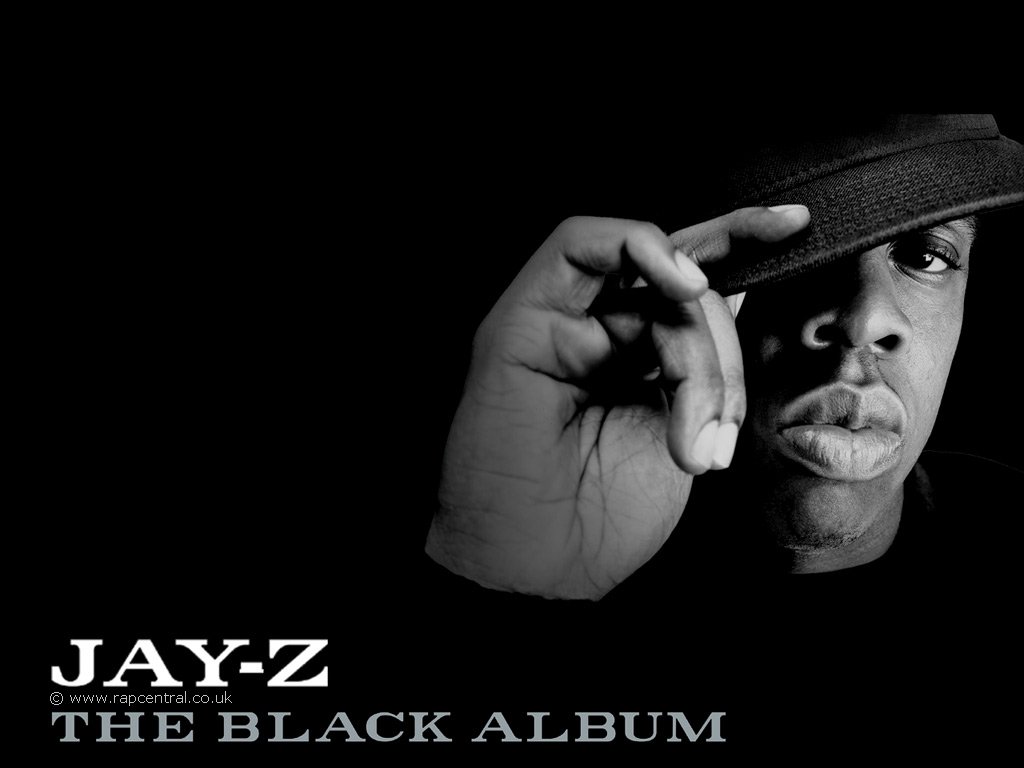
JAYHOVA: Superior wordplay, uncompromised confidence, and choice beat selection have made Jay-Z one of rap music's premiere artists.

Whatever the motivation behind this occurrence, Jay's quote from his 2001 hit single "Hova (IZZO)" has proven to be prophetic: "Can't leave rap alone/the game needs me."

To view more writings, articles and perspectives from the cultural analyst known as Mr. Byron Lee please visit his official blog @ http://www.bleebus.blogspot.com

The Spring of August, Pt. 2

Click here to view Pt. 1 of The Spring of August
A Limelight Exclusive on playwright August Wilson
By Byron Lee

Last month, we looked at the road August Wilson took to becoming a playwright. This month, we examine some of his works, and look at the praise and criticism his works and actions have garnered.

THE ORIGIN: "Jitney" is one of Wilson's first notable
plays.

The success that "Jitney" would have in its run in Minnesota would serve as a precursor for the acclaim Wilson would receive for his follow up. "Ma Rainey's Black Bottom" (the only play in Wilson's ten-play cycle that is not set Pittsburgh, but in Chicago) was accepted by Connecticut's National Playwrights Conference of the Eugene O' Neill Theatre Center, opening in April of 1984 at the Yale Repertory Theatre in New Haven. It was with this production that a long creative partnership with Lloyd Richards (the Eugene O'Neill Center's Director and the Yale Dean of Drama) began.

THE WINDFALL: "Ma Rainey's Black Bottom" cemented
Wilson's status as a playwright of note.
Fences, a quick successor, opened in 1987 on Broadway and went on to win four Tonys, the New York Drama Critics Award, and the Pulitzer Prize. Wilson's next production, "Joe Turner's Come and Gone" opened on Broadway in March of 1988, making August Wilson a black playwright with two plays running simultaneously on the Great White Way.

A PERFECT COMBINATION: The inaugural run of "Ma
Rainey's Black Bottom" marked the beginning of
Wilson's long creative partnership with director Lloyd
Richards.

The themes these plays present are as notable as the reception they received. "Ma Rainey's Black Bottom" focuses on a 1927 recording session for a legendary black blues singer. The backing band, with each member representing a different facet of the black community, is ridiculed by a white producer for their playing technique. The play reaffirms, through the words of the singer herself, the idea that the blues are the black community's way of channeling and communicating our frustration. Fences, set in the 1950's, deals with Troy Maxson, a garbage man, and his struggles with his past. Troy, who never had a chance to play in the Major Leagues due to racism, is bitter towards black players who found mainstream success and forbids his son, Cory, a football star, from playing on the team, even though a recruiter from North Carolina has expressed interest in him. "Joe Turner's Come and Gone" focuses on Herald Loomis, a man who has just completed an unjust seven-year sentence of hard labor in Tennessee and arrives, rightfully bitter, at a boarding house in Pittsburgh in search of his wife and daughter.

GENERATION GAP: With keen analysis of the relationship
between black fathers and black sons, "Fences" won
over critics and fans alike.
These plays have characters that Wilson refers to as the "Warrior Spirit"--the man who forcefully fights against oppression, even if his anger is misdirected. In "Rainey", Levee the trumpeter snaps and attacks fellow bandmate Toledo, instead of the condescending producer; In "Fences," Troy never reconciles his anger from a dream deferred, and, instead, betrays his wife and ostracizes his son. "Joe Turner's Come and Gone" is notable because it has a positive resolution that contains another feature of Wilson's work: the embrace of African heritage in order to transcend the psychological scars of the past and work towards the future (Loomis is only able to be delivered from his consternation through the aid of Byrum Walker, an African Mystic.)

NO MIDDLE GROUND: August Wilson's "The Piano Lesson,"
thought to be his most polarizing work, won a Pulitzer
Prize and was adapted into a television movie.

Both the praise and the criticism leveled at Wilson would come to a head with his next work. "The Piano Lesson" centers around a conflict between brother and sister with regard to the family heirloom: a piano that was stolen from the family of a slaveowner after being used to purchase some of the family's ancestors into captivity; the brother wants to sell it, in order to buy the plantation on which his ancestors once worked, while his sister wants to keep it as a symbol of the family's triumph over unimaginable adversity. In addition to this struggle, the two must deal with the spirit of a deceased descendant of the aforementioned slaveowner.

IN FULL CIRCLE: "Radio Golf," which represents the
90’s in Wilson's ten-play cycle, debuted just a few
months before Wilson's death.
The play won Wilson his second Pulitzer Prize, with many theatergoers lauding what they saw as Wilson's successful marriage of the realistic and the supernatural. Others, however, complained that Wilson had finally let the worst aspects of his plays (too many monologues, too many subplots, too much metaphorical weight) get the better of him.

DARK DAYS: "King Hedley II" represents the 80's in
August Wilson's ten-year cycle.

Like his plays, Wilson's social stances became polarizing. In 1987, Paramount Pictures obtained the rights to make "Fences" into a motion picture. When Wilson learned that the studio had planned to have Barry Levinson (of "Diner" fame) helm the project, Wilson balked. In 1990, Wilson wrote an op-ed piece for the New York Times entitled "I Want A Black Director" in which he defended his position, stating that he feared that a white director would have neither the knowledge of, nor the sympathy towards, the black experience needed to properly convey the story's message. (Wilson took pains to make it clear that he disapproved of Levinson's assignment on the basis of culture, not race.) He also addressed what he saw as Hollywood's general lack of faith in black directors. (In this way, Wilson could be thought of as
a pioneer of a different vein: this type of filibuster would be enacted again in the mid-90s by director Spike Lee when Lee called for the removal of Norman Jewison ("In The Heat Of The Night") from the director's chair for "Malcolm X," eventually to direct the film himself.

MIND IN MOTION: Wilson in thoughtful pose.
Furthermore, his address at the 1996 Theatre Communication Group National Conference entitled "The Ground On Which I Stand" drew criticism for its condemnation of color blind casting in theatrical productions and its call for self-contained black theater companies. In the speech, Wilson also expressed discontentment with the belief held by many theater purists that the influx of multicultural works had lowered the quality of theater as a whole. The speech started an epistolary joust between Wilson and Robert Brustein, the Artistic director of American Repertory Theater at Harvard University, which culminated in a 1997 public debate at New York City Town Hall. (While many people lauded the diplomatic manner in which the two men conducted themselves, they also regretted that no agreement could be reached.) It is worth noting that, even though many black actors and intellectuals openly disagreed with Wilson's views, they respected the fact that, at a time when the theatrical world was struggling for attention, a black man put this artistic community back in the public eye.

IN TOUCH: August Wilson signing an autograph for one
of his many fans.

The voice of August Wilson was silenced on October 2, 2005 when the playwright lost a battle with liver cancer (Wilson had just completed his ten play cycle a few months earlier with the debut of "Radio Golf," a commentary on urban renewal and black career mobility, set in the 1990's.) 14 days after his death, Wilson became the first African-American to have a Broadway theatre named in his honor when New York's Virginia Theatre was renamed The August Wilson Theatre.

Although "The Ground On Which I Stand" caused a great deal of controversy, one of its main points needs to be reiterated: the ground on which Wilson stood was firmly in the black experience, but his plays also provided mainstream audiences universal themes with which to identify. This point is brought home in a quote concerning the character of Troy (from "Fences") from a 1999 interview with literary journal "The Paris Review":

SILENT, BUT STRONG: Many people were disarmed by the
fact that, despite having a burly physique, August
Wilson was soft-spoken in demeanor.

Here in America whites have a particular view of blacks. I think my plays offer them a different way to look at black Americans. For instance, in Fences they see a garbage man, a person they don't really look at, although they see a garbage man every day. By looking at Troy's life, white people find out that the content of this black garbage man's life is affected by the same things--love, honor, beauty, betrayal, duty. Recognizing that these things are as much part of his life as theirs can affect how they think about and deal with black people in their lives.

To view more writings, articles and perspectives from the cultural analyst known as Mr. Byron Lee please visit his official blog @
http://www.weallbe.blogspot.com

"Why Not Knowledge???":More Words of Wisdom for the New Year from Tha Artivist's Mom...

I wonder many times "Why Not Knowledge?" when I look at African American people. We many times leave our faith in other hands without researching, if the information provided to us is factual or not. We look more to if the story is fascinating and has a good conclusion rather than can you prove where you received the information from.

Could you tell me "Why is it that when someone tells you knowledge and tries to demonstrate how to obtain it that he or she is shun or rumored to be a "know it all"?" Why don't we thirst for knowledge like we do water? Why do we have to be so envious of someone who possess knowledge?

I am many times saddened that we point fingers at why we are in the situation we are in, rather than seeking meaningful ways to get out of it. If we are getting people registered to "vote" should there be something in place to teach or train us the voting process? But this "get out to vote" syndrome, sometimes puzzles me, because I wonder why when we try to register people that we don't try to make sure that they know how to use the voting system. This process will not help, but can hamper it. We need to be taught how to use the voting machines as well.

Do we know that it is alright to let someone know that we don't understand or maybe we can't read, instead of pretending because of pride? If that person appreciates you, he or she will accept you for you.

Just think what a better world it would be if we could express ourselves in a way that we didn't feel that we would be humiliated, but rather have individuals that are willing to help or provide information so that we can make a good decision than being more confused.

True freedom is being able to look at oneself and have no regrets of what one sees. We all are made to look different, but no one is any better than another. We must stop feeling that life has provided us a negative stance, but rather be in search of knowledge and our identity and know that "we are our brother's keepers" and what happens to one has an impact on all.

There isn't such a thing as a "little me" and a "big you", but we are all equal under the eyes of the Lord. The Lord's goodness and mercy is not for some, but rather for all.

As we approach 2007, let's make a difference in someone's life and reach out to them and let them know that "life challenges goes to the person who thinks he or she can."

In ending, we are beautiful flowers waiting to blossom together in full bloom.

May you be blessed abundantly in the New Year.
Ms. Callie Herd a.k.a. Tha Artivist's Mom is the visionary and founder of I. A.M. Inspiring Academic Motivation and of the award winning blog http://www.ctherd.blogspot.com which lists millions of dollars in scholarship, job and internship opportunities...She was recently featured in the NY Daily News by famed and sometimes controversial cultural critic Stanley Crouch...Please read the following articles to find out more about Ms. Herd and her mission:
http://weallbe.blogspot.com/2006/08/whats-wrong-with-my-people.html
http://weallbe.blogspot.com/2006/12/season-of-hope_28.html
http://weallbe.blogspot.com/2006/11/why-community-service-event-serves.html
http://weallbe.blogspot.com/2006/11/keep-hope-alive.html

Saddam Hussein was more Benito Mussolini than Josef Stalin...

“A prince must imitate the fox and the lion, for the lion cannot protect himself from traps, and the fox cannot defend himself from wolves. One must therefore be a fox to recognize traps, and a lion to frighten wolves. Those that wish to be only lions do not understand this. Therefore, a prudent ruler ought not to keep faith when by so doing it would be against his interest, and when the reasons which made him bind himself no longer exist. If men were all good, this precept would not be a good one; but as they are bad, and would not observe their faith with you, so you are not bound to keep faith with them.”
---Niccolo Machiavelli

Saddam Hussein like Benito Mussolini was a Machiavelli Prince Type at best...Tha Artstorian Reports...
How can one compare the Butcher of Baghdad to the Butcher of Russia a.k.a. Josef Stalin and be taken seriously as if it were the gospel truth??? How can you equate the killing hundred of thousands to millions...Saddam was a Mussolini type at best or worst because historically he was just enough to keep so called warring city states that was once known as Iraq together and functional...In 1921 the British Empire invented the country known as Iraq...To paraphrase Winston Churchill, it was stated that a ruthless dictator was needed in that new country and region to keep the whole project from collapsing and to avoid creating a power vacuum full of chaos and uncertainty...Benito Mussolini, a former elementary school teacher, was the ruthless dictator that rose to the rank of supreme leader or Il Duce of the Fascist a.k.a. the Black Shirts movement/political party in Italy much like Saddam who also came from humble beginnings to rise as the figurehead of the Baathist party...Mussolini for his part ruled Italy with an iron fist...He kept the Italian Mafia in check by locking them up like caged animals and parading them through the streets of Rome and Italy...Mussolini was one of the main reasons why so many Mafiosi fled Italy like rats abandoning a sinking ship for the Prohibition riches of the United States of America...Saddam Hussein also ruled the same way (I never heard of Saddam during his more than a quarter century rule have any problems with people becoming suicide bombers and car bomber aficionados)...Both men were known for killing close relatives and associates when they got out of hand...Both men possessed deadly charm and were persuasive orators and propagandists...Both men had landmark military victories that defined their careers...Mussolini flexed his military muscle (with Hitler's Germany help) in his skirmishes with Ethiopia during the 1930s while Saddam's came when he defeated (with U.S. help) the Iranians during the 1980s (the enemy of my enemy is my friend mentality)...
However, when they lost their key alliances (Germany for Italy and U.S. for Iraq) on the international front Saddam Hussein and Benito Mussolini were a lot like paper tigers and poker card game bluffers because their militaries and limited resources could not fend off invading forces and growing dissension among their own ranks which ultimately resulted in their hangings and deaths...

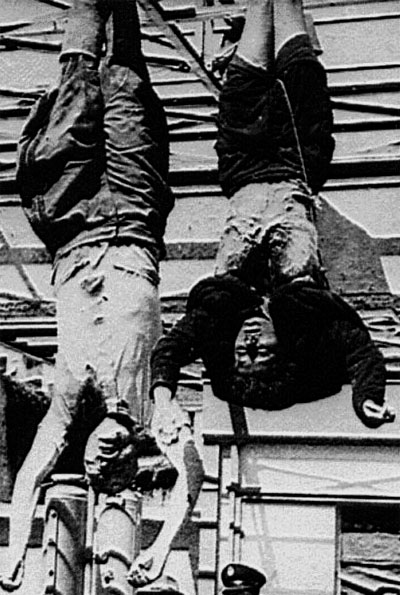
Mussolini hanging out and spending quality time with his mistress Clara Petacci
Saddam and Mussolini were classic Machiavelli type leaders in that they had the ability to hold their countries together through their cunning and ruthlessness, but were limited by their resources in satisfying imperial ambitions.

To download a free copy of Machiavelli's landmark book "The Prince" please click on the following link:

http://www.gutenberg.org/etext/1232

More Saddam Execution News and Reaction courtesy of the BBC

Was Saddam Worth It? The Outraged Negro weighs in...

“Men should be either treated generously or destroyed, because they take revenge for slight injuries - for heavy ones they cannot”
---Niccolo Machiavelli


Warning footage in video may be disturbing to some viewers. (If you are a W.E. A.L.L. B.E. subscriber please click on the following link to view video:http://weallbe.blogspot.com/2007/01/was-saddam-worth-it-outraged-negro.html)

Happy New Year Heathens and Infidels!!!
It's been along time coming, but the Outraged Negro is back and after a much needed rest...The last week in 2006 proved to be one of the busiest and probably most important news week all of last year...Late last Friday the Lion of Baghdad a.k.a. The Iraqi Badass a.k.a. Tikrit's Favorite Son known as Saddam Hussein was officially silenced...I don't think so!!! This could actually proved to be detrimental in the outcome to the soap opera known As The World Turns...Baghdad Burns!!! To me I have always had a problem when you put flawed human beings in charge of moral responsibility and accountability of this magnitude...How can anyone tell anyone that they have the right to kill you for your sins regardless of how horrible??? How can one person or a group of people think one so-called sin is worse than the other...Is not lying just as bad as killing, robbing or raping no matter how white the lie or person...Remember the Trans-Atlantic Slave Trade was justified by a lie from no less an authoritative and moral organization than the Catholic Church which stated that beast of burden (African peoples) had no soul!!!

So the question remains was it worth three thousand American soldiers' deaths and other U.S. military casualties, hundreds of thousands of Iraqis getting killed, billions of dollars spent equating to massive deficits in the decimation of civilization, igniting an all out civil war while destroying untold numbers of people's lives so that we or U.S. or them, the world's moral authority, can hang Saddam Hussein on the eve of a major muslim holiday and one day before New Year's eve after nearly fours years of fighting a war with no end or exit strategy in sight??? You be the judge...
More Saddam Execution News and Reaction courtesy of the BBC
Views of the Outraged Negro are not the official views of W.E. A.L.L. B.E. and its contributors...Please e-mail the Outraged Negro at outragedandnegro@gmail.com or post on this article if you have any questions or comments.